 Rhode Island’s e-scrap law received some updates this month, requiring certain manufacturers to join the state-run collection program while allowing more flexibility for OEMs running independent plans.
First passed in 2009 and updated in 2013, the Ocean State’s extended producer responsibility le
Rhode Island’s e-scrap law received some updates this month, requiring certain manufacturers to join the state-run collection program while allowing more flexibility for OEMs running independent plans.
First passed in 2009 and updated in 2013, the Ocean State’s extended producer responsibility le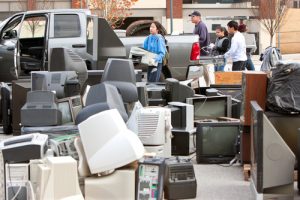 Regulators in California are studying a number of legislative fixes to the nation's longest-running e-scrap program, including expanding the existing consumer-funded model or going with a more commonly used system financed by OEMs.
In an
Regulators in California are studying a number of legislative fixes to the nation's longest-running e-scrap program, including expanding the existing consumer-funded model or going with a more commonly used system financed by OEMs.
In an 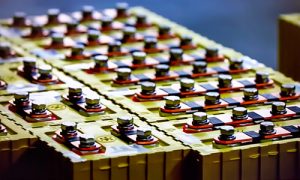 China’s early adoption of electric vehicle usage means the country is also getting an early look at the next big material in the waste stream: lithium-ion batteries.
 A confluence of factors has led logistics experts to predict that American firms, including those in the recycling industry, will experience higher over-the-road shipping costs in the next six months.
The current truckload market is already the tightest in four years.
The largest issue is a growing economy.
A confluence of factors has led logistics experts to predict that American firms, including those in the recycling industry, will experience higher over-the-road shipping costs in the next six months.
The current truckload market is already the tightest in four years.
The largest issue is a growing economy.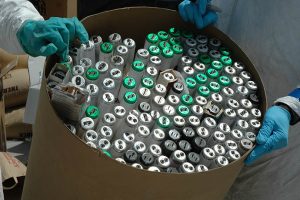 Veolia has opened an operation in Ontario to recycle lamps and mercury-bearing electronic components.
The 5,000-square-foot facility is located in the Toronto-area city of Pickering, Ontario, where Veolia already runs an industrial cleaning and hazardous materials management operation, according to a
Veolia has opened an operation in Ontario to recycle lamps and mercury-bearing electronic components.
The 5,000-square-foot facility is located in the Toronto-area city of Pickering, Ontario, where Veolia already runs an industrial cleaning and hazardous materials management operation, according to a  Proposed legislation dramatically overhauls Pennsylvania’s e-scrap program, adding a point-of-sale fee on certain devices and making manufacturers financially responsible for end-of-life management of all devices collected under the law.
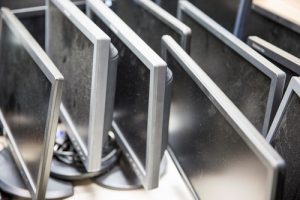 Seattle-based processor Total Reclaim has been fined by state regulators, who allege it speculatively accumulated mercury-bearing flat-panel TVs and monitors.
The $67,500 fine was
Seattle-based processor Total Reclaim has been fined by state regulators, who allege it speculatively accumulated mercury-bearing flat-panel TVs and monitors.
The $67,500 fine was  Environmental advocacy group Greenpeace has scored a handful of the top consumer electronics manufacturers on the recyclability of their devices, among other criteria.
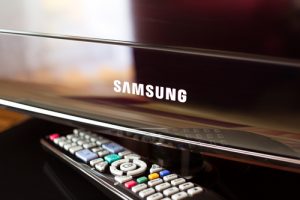 Samsung withdrew an environmental friendliness claim for a TV model after the manufacturer failed to prove its device met recyclability and reusability standards.
The global electronics company had one of its flat-screen TV models audited to determine whether it was conforming to standards that allow it to be listed as an EPEAT device.
Samsung withdrew an environmental friendliness claim for a TV model after the manufacturer failed to prove its device met recyclability and reusability standards.
The global electronics company had one of its flat-screen TV models audited to determine whether it was conforming to standards that allow it to be listed as an EPEAT device.