 Hamstrung by regulatory setbacks in Pennsylvania and New York, Nulife Glass is in the midst of a major restructuring in order keep its CRT glass recycling business alive.
The company's leader said smelting equipment previously used in New York has been sent to another location in Virginia.
Hamstrung by regulatory setbacks in Pennsylvania and New York, Nulife Glass is in the midst of a major restructuring in order keep its CRT glass recycling business alive.
The company's leader said smelting equipment previously used in New York has been sent to another location in Virginia. Oregon regulators have fined Total Reclaim more than $160,000 for allegedly violating hazardous waste laws, but the e-scrap processor denies the allegations and has appealed the penalty.
The Oregon Department of Environmental Quality (DEQ) on April 3 issued a
Oregon regulators have fined Total Reclaim more than $160,000 for allegedly violating hazardous waste laws, but the e-scrap processor denies the allegations and has appealed the penalty.
The Oregon Department of Environmental Quality (DEQ) on April 3 issued a 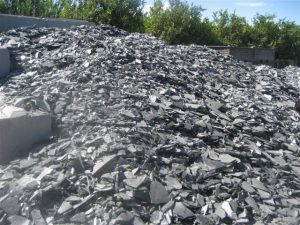 Stories on the disposition of CRT glass in California and a legal battle over a battery fire drew our readers' attention last month.
The list below shows our top stories last month in terms of unique page views.
1 |
Stories on the disposition of CRT glass in California and a legal battle over a battery fire drew our readers' attention last month.
The list below shows our top stories last month in terms of unique page views.
1 |  New York state regulators have fined a recycling facility for allowing lead and other hazardous materials to seep into the ground last summer.
Alpco Recycling must pay $225,000 over the next two years for improperly handling e-scrap, according to Rochester, N.Y.
New York state regulators have fined a recycling facility for allowing lead and other hazardous materials to seep into the ground last summer.
Alpco Recycling must pay $225,000 over the next two years for improperly handling e-scrap, according to Rochester, N.Y.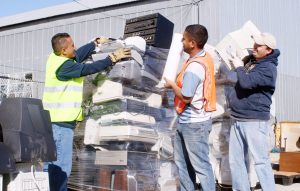 Public entities continue to take the pledge to become participants in the State Electronics Challenge, indicating their willingness to become better stewards of electronics.
In 2016, the program
Public entities continue to take the pledge to become participants in the State Electronics Challenge, indicating their willingness to become better stewards of electronics.
In 2016, the program  Updates to the R2 standard continue to be developed, and a large e-scrap processing facility is under construction in South Australia.
R2 revisions: Work is continuing on an update to the e-scrap processor certification managed by Sustainable Electronics Recycling International (SERI).
Updates to the R2 standard continue to be developed, and a large e-scrap processing facility is under construction in South Australia.
R2 revisions: Work is continuing on an update to the e-scrap processor certification managed by Sustainable Electronics Recycling International (SERI). E-scrap and hazardous material processor AERC has drawn investment dollars from a commercial recycling company and its parent holding company.
Allentown, Pa.-based AERC Recycling Solutions was recently acquired by Hatboro, Pa.-based Clean Earth Inc., a commercial waste and recycling management company.
E-scrap and hazardous material processor AERC has drawn investment dollars from a commercial recycling company and its parent holding company.
Allentown, Pa.-based AERC Recycling Solutions was recently acquired by Hatboro, Pa.-based Clean Earth Inc., a commercial waste and recycling management company. A Basel Action Network project that followed the trail of broken devices didn't just lead to a loss of certification for one company – it also prompted an entire state program to take action, recent analysis shows.
The BAN project showed that Seattle-based processor Total Reclaim exported e-scrap to Hong
A Basel Action Network project that followed the trail of broken devices didn't just lead to a loss of certification for one company – it also prompted an entire state program to take action, recent analysis shows.
The BAN project showed that Seattle-based processor Total Reclaim exported e-scrap to Hong  The largest probe to date of used devices supposedly scrubbed of their data found that 40 percent still retained some amount of personal information.
Conducted by the National Association of Information Destruction (NAID), the study examined a random sample of 258 smartphones, tablets and hard drives.
The largest probe to date of used devices supposedly scrubbed of their data found that 40 percent still retained some amount of personal information.
Conducted by the National Association of Information Destruction (NAID), the study examined a random sample of 258 smartphones, tablets and hard drives.