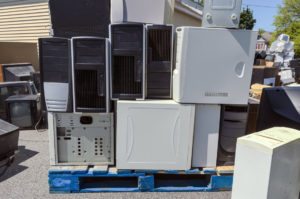
Electronics manufacturers are launching an e-scrap recycling pilot program in Nebraska, an effort to explore sustainable systems that aren't driven by state law.
The Consumer Technology Association (CTA) announced the project via a
[caption id="attachment_3229" align="alignright" width="300"] Nigel Mattravers[/caption]
Legislation and technologies have led to more formalized e-scrap processing in China and Hong Kong, experts meeting in Macau said recently.
Spain prepares to implement its electronics reuse targets, and activists in Bangladesh urge the government to address the issue of electronics disposal.
Bangladesh: Activists pushed for e-scrap management laws at a meeting in Dhaka, one of the world's most populous cities.
[caption id="attachment_3223" align="alignright" width="300"] Scott Pruitt, photo by Gage Skidmore[/caption]
After several weeks spent considering several candidates, President-elect Donald Trump has chosen Oklahoma Attorney General Scott Pruitt as his nominee to head the Environmental Protection Agency.
The news was
Apple settles accusations from California that it mishandled material from recycled electronics, and a writer says design innovation may have led to the Galaxy Note 7 battery issues.
Apple settlement: The California EPA has reached a settlement with Apple, which was accused of mishandling e-scrap, according to
This story originally appeared in the September 2016 issue of E-Scrap News.Subscribe today for access to all print content.
Like most aspects of life, operating in the e-scrap world is more complex than it might first appear.
UNICOR, also known as Federal Prison Industries, has shut down its electronics recycling facilities at several prisons across the country, leaving a sizable gap in the U.S.
Oregonians are generating more waste and recycling less of it, according to a state report, and that includes electronics.
According to the Oregon Department of Environmental Quality, the the total volume of electronics collec
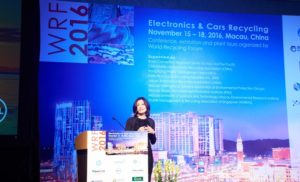
Key electronics recycling leaders, especially those from Asia, gathered in China recently to discuss the realities of e-scrap management from a global perspective.
The Electronics & Cars Recycling event, sponsored by ICM, was held in Macau in mid-November.
Electronics recycling is one tough business. Industry companies are encountering high operating costs, low profit margins and the “C word” (commodities). What if technology could make the process more profitable?
Imagine end-of-life electronics that were manufactured with radio frequency identification (RFID) tags.
 Electronics manufacturers are launching an e-scrap recycling pilot program in Nebraska, an effort to explore sustainable systems that aren't driven by state law.
The Consumer Technology Association (CTA) announced the project via a
Electronics manufacturers are launching an e-scrap recycling pilot program in Nebraska, an effort to explore sustainable systems that aren't driven by state law.
The Consumer Technology Association (CTA) announced the project via a 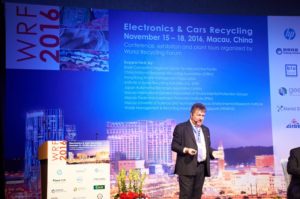 Nigel Mattravers[/caption]
Legislation and technologies have led to more formalized e-scrap processing in China and Hong Kong, experts meeting in Macau said recently.
Nigel Mattravers[/caption]
Legislation and technologies have led to more formalized e-scrap processing in China and Hong Kong, experts meeting in Macau said recently. Spain prepares to implement its electronics reuse targets, and activists in Bangladesh urge the government to address the issue of electronics disposal.
Bangladesh: Activists pushed for e-scrap management laws at a meeting in Dhaka, one of the world's most populous cities.
Spain prepares to implement its electronics reuse targets, and activists in Bangladesh urge the government to address the issue of electronics disposal.
Bangladesh: Activists pushed for e-scrap management laws at a meeting in Dhaka, one of the world's most populous cities. Scott Pruitt, photo by Gage Skidmore[/caption]
After several weeks spent considering several candidates, President-elect Donald Trump has chosen Oklahoma Attorney General Scott Pruitt as his nominee to head the Environmental Protection Agency.
The news was
Scott Pruitt, photo by Gage Skidmore[/caption]
After several weeks spent considering several candidates, President-elect Donald Trump has chosen Oklahoma Attorney General Scott Pruitt as his nominee to head the Environmental Protection Agency.
The news was  Apple settles accusations from California that it mishandled material from recycled electronics, and a writer says design innovation may have led to the Galaxy Note 7 battery issues.
Apple settlement: The California EPA has reached a settlement with Apple, which was accused of mishandling e-scrap, according to
Apple settles accusations from California that it mishandled material from recycled electronics, and a writer says design innovation may have led to the Galaxy Note 7 battery issues.
Apple settlement: The California EPA has reached a settlement with Apple, which was accused of mishandling e-scrap, according to  Like most aspects of life, operating in the e-scrap world is more complex than it might first appear.
 UNICOR, also known as Federal Prison Industries, has shut down its electronics recycling facilities at several prisons across the country, leaving a sizable gap in the U.S.
 Oregonians are generating more waste and recycling less of it, according to a state report, and that includes electronics.
 Key electronics recycling leaders, especially those from Asia, gathered in China recently to discuss the realities of e-scrap management from a global perspective.
The Electronics & Cars Recycling event, sponsored by ICM, was held in Macau in mid-November.
Key electronics recycling leaders, especially those from Asia, gathered in China recently to discuss the realities of e-scrap management from a global perspective.
The Electronics & Cars Recycling event, sponsored by ICM, was held in Macau in mid-November.
 Electronics recycling is one tough business. Industry companies are encountering high operating costs, low profit margins and the “C word” (commodities). What if technology could make the process more profitable?
Imagine end-of-life electronics that were manufactured with radio frequency identification (RFID) tags.
Electronics recycling is one tough business. Industry companies are encountering high operating costs, low profit margins and the “C word” (commodities). What if technology could make the process more profitable?
Imagine end-of-life electronics that were manufactured with radio frequency identification (RFID) tags.