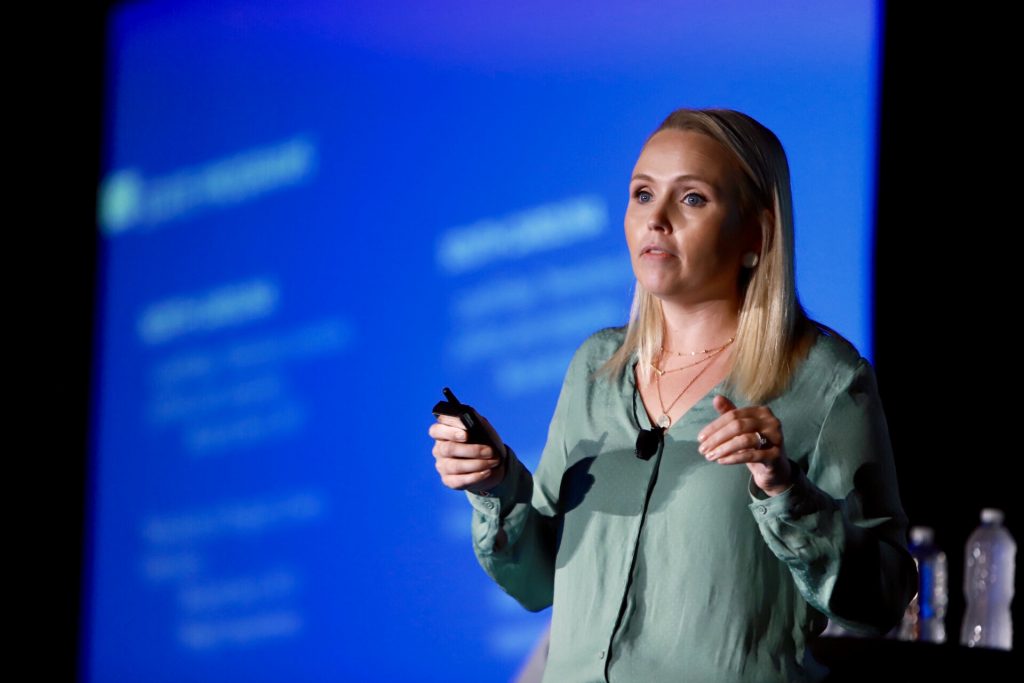
 Megan Tabb of Synergy speaks at the 2019 E-Scrap Conference and Trade Show. | Brian Adams Photography[/caption]
At the E-Scrap Conference and Trade Show last month, Megan Tabb of North Carolina processor Synergy Electronics Recycling offered advice for companies looking to remain afloat in the challenging world of CRT management.
CRT strife is well known in the e-scrap industry, generating headlines about warehouses filled with abandoned TVs, improper disposal leading to prison sentences, lawsuits targeting processors, and more.
While CRTs are on the decline in the end-of-life device stream nationwide, they're still a major component of what e-scrap companies handle.
"Even though we are slowly seeing this material go out of the waste stream, it still represents a very significant portion of what's being generated in the Carolinas," said Tabb, whose company handles CRTs and other types of scrap electronics. She estimates North Carolina will generate a little over 12 million pounds of CRTs over the course of 2019. "While it is decreasing, it's obviously still a significant problem for us."
Tabb offered a handful of tips for processors to avoid common pitfalls.
Megan Tabb of Synergy speaks at the 2019 E-Scrap Conference and Trade Show. | Brian Adams Photography[/caption]
At the E-Scrap Conference and Trade Show last month, Megan Tabb of North Carolina processor Synergy Electronics Recycling offered advice for companies looking to remain afloat in the challenging world of CRT management.
CRT strife is well known in the e-scrap industry, generating headlines about warehouses filled with abandoned TVs, improper disposal leading to prison sentences, lawsuits targeting processors, and more.
While CRTs are on the decline in the end-of-life device stream nationwide, they're still a major component of what e-scrap companies handle.
"Even though we are slowly seeing this material go out of the waste stream, it still represents a very significant portion of what's being generated in the Carolinas," said Tabb, whose company handles CRTs and other types of scrap electronics. She estimates North Carolina will generate a little over 12 million pounds of CRTs over the course of 2019. "While it is decreasing, it's obviously still a significant problem for us."
Tabb offered a handful of tips for processors to avoid common pitfalls.
[caption id="attachment_12525" align="aligncenter" width="900"] Megan Tabb of Synergy speaks at the 2019 E-Scrap Conference and Trade Show. | Brian Adams Photography[/caption]
At the E-Scrap Conference and Trade Show last month, Megan Tabb of North Carolina processor Synergy Electronics Recycling offered advice for companies looking to remain afloat in the challenging world of CRT management.
CRT strife is well known in the e-scrap industry, generating headlines about warehouses filled with abandoned TVs, improper disposal leading to prison sentences, lawsuits targeting processors, and more.
While CRTs are on the decline in the end-of-life device stream nationwide, they're still a major component of what e-scrap companies handle.
"Even though we are slowly seeing this material go out of the waste stream, it still represents a very significant portion of what's being generated in the Carolinas," said Tabb, whose company handles CRTs and other types of scrap electronics. She estimates North Carolina will generate a little over 12 million pounds of CRTs over the course of 2019. "While it is decreasing, it's obviously still a significant problem for us."
Tabb offered a handful of tips for processors to avoid common pitfalls.
Megan Tabb of Synergy speaks at the 2019 E-Scrap Conference and Trade Show. | Brian Adams Photography[/caption]
At the E-Scrap Conference and Trade Show last month, Megan Tabb of North Carolina processor Synergy Electronics Recycling offered advice for companies looking to remain afloat in the challenging world of CRT management.
CRT strife is well known in the e-scrap industry, generating headlines about warehouses filled with abandoned TVs, improper disposal leading to prison sentences, lawsuits targeting processors, and more.
While CRTs are on the decline in the end-of-life device stream nationwide, they're still a major component of what e-scrap companies handle.
"Even though we are slowly seeing this material go out of the waste stream, it still represents a very significant portion of what's being generated in the Carolinas," said Tabb, whose company handles CRTs and other types of scrap electronics. She estimates North Carolina will generate a little over 12 million pounds of CRTs over the course of 2019. "While it is decreasing, it's obviously still a significant problem for us."
Tabb offered a handful of tips for processors to avoid common pitfalls.
Categories