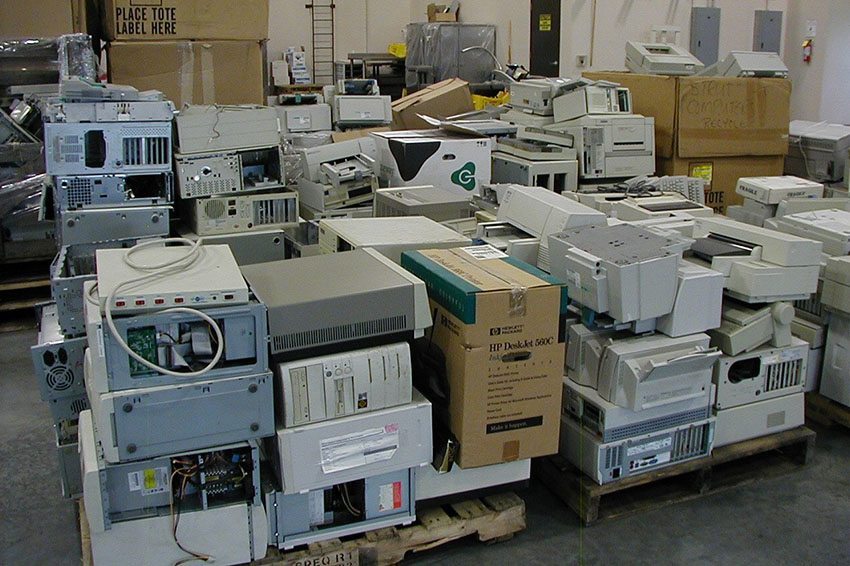
 The U.S. recycling rate for consumer electronics has been trending downward since 2014.[/caption]
The U.S. recycling rate for consumer electronics took a dive in 2016 and flatlined the following year, according to the U.S. EPA.
The recycling rate for consumer electronics decreased from 39.7% in 2015 to 35.8% in 2016. It then remained relatively flat, at 35.9%, in 2017.
EPA this month released national waste generation and recycling data for the years 2016 and 2017. The prior data release, which occurred a year and a half ago, covered 2015.
In 2017, the U.S. generated 2.84 million tons of consumer electronic scrap, down 8.4% from 2015. The country recycled 1.02 million tons, down 17.1% from 2015. EPA did not provide incineration and landfilling estimates.
The recycling rate for consumer electronics has been decreasing since 2014, when it hit 41.7%.
The EPA’s “consumer electronics” category includes devices such as TVs, VCRs, DVD players, video cameras, stereo systems, telephones and computer equipment. Small appliances and white goods are included in separate categories.
The U.S. recycling rate for consumer electronics has been trending downward since 2014.[/caption]
The U.S. recycling rate for consumer electronics took a dive in 2016 and flatlined the following year, according to the U.S. EPA.
The recycling rate for consumer electronics decreased from 39.7% in 2015 to 35.8% in 2016. It then remained relatively flat, at 35.9%, in 2017.
EPA this month released national waste generation and recycling data for the years 2016 and 2017. The prior data release, which occurred a year and a half ago, covered 2015.
In 2017, the U.S. generated 2.84 million tons of consumer electronic scrap, down 8.4% from 2015. The country recycled 1.02 million tons, down 17.1% from 2015. EPA did not provide incineration and landfilling estimates.
The recycling rate for consumer electronics has been decreasing since 2014, when it hit 41.7%.
The EPA’s “consumer electronics” category includes devices such as TVs, VCRs, DVD players, video cameras, stereo systems, telephones and computer equipment. Small appliances and white goods are included in separate categories.
[caption id="attachment_8319" align="aligncenter" width="850"] The U.S. recycling rate for consumer electronics has been trending downward since 2014.[/caption]
The U.S. recycling rate for consumer electronics took a dive in 2016 and flatlined the following year, according to the U.S. EPA.
The recycling rate for consumer electronics decreased from 39.7% in 2015 to 35.8% in 2016. It then remained relatively flat, at 35.9%, in 2017.
EPA this month released national waste generation and recycling data for the years 2016 and 2017. The prior data release, which occurred a year and a half ago, covered 2015.
In 2017, the U.S. generated 2.84 million tons of consumer electronic scrap, down 8.4% from 2015. The country recycled 1.02 million tons, down 17.1% from 2015. EPA did not provide incineration and landfilling estimates.
The recycling rate for consumer electronics has been decreasing since 2014, when it hit 41.7%.
The EPA’s “consumer electronics” category includes devices such as TVs, VCRs, DVD players, video cameras, stereo systems, telephones and computer equipment. Small appliances and white goods are included in separate categories.
The U.S. recycling rate for consumer electronics has been trending downward since 2014.[/caption]
The U.S. recycling rate for consumer electronics took a dive in 2016 and flatlined the following year, according to the U.S. EPA.
The recycling rate for consumer electronics decreased from 39.7% in 2015 to 35.8% in 2016. It then remained relatively flat, at 35.9%, in 2017.
EPA this month released national waste generation and recycling data for the years 2016 and 2017. The prior data release, which occurred a year and a half ago, covered 2015.
In 2017, the U.S. generated 2.84 million tons of consumer electronic scrap, down 8.4% from 2015. The country recycled 1.02 million tons, down 17.1% from 2015. EPA did not provide incineration and landfilling estimates.
The recycling rate for consumer electronics has been decreasing since 2014, when it hit 41.7%.
The EPA’s “consumer electronics” category includes devices such as TVs, VCRs, DVD players, video cameras, stereo systems, telephones and computer equipment. Small appliances and white goods are included in separate categories.
Categories