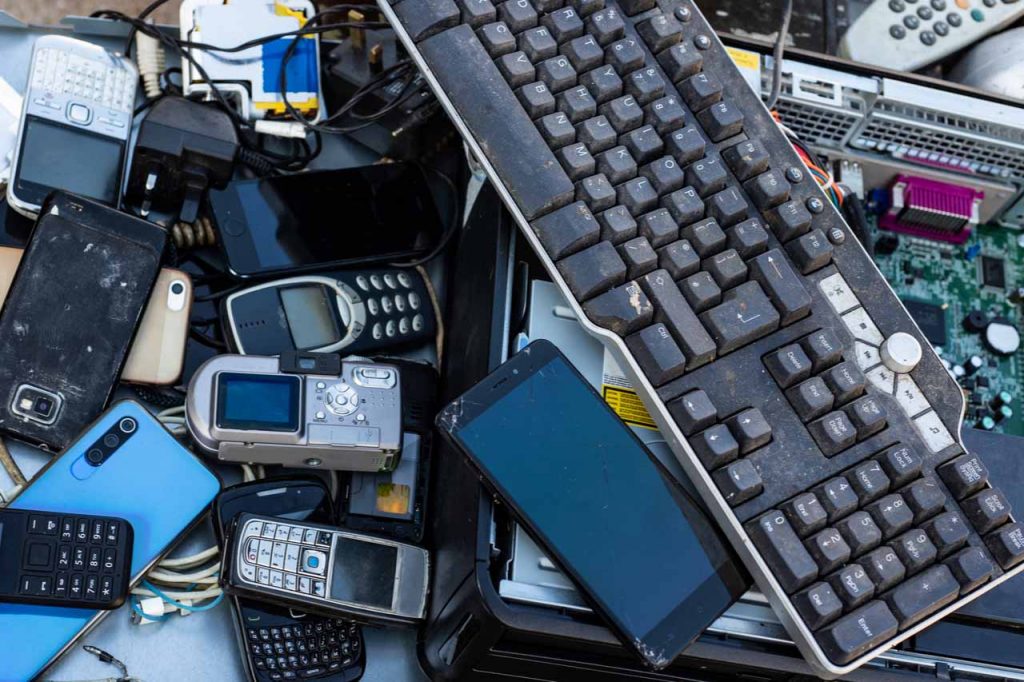
 A leader with ARMA said the expansion is expected to basically double the amount of covered material handled each day, bringing in an additional 12,300 metric tons per year. | gabriel12/Shutterstock[/caption]
As Alberta's electronics recycling program looks to grow, e-scrap processors are planning to buy equipment and hire staff to handle an expected doubling of incoming tons.
The Alberta Recycling Management Authority (ARMA), the stewardship group that runs the oldest e-scrap recycling program in Canada, announced it will add several categories of electronics and small appliances to the program starting later this year. The expansion is part of a two-year pilot project.
Started in 2004, ARMA's program receives money from fees consumers pay when they buy new TVs and computer equipment. The group funds collection and recycling of TVs and monitors, computers and servers, laptops and tablets, computer peripherals, printers, copiers, scanners and fax machines.
Through the two-year program, estimated to cost 43 million Canadian dollars (nearly $32 million), ARMA will add to the list the following categories: small home appliances, audio and video equipment, cell phones and other wireless devices, gaming equipment, toys, musical instruments, power tools and solar panels.
Ed Gugenheimer, CEO of ARMA, said the expansion is expected to basically double the amount of covered material handled each day, bringing in an additional 12,300 metric tons per year.
"That's a massive amount of diversion from landfill," he said.
A leader with ARMA said the expansion is expected to basically double the amount of covered material handled each day, bringing in an additional 12,300 metric tons per year. | gabriel12/Shutterstock[/caption]
As Alberta's electronics recycling program looks to grow, e-scrap processors are planning to buy equipment and hire staff to handle an expected doubling of incoming tons.
The Alberta Recycling Management Authority (ARMA), the stewardship group that runs the oldest e-scrap recycling program in Canada, announced it will add several categories of electronics and small appliances to the program starting later this year. The expansion is part of a two-year pilot project.
Started in 2004, ARMA's program receives money from fees consumers pay when they buy new TVs and computer equipment. The group funds collection and recycling of TVs and monitors, computers and servers, laptops and tablets, computer peripherals, printers, copiers, scanners and fax machines.
Through the two-year program, estimated to cost 43 million Canadian dollars (nearly $32 million), ARMA will add to the list the following categories: small home appliances, audio and video equipment, cell phones and other wireless devices, gaming equipment, toys, musical instruments, power tools and solar panels.
Ed Gugenheimer, CEO of ARMA, said the expansion is expected to basically double the amount of covered material handled each day, bringing in an additional 12,300 metric tons per year.
"That's a massive amount of diversion from landfill," he said.
[caption id="attachment_13800" align="aligncenter" width="900"] A leader with ARMA said the expansion is expected to basically double the amount of covered material handled each day, bringing in an additional 12,300 metric tons per year. | gabriel12/Shutterstock[/caption]
As Alberta's electronics recycling program looks to grow, e-scrap processors are planning to buy equipment and hire staff to handle an expected doubling of incoming tons.
The Alberta Recycling Management Authority (ARMA), the stewardship group that runs the oldest e-scrap recycling program in Canada, announced it will add several categories of electronics and small appliances to the program starting later this year. The expansion is part of a two-year pilot project.
Started in 2004, ARMA's program receives money from fees consumers pay when they buy new TVs and computer equipment. The group funds collection and recycling of TVs and monitors, computers and servers, laptops and tablets, computer peripherals, printers, copiers, scanners and fax machines.
Through the two-year program, estimated to cost 43 million Canadian dollars (nearly $32 million), ARMA will add to the list the following categories: small home appliances, audio and video equipment, cell phones and other wireless devices, gaming equipment, toys, musical instruments, power tools and solar panels.
Ed Gugenheimer, CEO of ARMA, said the expansion is expected to basically double the amount of covered material handled each day, bringing in an additional 12,300 metric tons per year.
"That's a massive amount of diversion from landfill," he said.
A leader with ARMA said the expansion is expected to basically double the amount of covered material handled each day, bringing in an additional 12,300 metric tons per year. | gabriel12/Shutterstock[/caption]
As Alberta's electronics recycling program looks to grow, e-scrap processors are planning to buy equipment and hire staff to handle an expected doubling of incoming tons.
The Alberta Recycling Management Authority (ARMA), the stewardship group that runs the oldest e-scrap recycling program in Canada, announced it will add several categories of electronics and small appliances to the program starting later this year. The expansion is part of a two-year pilot project.
Started in 2004, ARMA's program receives money from fees consumers pay when they buy new TVs and computer equipment. The group funds collection and recycling of TVs and monitors, computers and servers, laptops and tablets, computer peripherals, printers, copiers, scanners and fax machines.
Through the two-year program, estimated to cost 43 million Canadian dollars (nearly $32 million), ARMA will add to the list the following categories: small home appliances, audio and video equipment, cell phones and other wireless devices, gaming equipment, toys, musical instruments, power tools and solar panels.
Ed Gugenheimer, CEO of ARMA, said the expansion is expected to basically double the amount of covered material handled each day, bringing in an additional 12,300 metric tons per year.
"That's a massive amount of diversion from landfill," he said.
Categories