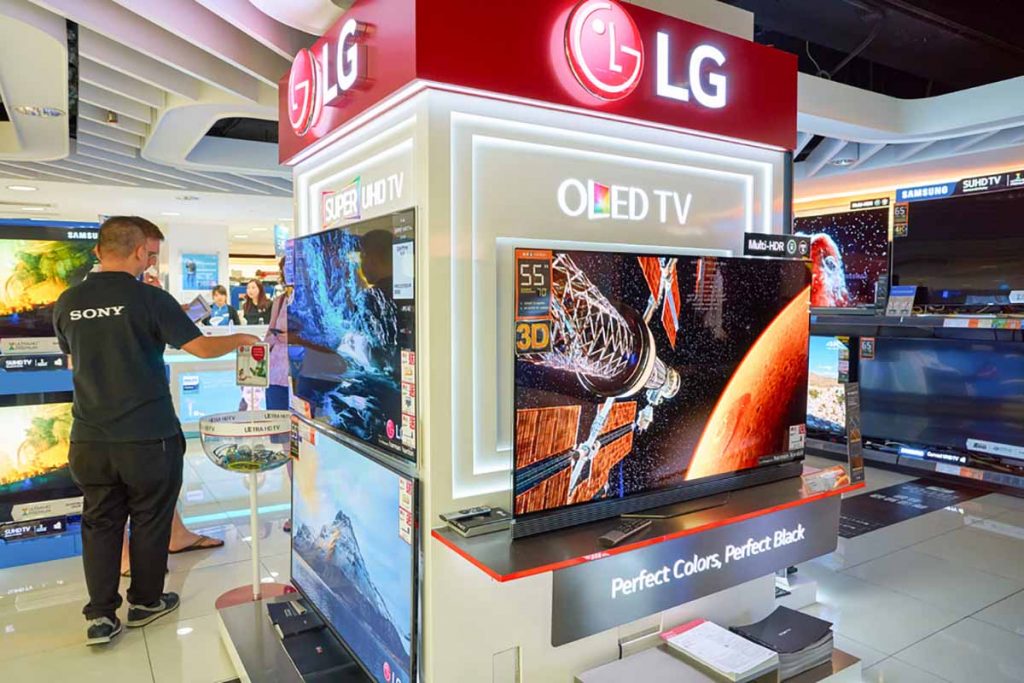
 California officials are testing a variety of electronic devices to measure the concentrations of metals and compare them to the thresholds listed in the California Code of Regulations. | Sorbis/Shutterstock[/caption]
E-scrap processors in California could get paid by the state to recycle additional types of electronic devices, depending on the outcome of toxicity testing by officials.
The California Department of Toxic Substances Control (DTSC) is testing the amount of hazardous metals in organic light-emitting diode (OLED) devices, including TVs, laptops, monitors and tablets, as well as LCD tablets and LCD-containing smart devices.
If the concentrations of hazardous metals are above thresholds in state regulations, then officials will add them to the legislated recycling program.
"We've become very cognizant with the fact that technology now, especially compared to 2003 or 2005, is moving quickly," Ricardo Rivera, environmental scientist at DTSC, said during a Dec. 16 workshop. "OLED TVs are the new displays now, but even now there's newer types of technologies coming out."
California's electronics recycling program, which passed in 2003 and is the oldest in the U.S., charges consumers fees of $4, $5 or $6 when they purchase certain types of new devices, with the fee amount dependent on the screen size.
The state's tax and fee department collects the revenue, and the California Department of Resources Recycling and Recovery (CalRecycle) pays e-scrap companies that collect and properly recycle covered electronics. As of this past July, the combined collection and recycling payment rate is 66 cents a pound for CRTs and 87 cents a pound for non-CRT devices.
The program includes devices with video displays that are four inches or greater when measured diagonally and those that are found to "exhibit the hazardous waste characteristic of toxicity when discarded," according to DTSC (cell phones are excluded).
The current list includes portable DVD players, CRT TVs and monitors, LCD TVs and laptops, and plasma TVs (excluding plasma projection TVs).
California officials are testing a variety of electronic devices to measure the concentrations of metals and compare them to the thresholds listed in the California Code of Regulations. | Sorbis/Shutterstock[/caption]
E-scrap processors in California could get paid by the state to recycle additional types of electronic devices, depending on the outcome of toxicity testing by officials.
The California Department of Toxic Substances Control (DTSC) is testing the amount of hazardous metals in organic light-emitting diode (OLED) devices, including TVs, laptops, monitors and tablets, as well as LCD tablets and LCD-containing smart devices.
If the concentrations of hazardous metals are above thresholds in state regulations, then officials will add them to the legislated recycling program.
"We've become very cognizant with the fact that technology now, especially compared to 2003 or 2005, is moving quickly," Ricardo Rivera, environmental scientist at DTSC, said during a Dec. 16 workshop. "OLED TVs are the new displays now, but even now there's newer types of technologies coming out."
California's electronics recycling program, which passed in 2003 and is the oldest in the U.S., charges consumers fees of $4, $5 or $6 when they purchase certain types of new devices, with the fee amount dependent on the screen size.
The state's tax and fee department collects the revenue, and the California Department of Resources Recycling and Recovery (CalRecycle) pays e-scrap companies that collect and properly recycle covered electronics. As of this past July, the combined collection and recycling payment rate is 66 cents a pound for CRTs and 87 cents a pound for non-CRT devices.
The program includes devices with video displays that are four inches or greater when measured diagonally and those that are found to "exhibit the hazardous waste characteristic of toxicity when discarded," according to DTSC (cell phones are excluded).
The current list includes portable DVD players, CRT TVs and monitors, LCD TVs and laptops, and plasma TVs (excluding plasma projection TVs).
[caption id="attachment_15132" align="aligncenter" width="900"] California officials are testing a variety of electronic devices to measure the concentrations of metals and compare them to the thresholds listed in the California Code of Regulations. | Sorbis/Shutterstock[/caption]
E-scrap processors in California could get paid by the state to recycle additional types of electronic devices, depending on the outcome of toxicity testing by officials.
The California Department of Toxic Substances Control (DTSC) is testing the amount of hazardous metals in organic light-emitting diode (OLED) devices, including TVs, laptops, monitors and tablets, as well as LCD tablets and LCD-containing smart devices.
If the concentrations of hazardous metals are above thresholds in state regulations, then officials will add them to the legislated recycling program.
"We've become very cognizant with the fact that technology now, especially compared to 2003 or 2005, is moving quickly," Ricardo Rivera, environmental scientist at DTSC, said during a Dec. 16 workshop. "OLED TVs are the new displays now, but even now there's newer types of technologies coming out."
California's electronics recycling program, which passed in 2003 and is the oldest in the U.S., charges consumers fees of $4, $5 or $6 when they purchase certain types of new devices, with the fee amount dependent on the screen size.
The state's tax and fee department collects the revenue, and the California Department of Resources Recycling and Recovery (CalRecycle) pays e-scrap companies that collect and properly recycle covered electronics. As of this past July, the combined collection and recycling payment rate is 66 cents a pound for CRTs and 87 cents a pound for non-CRT devices.
The program includes devices with video displays that are four inches or greater when measured diagonally and those that are found to "exhibit the hazardous waste characteristic of toxicity when discarded," according to DTSC (cell phones are excluded).
The current list includes portable DVD players, CRT TVs and monitors, LCD TVs and laptops, and plasma TVs (excluding plasma projection TVs).
California officials are testing a variety of electronic devices to measure the concentrations of metals and compare them to the thresholds listed in the California Code of Regulations. | Sorbis/Shutterstock[/caption]
E-scrap processors in California could get paid by the state to recycle additional types of electronic devices, depending on the outcome of toxicity testing by officials.
The California Department of Toxic Substances Control (DTSC) is testing the amount of hazardous metals in organic light-emitting diode (OLED) devices, including TVs, laptops, monitors and tablets, as well as LCD tablets and LCD-containing smart devices.
If the concentrations of hazardous metals are above thresholds in state regulations, then officials will add them to the legislated recycling program.
"We've become very cognizant with the fact that technology now, especially compared to 2003 or 2005, is moving quickly," Ricardo Rivera, environmental scientist at DTSC, said during a Dec. 16 workshop. "OLED TVs are the new displays now, but even now there's newer types of technologies coming out."
California's electronics recycling program, which passed in 2003 and is the oldest in the U.S., charges consumers fees of $4, $5 or $6 when they purchase certain types of new devices, with the fee amount dependent on the screen size.
The state's tax and fee department collects the revenue, and the California Department of Resources Recycling and Recovery (CalRecycle) pays e-scrap companies that collect and properly recycle covered electronics. As of this past July, the combined collection and recycling payment rate is 66 cents a pound for CRTs and 87 cents a pound for non-CRT devices.
The program includes devices with video displays that are four inches or greater when measured diagonally and those that are found to "exhibit the hazardous waste characteristic of toxicity when discarded," according to DTSC (cell phones are excluded).
The current list includes portable DVD players, CRT TVs and monitors, LCD TVs and laptops, and plasma TVs (excluding plasma projection TVs).
Categories