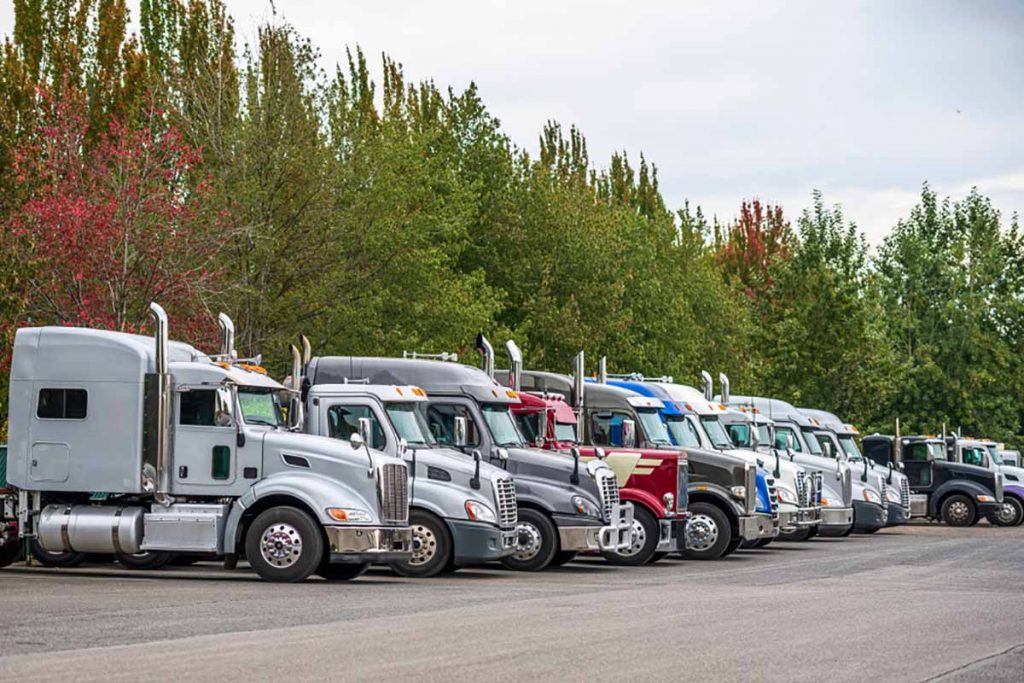
 With fewer available drivers comes less available trucking supply, leading to higher prices and potential disruptions in trucking availability for those in the recycling industry. | Vitpho/Shutterstock[/caption]
A driver shortage that was exacerbated by the COVID-19 pandemic will continue to create challenges for moving used electronics and other recovered materials this year, analysts say.
Freight market research firm FTR Intel recently shared insights covering the trucking market during the pandemic and how some of the challenges of the past year will be around for months to come.
Trucking activity dropped dramatically in March 2020, when COVID-19 restrictions and associated impacts began to spread across the U.S. Overall freight volume is still down compared with pre-pandemic levels, and FTR doesn’t anticipate the freight activity will recover fully until mid-2021. That’s largely because of wider economic impacts from the pandemic on a number of business sectors.
But one figure has surged above pre-pandemic levels, and it’s an important one for recycling firms seeking transportation to move recyclables. Active truck utilization, which is the share of trucks engaged in hauling freight, is “far above” February 2020 levels, said Avery Vise, vice president of trucking for FTR.
“While freight demand has not fully recovered, driver capacity is much tighter than it was,” he said, noting that payroll employment in the trucking industry is down 3% from February 2020.
Electronics recycling facility operators say the freight situation has been turbulent for much of the past year.
"Since the start of COVID, there has been large swings in access and pricing for logistics across the country," said Jeff Gloyd, vice president of sales and marketing for Universal Recycling Technologies (URT), a processor with four U.S. facilities. "We continue to have issues and have developed a large list of vendors in order to support our customer’s needs."
Another facility operator said there has been pressure in all sectors of the trucking industry.
"We have seen increases across the board: full truck, LTL [less-than-truckload] and package delivery," said Craig Boswell, president of Texas-based HOBI International. "We are being told it is a capacity issue driving up costs."
With fewer available drivers comes less available trucking supply, leading to higher prices and potential disruptions in trucking availability for those in the recycling industry. | Vitpho/Shutterstock[/caption]
A driver shortage that was exacerbated by the COVID-19 pandemic will continue to create challenges for moving used electronics and other recovered materials this year, analysts say.
Freight market research firm FTR Intel recently shared insights covering the trucking market during the pandemic and how some of the challenges of the past year will be around for months to come.
Trucking activity dropped dramatically in March 2020, when COVID-19 restrictions and associated impacts began to spread across the U.S. Overall freight volume is still down compared with pre-pandemic levels, and FTR doesn’t anticipate the freight activity will recover fully until mid-2021. That’s largely because of wider economic impacts from the pandemic on a number of business sectors.
But one figure has surged above pre-pandemic levels, and it’s an important one for recycling firms seeking transportation to move recyclables. Active truck utilization, which is the share of trucks engaged in hauling freight, is “far above” February 2020 levels, said Avery Vise, vice president of trucking for FTR.
“While freight demand has not fully recovered, driver capacity is much tighter than it was,” he said, noting that payroll employment in the trucking industry is down 3% from February 2020.
Electronics recycling facility operators say the freight situation has been turbulent for much of the past year.
"Since the start of COVID, there has been large swings in access and pricing for logistics across the country," said Jeff Gloyd, vice president of sales and marketing for Universal Recycling Technologies (URT), a processor with four U.S. facilities. "We continue to have issues and have developed a large list of vendors in order to support our customer’s needs."
Another facility operator said there has been pressure in all sectors of the trucking industry.
"We have seen increases across the board: full truck, LTL [less-than-truckload] and package delivery," said Craig Boswell, president of Texas-based HOBI International. "We are being told it is a capacity issue driving up costs."
[caption id="attachment_18675" align="aligncenter" width="900"] With fewer available drivers comes less available trucking supply, leading to higher prices and potential disruptions in trucking availability for those in the recycling industry. | Vitpho/Shutterstock[/caption]
A driver shortage that was exacerbated by the COVID-19 pandemic will continue to create challenges for moving used electronics and other recovered materials this year, analysts say.
Freight market research firm FTR Intel recently shared insights covering the trucking market during the pandemic and how some of the challenges of the past year will be around for months to come.
Trucking activity dropped dramatically in March 2020, when COVID-19 restrictions and associated impacts began to spread across the U.S. Overall freight volume is still down compared with pre-pandemic levels, and FTR doesn’t anticipate the freight activity will recover fully until mid-2021. That’s largely because of wider economic impacts from the pandemic on a number of business sectors.
But one figure has surged above pre-pandemic levels, and it’s an important one for recycling firms seeking transportation to move recyclables. Active truck utilization, which is the share of trucks engaged in hauling freight, is “far above” February 2020 levels, said Avery Vise, vice president of trucking for FTR.
“While freight demand has not fully recovered, driver capacity is much tighter than it was,” he said, noting that payroll employment in the trucking industry is down 3% from February 2020.
Electronics recycling facility operators say the freight situation has been turbulent for much of the past year.
"Since the start of COVID, there has been large swings in access and pricing for logistics across the country," said Jeff Gloyd, vice president of sales and marketing for Universal Recycling Technologies (URT), a processor with four U.S. facilities. "We continue to have issues and have developed a large list of vendors in order to support our customer’s needs."
Another facility operator said there has been pressure in all sectors of the trucking industry.
"We have seen increases across the board: full truck, LTL [less-than-truckload] and package delivery," said Craig Boswell, president of Texas-based HOBI International. "We are being told it is a capacity issue driving up costs."
With fewer available drivers comes less available trucking supply, leading to higher prices and potential disruptions in trucking availability for those in the recycling industry. | Vitpho/Shutterstock[/caption]
A driver shortage that was exacerbated by the COVID-19 pandemic will continue to create challenges for moving used electronics and other recovered materials this year, analysts say.
Freight market research firm FTR Intel recently shared insights covering the trucking market during the pandemic and how some of the challenges of the past year will be around for months to come.
Trucking activity dropped dramatically in March 2020, when COVID-19 restrictions and associated impacts began to spread across the U.S. Overall freight volume is still down compared with pre-pandemic levels, and FTR doesn’t anticipate the freight activity will recover fully until mid-2021. That’s largely because of wider economic impacts from the pandemic on a number of business sectors.
But one figure has surged above pre-pandemic levels, and it’s an important one for recycling firms seeking transportation to move recyclables. Active truck utilization, which is the share of trucks engaged in hauling freight, is “far above” February 2020 levels, said Avery Vise, vice president of trucking for FTR.
“While freight demand has not fully recovered, driver capacity is much tighter than it was,” he said, noting that payroll employment in the trucking industry is down 3% from February 2020.
Electronics recycling facility operators say the freight situation has been turbulent for much of the past year.
"Since the start of COVID, there has been large swings in access and pricing for logistics across the country," said Jeff Gloyd, vice president of sales and marketing for Universal Recycling Technologies (URT), a processor with four U.S. facilities. "We continue to have issues and have developed a large list of vendors in order to support our customer’s needs."
Another facility operator said there has been pressure in all sectors of the trucking industry.
"We have seen increases across the board: full truck, LTL [less-than-truckload] and package delivery," said Craig Boswell, president of Texas-based HOBI International. "We are being told it is a capacity issue driving up costs."
Categories