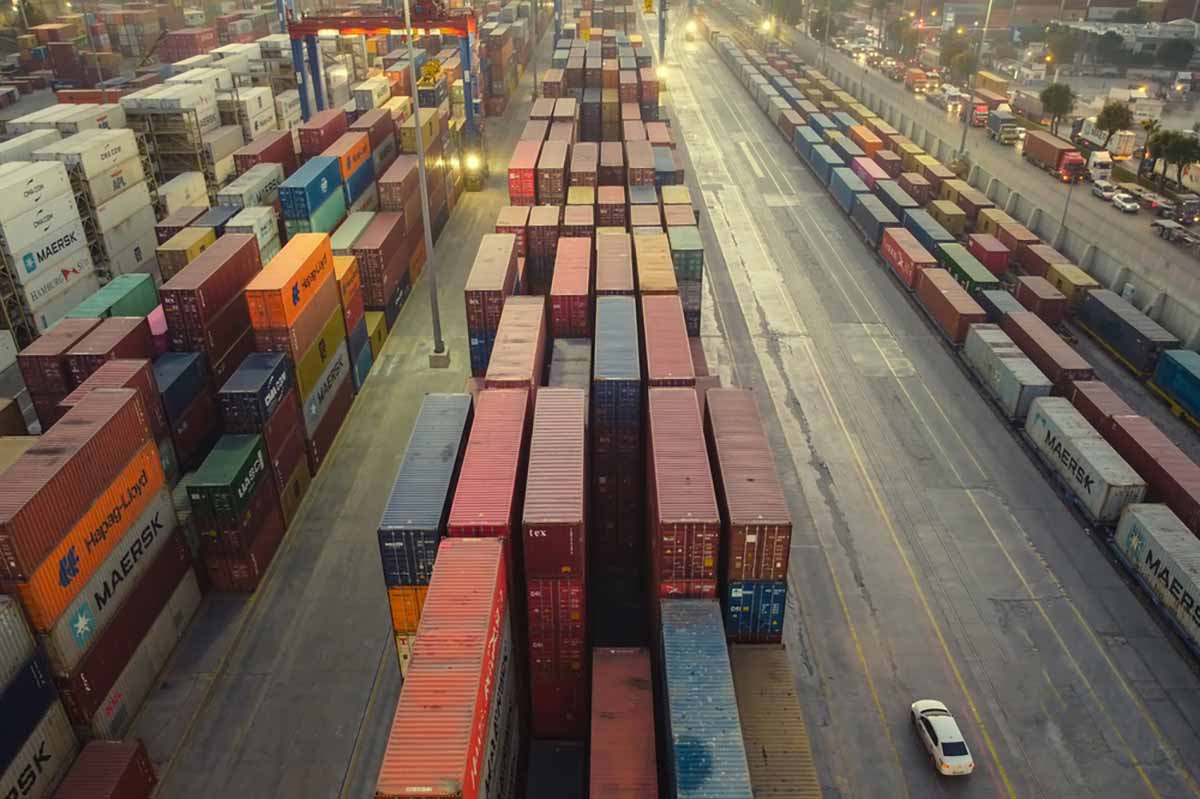
 The Basel Convention on the Control of Transboundary Movements of Hazardous Wastes and their Disposal is an international treaty governing how waste is moved around the world. | phil berry/Shutterstock[/caption]
The Basel Convention has published multiple proposals that would restrict U.S. exports of scrap electronics. The changes will be considered at a meeting this summer.
The governments of Switzerland and Ghana last year announced plans to propose a change in the Basel Convention, covering how exports of some end-of-life electronics are managed. The European Union also recently proposed a change that would expand the scope of devices that are categorized as "waste."
The Basel Convention on the Control of Transboundary Movements of Hazardous Wastes and their Disposal is an international treaty governing how waste is moved around the world. It was first implemented in 1992. More than 180 countries are party to the convention, but the U.S. is not. That fact complicates how any change to the convention impacts exports from the U.S.
Both of the proposals for alterations to the treaty were released in December and were sent to Basel delegates in late January for comment. They are slated to be discussed at a Basel meeting in late July.
One processor anticipates significant disruption within the U.S. industry if the changes are adopted.
"For U.S. companies, it could be extremely punitive with us not being a member of the convention," said Craig Boswell, president of Dallas-based HOBI International. "All of a sudden our competitive landscape changes dramatically."
The Basel Convention on the Control of Transboundary Movements of Hazardous Wastes and their Disposal is an international treaty governing how waste is moved around the world. | phil berry/Shutterstock[/caption]
The Basel Convention has published multiple proposals that would restrict U.S. exports of scrap electronics. The changes will be considered at a meeting this summer.
The governments of Switzerland and Ghana last year announced plans to propose a change in the Basel Convention, covering how exports of some end-of-life electronics are managed. The European Union also recently proposed a change that would expand the scope of devices that are categorized as "waste."
The Basel Convention on the Control of Transboundary Movements of Hazardous Wastes and their Disposal is an international treaty governing how waste is moved around the world. It was first implemented in 1992. More than 180 countries are party to the convention, but the U.S. is not. That fact complicates how any change to the convention impacts exports from the U.S.
Both of the proposals for alterations to the treaty were released in December and were sent to Basel delegates in late January for comment. They are slated to be discussed at a Basel meeting in late July.
One processor anticipates significant disruption within the U.S. industry if the changes are adopted.
"For U.S. companies, it could be extremely punitive with us not being a member of the convention," said Craig Boswell, president of Dallas-based HOBI International. "All of a sudden our competitive landscape changes dramatically."
[caption id="attachment_15327" align="aligncenter" width="1200"] The Basel Convention on the Control of Transboundary Movements of Hazardous Wastes and their Disposal is an international treaty governing how waste is moved around the world. | phil berry/Shutterstock[/caption]
The Basel Convention has published multiple proposals that would restrict U.S. exports of scrap electronics. The changes will be considered at a meeting this summer.
The governments of Switzerland and Ghana last year announced plans to propose a change in the Basel Convention, covering how exports of some end-of-life electronics are managed. The European Union also recently proposed a change that would expand the scope of devices that are categorized as "waste."
The Basel Convention on the Control of Transboundary Movements of Hazardous Wastes and their Disposal is an international treaty governing how waste is moved around the world. It was first implemented in 1992. More than 180 countries are party to the convention, but the U.S. is not. That fact complicates how any change to the convention impacts exports from the U.S.
Both of the proposals for alterations to the treaty were released in December and were sent to Basel delegates in late January for comment. They are slated to be discussed at a Basel meeting in late July.
One processor anticipates significant disruption within the U.S. industry if the changes are adopted.
"For U.S. companies, it could be extremely punitive with us not being a member of the convention," said Craig Boswell, president of Dallas-based HOBI International. "All of a sudden our competitive landscape changes dramatically."
The Basel Convention on the Control of Transboundary Movements of Hazardous Wastes and their Disposal is an international treaty governing how waste is moved around the world. | phil berry/Shutterstock[/caption]
The Basel Convention has published multiple proposals that would restrict U.S. exports of scrap electronics. The changes will be considered at a meeting this summer.
The governments of Switzerland and Ghana last year announced plans to propose a change in the Basel Convention, covering how exports of some end-of-life electronics are managed. The European Union also recently proposed a change that would expand the scope of devices that are categorized as "waste."
The Basel Convention on the Control of Transboundary Movements of Hazardous Wastes and their Disposal is an international treaty governing how waste is moved around the world. It was first implemented in 1992. More than 180 countries are party to the convention, but the U.S. is not. That fact complicates how any change to the convention impacts exports from the U.S.
Both of the proposals for alterations to the treaty were released in December and were sent to Basel delegates in late January for comment. They are slated to be discussed at a Basel meeting in late July.
One processor anticipates significant disruption within the U.S. industry if the changes are adopted.
"For U.S. companies, it could be extremely punitive with us not being a member of the convention," said Craig Boswell, president of Dallas-based HOBI International. "All of a sudden our competitive landscape changes dramatically."
Categories