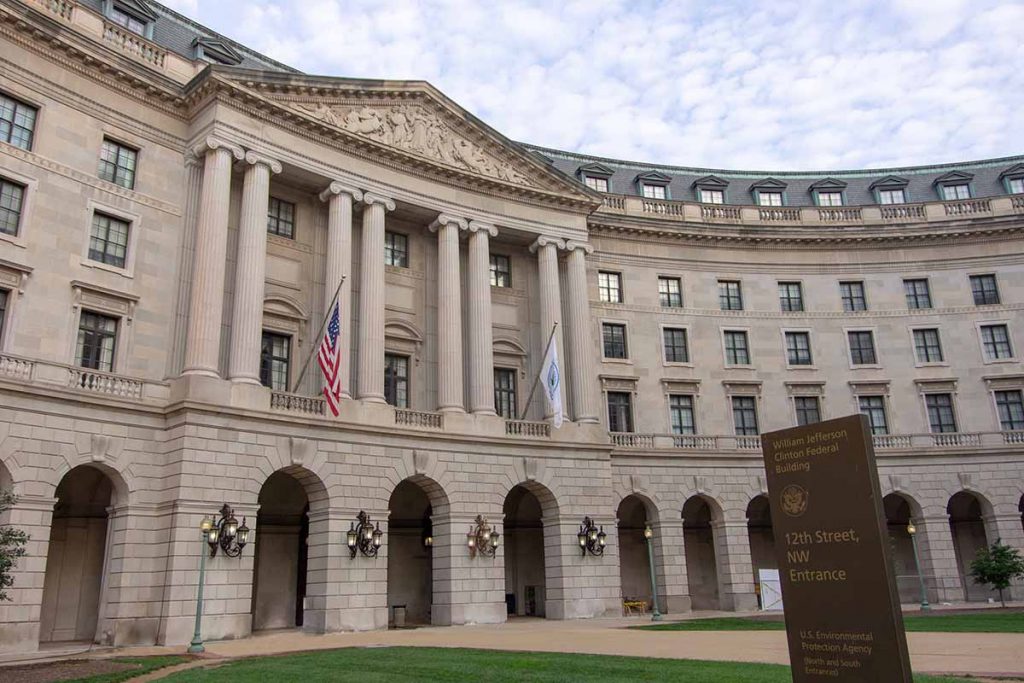
 The bipartisan infrastructure bill passed last year provides about $350 million to the U.S. EPA over several years to fund recycling infrastructure and education grants. | RozenskiP/Shutterstock[/caption]
The U.S. EPA is working to build several grant programs from the ground up thanks to an influx of money from the Bipartisan Infrastructure Law, and it is reaching out to stakeholders to make sure the education, recycling infrastructure and battery programs will meet industry needs.
Nicole Villamizar, deputy director for the EPA Resource Conservation and Sustainability Division, opened the Intergovernmental Recycling Infrastructure and Education and Outreach Feedback session on May 18 by telling attendees she was "not looking for consensus today," but rather to hear individual experiences.
John Lucey, special assistant to the EPA administrator, said the EPA planned to make "significant investments in health, equity and resilience" with the funding, and told the roughly 220 Zoom attendees that "this is an opportunity for you to tell EPA how these funds can best meet your needs."
Two grant programs the EPA is currently creating from scratch are the Solid Waste Infrastructure for Recycling program (SWIFR) and the Recycling Education and Outreach program. Both are funded by the bipartisan infrastructure bill that was signed into law last fall. Villamizar said there will be future outreach sessions on the two grant programs, as well as sessions on battery best practices and voluntary labeling.
SWIFR has been allocated $275 million for 2022-26, which is about $55 million per year. However, the funds do not expire, so the department can be flexible about when they are spent, Villamizar said. Eligible entities for SWIFR include states and political subdivisions of states like counties, as well as tribal governments and others. Nonprofit groups and public-private partnerships are not eligible for the grant.
The Recycling Education and Outreach program was allocated $75 million for 2022-26, which is about $15 million per year. Nonprofit organizations and public-private partnerships are eligible for that grant, she said.
The programs are "Justice 40" programs, meaning they fall under an executive order to direct 40% of funding to disadvantaged communities. Villamizar said definitions of disadvantaged communities are forthcoming.
The EPA's goal is to open applications for the first round of funding by September. Villamizar said there's no match requirement written in the legislation, and that the education and outreach program is "much more prescriptive under the legislation" than SWIFR.
There is also no allocation formula outlined in the legislation, so the EPA will need to determine that, she added, though the education grant is competitive.
"We want your feedback on if funding should be one year or for multi-year projects," Villamizar said.
One participant asked if chemical recycling technologies would be eligible for grants, but Villamizar said the EPA was not sure yet and was looking for feedback on that, as well.
The bipartisan infrastructure bill passed last year provides about $350 million to the U.S. EPA over several years to fund recycling infrastructure and education grants. | RozenskiP/Shutterstock[/caption]
The U.S. EPA is working to build several grant programs from the ground up thanks to an influx of money from the Bipartisan Infrastructure Law, and it is reaching out to stakeholders to make sure the education, recycling infrastructure and battery programs will meet industry needs.
Nicole Villamizar, deputy director for the EPA Resource Conservation and Sustainability Division, opened the Intergovernmental Recycling Infrastructure and Education and Outreach Feedback session on May 18 by telling attendees she was "not looking for consensus today," but rather to hear individual experiences.
John Lucey, special assistant to the EPA administrator, said the EPA planned to make "significant investments in health, equity and resilience" with the funding, and told the roughly 220 Zoom attendees that "this is an opportunity for you to tell EPA how these funds can best meet your needs."
Two grant programs the EPA is currently creating from scratch are the Solid Waste Infrastructure for Recycling program (SWIFR) and the Recycling Education and Outreach program. Both are funded by the bipartisan infrastructure bill that was signed into law last fall. Villamizar said there will be future outreach sessions on the two grant programs, as well as sessions on battery best practices and voluntary labeling.
SWIFR has been allocated $275 million for 2022-26, which is about $55 million per year. However, the funds do not expire, so the department can be flexible about when they are spent, Villamizar said. Eligible entities for SWIFR include states and political subdivisions of states like counties, as well as tribal governments and others. Nonprofit groups and public-private partnerships are not eligible for the grant.
The Recycling Education and Outreach program was allocated $75 million for 2022-26, which is about $15 million per year. Nonprofit organizations and public-private partnerships are eligible for that grant, she said.
The programs are "Justice 40" programs, meaning they fall under an executive order to direct 40% of funding to disadvantaged communities. Villamizar said definitions of disadvantaged communities are forthcoming.
The EPA's goal is to open applications for the first round of funding by September. Villamizar said there's no match requirement written in the legislation, and that the education and outreach program is "much more prescriptive under the legislation" than SWIFR.
There is also no allocation formula outlined in the legislation, so the EPA will need to determine that, she added, though the education grant is competitive.
"We want your feedback on if funding should be one year or for multi-year projects," Villamizar said.
One participant asked if chemical recycling technologies would be eligible for grants, but Villamizar said the EPA was not sure yet and was looking for feedback on that, as well.
[caption id="attachment_23247" align="aligncenter" width="900"] The bipartisan infrastructure bill passed last year provides about $350 million to the U.S. EPA over several years to fund recycling infrastructure and education grants. | RozenskiP/Shutterstock[/caption]
The U.S. EPA is working to build several grant programs from the ground up thanks to an influx of money from the Bipartisan Infrastructure Law, and it is reaching out to stakeholders to make sure the education, recycling infrastructure and battery programs will meet industry needs.
Nicole Villamizar, deputy director for the EPA Resource Conservation and Sustainability Division, opened the Intergovernmental Recycling Infrastructure and Education and Outreach Feedback session on May 18 by telling attendees she was "not looking for consensus today," but rather to hear individual experiences.
John Lucey, special assistant to the EPA administrator, said the EPA planned to make "significant investments in health, equity and resilience" with the funding, and told the roughly 220 Zoom attendees that "this is an opportunity for you to tell EPA how these funds can best meet your needs."
Two grant programs the EPA is currently creating from scratch are the Solid Waste Infrastructure for Recycling program (SWIFR) and the Recycling Education and Outreach program. Both are funded by the bipartisan infrastructure bill that was signed into law last fall. Villamizar said there will be future outreach sessions on the two grant programs, as well as sessions on battery best practices and voluntary labeling.
SWIFR has been allocated $275 million for 2022-26, which is about $55 million per year. However, the funds do not expire, so the department can be flexible about when they are spent, Villamizar said. Eligible entities for SWIFR include states and political subdivisions of states like counties, as well as tribal governments and others. Nonprofit groups and public-private partnerships are not eligible for the grant.
The Recycling Education and Outreach program was allocated $75 million for 2022-26, which is about $15 million per year. Nonprofit organizations and public-private partnerships are eligible for that grant, she said.
The programs are "Justice 40" programs, meaning they fall under an executive order to direct 40% of funding to disadvantaged communities. Villamizar said definitions of disadvantaged communities are forthcoming.
The EPA's goal is to open applications for the first round of funding by September. Villamizar said there's no match requirement written in the legislation, and that the education and outreach program is "much more prescriptive under the legislation" than SWIFR.
There is also no allocation formula outlined in the legislation, so the EPA will need to determine that, she added, though the education grant is competitive.
"We want your feedback on if funding should be one year or for multi-year projects," Villamizar said.
One participant asked if chemical recycling technologies would be eligible for grants, but Villamizar said the EPA was not sure yet and was looking for feedback on that, as well.
The bipartisan infrastructure bill passed last year provides about $350 million to the U.S. EPA over several years to fund recycling infrastructure and education grants. | RozenskiP/Shutterstock[/caption]
The U.S. EPA is working to build several grant programs from the ground up thanks to an influx of money from the Bipartisan Infrastructure Law, and it is reaching out to stakeholders to make sure the education, recycling infrastructure and battery programs will meet industry needs.
Nicole Villamizar, deputy director for the EPA Resource Conservation and Sustainability Division, opened the Intergovernmental Recycling Infrastructure and Education and Outreach Feedback session on May 18 by telling attendees she was "not looking for consensus today," but rather to hear individual experiences.
John Lucey, special assistant to the EPA administrator, said the EPA planned to make "significant investments in health, equity and resilience" with the funding, and told the roughly 220 Zoom attendees that "this is an opportunity for you to tell EPA how these funds can best meet your needs."
Two grant programs the EPA is currently creating from scratch are the Solid Waste Infrastructure for Recycling program (SWIFR) and the Recycling Education and Outreach program. Both are funded by the bipartisan infrastructure bill that was signed into law last fall. Villamizar said there will be future outreach sessions on the two grant programs, as well as sessions on battery best practices and voluntary labeling.
SWIFR has been allocated $275 million for 2022-26, which is about $55 million per year. However, the funds do not expire, so the department can be flexible about when they are spent, Villamizar said. Eligible entities for SWIFR include states and political subdivisions of states like counties, as well as tribal governments and others. Nonprofit groups and public-private partnerships are not eligible for the grant.
The Recycling Education and Outreach program was allocated $75 million for 2022-26, which is about $15 million per year. Nonprofit organizations and public-private partnerships are eligible for that grant, she said.
The programs are "Justice 40" programs, meaning they fall under an executive order to direct 40% of funding to disadvantaged communities. Villamizar said definitions of disadvantaged communities are forthcoming.
The EPA's goal is to open applications for the first round of funding by September. Villamizar said there's no match requirement written in the legislation, and that the education and outreach program is "much more prescriptive under the legislation" than SWIFR.
There is also no allocation formula outlined in the legislation, so the EPA will need to determine that, she added, though the education grant is competitive.
"We want your feedback on if funding should be one year or for multi-year projects," Villamizar said.
One participant asked if chemical recycling technologies would be eligible for grants, but Villamizar said the EPA was not sure yet and was looking for feedback on that, as well.
Categories