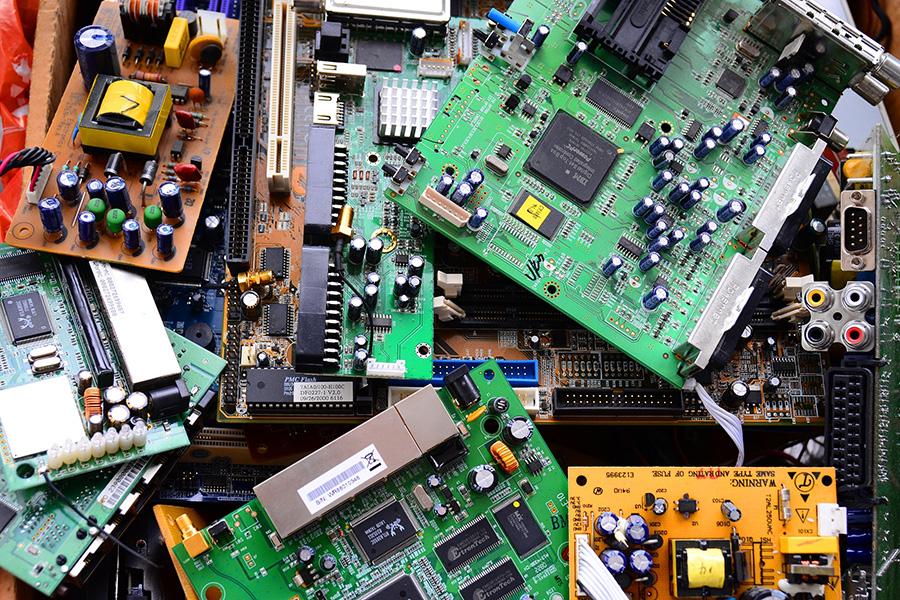
 An acid-free dissolution method can selectively target rare earths for extraction. | Bokstaz/Shutterstock[/caption]
A technology that will allow recyclers to extract valuable metals from e-scrap like shredded hard drives without affecting the other materials is entering its pilot plant stage.
Daniel Bina, CEO of Critical Materials Recycling and TdVib, said the new method will make rare earth recycling more accessible at a time when there is a critical need for more domestic supply.
The method, called acid-free dissolution reaction (ADR), is unique because it can selectively target rare earths and doesn't use acids to do so, according to Bina. It was developed at the Critical Materials Institute, a federal laboratory, by Denis Prodius and Ikenna Nlebedim, but is being commercialized under a small business called TdVib. Once the testing is completed in August 2023, a new business called Critical Materials Recycling will take ADR to the market.
"It was very important that it was acid-free because that's one of the major issues with current technology, it uses a lot of acids and that has a lot of issues," Bina said. Because it is acid-free, ADR is more environmentally friendly and creates less waste and no hazardous waste, he said.
"We can basically recycle a lot of that solution and chemicals we're using," Bina noted. "We're able to recycle them right back into the process and reuse them so that's been environmentally friendly and helps with economics."
ADR works by using a specific mixture of chemicals and a selective leaching process to remove the rare earths into a solution, with little to no effect on other materials in the electronics mixture. For example, if used on shredded hard drives, it will not affect the aluminum, copper, gold, silver or other metals. The traditional acid-based method ends up dissolving everything, said Bina, making it impractical.
"Then you have all those elements in solution and it becomes more of a hassle and more of an expense to separate out all the rare earths from the rest, so many actually don't do that. It's not worth it," Bina remarked.
Rare earth magnets make up about 3% of a hard drive, but with ADR they can be extracted, then the rest of the shredded hard drives can be sent through the traditional recycling process.
"We see ourselves in the recycling process that already is in place today, just as an additional step," Bina said.
While rare earths can be very valuable, right now they are more of a nuisance or contaminant in e-scrap recycling, according to Bina, because they can get mixed in with other components. They are also magnets, and can cause things to stick together when processors are trying to separate out metals.
"In our process, if we're the first process, where it's shredded up and then we go through it, when it pulls those rare earths out, the magnet is no longer," Bina said, putting to rest both the contamination and the magnetic issue.
After the rare earths are pulled out into solution, he said it's a simple process to drop them out of the solution as a solid. Then, they need a small amount of purification before they can be sold and reused.
Bina estimated that if all the rare earths just from hard drives in the U.S. were recycled, they could provide 25% of all current demand for rare earths in the U.S. And the process doesn't just work on rare earths in electronics, he added. It can be used on any item that contains rare earths, such as electric vehicle motors.
"The problem here that we're really addressing and that really makes this process unique - there is no other technology we're aware of yet today that can pull out these rare earths in a profitable manner from dilute waste streams - is everything else you look at for technology to do this first are going in and manually removing magnets, so they have just magnets, nothing else," Bina said. "That right there is a huge financial burden to any process."
An acid-free dissolution method can selectively target rare earths for extraction. | Bokstaz/Shutterstock[/caption]
A technology that will allow recyclers to extract valuable metals from e-scrap like shredded hard drives without affecting the other materials is entering its pilot plant stage.
Daniel Bina, CEO of Critical Materials Recycling and TdVib, said the new method will make rare earth recycling more accessible at a time when there is a critical need for more domestic supply.
The method, called acid-free dissolution reaction (ADR), is unique because it can selectively target rare earths and doesn't use acids to do so, according to Bina. It was developed at the Critical Materials Institute, a federal laboratory, by Denis Prodius and Ikenna Nlebedim, but is being commercialized under a small business called TdVib. Once the testing is completed in August 2023, a new business called Critical Materials Recycling will take ADR to the market.
"It was very important that it was acid-free because that's one of the major issues with current technology, it uses a lot of acids and that has a lot of issues," Bina said. Because it is acid-free, ADR is more environmentally friendly and creates less waste and no hazardous waste, he said.
"We can basically recycle a lot of that solution and chemicals we're using," Bina noted. "We're able to recycle them right back into the process and reuse them so that's been environmentally friendly and helps with economics."
ADR works by using a specific mixture of chemicals and a selective leaching process to remove the rare earths into a solution, with little to no effect on other materials in the electronics mixture. For example, if used on shredded hard drives, it will not affect the aluminum, copper, gold, silver or other metals. The traditional acid-based method ends up dissolving everything, said Bina, making it impractical.
"Then you have all those elements in solution and it becomes more of a hassle and more of an expense to separate out all the rare earths from the rest, so many actually don't do that. It's not worth it," Bina remarked.
Rare earth magnets make up about 3% of a hard drive, but with ADR they can be extracted, then the rest of the shredded hard drives can be sent through the traditional recycling process.
"We see ourselves in the recycling process that already is in place today, just as an additional step," Bina said.
While rare earths can be very valuable, right now they are more of a nuisance or contaminant in e-scrap recycling, according to Bina, because they can get mixed in with other components. They are also magnets, and can cause things to stick together when processors are trying to separate out metals.
"In our process, if we're the first process, where it's shredded up and then we go through it, when it pulls those rare earths out, the magnet is no longer," Bina said, putting to rest both the contamination and the magnetic issue.
After the rare earths are pulled out into solution, he said it's a simple process to drop them out of the solution as a solid. Then, they need a small amount of purification before they can be sold and reused.
Bina estimated that if all the rare earths just from hard drives in the U.S. were recycled, they could provide 25% of all current demand for rare earths in the U.S. And the process doesn't just work on rare earths in electronics, he added. It can be used on any item that contains rare earths, such as electric vehicle motors.
"The problem here that we're really addressing and that really makes this process unique - there is no other technology we're aware of yet today that can pull out these rare earths in a profitable manner from dilute waste streams - is everything else you look at for technology to do this first are going in and manually removing magnets, so they have just magnets, nothing else," Bina said. "That right there is a huge financial burden to any process."
[caption id="attachment_10875" align="aligncenter" width="900"] An acid-free dissolution method can selectively target rare earths for extraction. | Bokstaz/Shutterstock[/caption]
A technology that will allow recyclers to extract valuable metals from e-scrap like shredded hard drives without affecting the other materials is entering its pilot plant stage.
Daniel Bina, CEO of Critical Materials Recycling and TdVib, said the new method will make rare earth recycling more accessible at a time when there is a critical need for more domestic supply.
The method, called acid-free dissolution reaction (ADR), is unique because it can selectively target rare earths and doesn't use acids to do so, according to Bina. It was developed at the Critical Materials Institute, a federal laboratory, by Denis Prodius and Ikenna Nlebedim, but is being commercialized under a small business called TdVib. Once the testing is completed in August 2023, a new business called Critical Materials Recycling will take ADR to the market.
"It was very important that it was acid-free because that's one of the major issues with current technology, it uses a lot of acids and that has a lot of issues," Bina said. Because it is acid-free, ADR is more environmentally friendly and creates less waste and no hazardous waste, he said.
"We can basically recycle a lot of that solution and chemicals we're using," Bina noted. "We're able to recycle them right back into the process and reuse them so that's been environmentally friendly and helps with economics."
ADR works by using a specific mixture of chemicals and a selective leaching process to remove the rare earths into a solution, with little to no effect on other materials in the electronics mixture. For example, if used on shredded hard drives, it will not affect the aluminum, copper, gold, silver or other metals. The traditional acid-based method ends up dissolving everything, said Bina, making it impractical.
"Then you have all those elements in solution and it becomes more of a hassle and more of an expense to separate out all the rare earths from the rest, so many actually don't do that. It's not worth it," Bina remarked.
Rare earth magnets make up about 3% of a hard drive, but with ADR they can be extracted, then the rest of the shredded hard drives can be sent through the traditional recycling process.
"We see ourselves in the recycling process that already is in place today, just as an additional step," Bina said.
While rare earths can be very valuable, right now they are more of a nuisance or contaminant in e-scrap recycling, according to Bina, because they can get mixed in with other components. They are also magnets, and can cause things to stick together when processors are trying to separate out metals.
"In our process, if we're the first process, where it's shredded up and then we go through it, when it pulls those rare earths out, the magnet is no longer," Bina said, putting to rest both the contamination and the magnetic issue.
After the rare earths are pulled out into solution, he said it's a simple process to drop them out of the solution as a solid. Then, they need a small amount of purification before they can be sold and reused.
Bina estimated that if all the rare earths just from hard drives in the U.S. were recycled, they could provide 25% of all current demand for rare earths in the U.S. And the process doesn't just work on rare earths in electronics, he added. It can be used on any item that contains rare earths, such as electric vehicle motors.
"The problem here that we're really addressing and that really makes this process unique - there is no other technology we're aware of yet today that can pull out these rare earths in a profitable manner from dilute waste streams - is everything else you look at for technology to do this first are going in and manually removing magnets, so they have just magnets, nothing else," Bina said. "That right there is a huge financial burden to any process."
An acid-free dissolution method can selectively target rare earths for extraction. | Bokstaz/Shutterstock[/caption]
A technology that will allow recyclers to extract valuable metals from e-scrap like shredded hard drives without affecting the other materials is entering its pilot plant stage.
Daniel Bina, CEO of Critical Materials Recycling and TdVib, said the new method will make rare earth recycling more accessible at a time when there is a critical need for more domestic supply.
The method, called acid-free dissolution reaction (ADR), is unique because it can selectively target rare earths and doesn't use acids to do so, according to Bina. It was developed at the Critical Materials Institute, a federal laboratory, by Denis Prodius and Ikenna Nlebedim, but is being commercialized under a small business called TdVib. Once the testing is completed in August 2023, a new business called Critical Materials Recycling will take ADR to the market.
"It was very important that it was acid-free because that's one of the major issues with current technology, it uses a lot of acids and that has a lot of issues," Bina said. Because it is acid-free, ADR is more environmentally friendly and creates less waste and no hazardous waste, he said.
"We can basically recycle a lot of that solution and chemicals we're using," Bina noted. "We're able to recycle them right back into the process and reuse them so that's been environmentally friendly and helps with economics."
ADR works by using a specific mixture of chemicals and a selective leaching process to remove the rare earths into a solution, with little to no effect on other materials in the electronics mixture. For example, if used on shredded hard drives, it will not affect the aluminum, copper, gold, silver or other metals. The traditional acid-based method ends up dissolving everything, said Bina, making it impractical.
"Then you have all those elements in solution and it becomes more of a hassle and more of an expense to separate out all the rare earths from the rest, so many actually don't do that. It's not worth it," Bina remarked.
Rare earth magnets make up about 3% of a hard drive, but with ADR they can be extracted, then the rest of the shredded hard drives can be sent through the traditional recycling process.
"We see ourselves in the recycling process that already is in place today, just as an additional step," Bina said.
While rare earths can be very valuable, right now they are more of a nuisance or contaminant in e-scrap recycling, according to Bina, because they can get mixed in with other components. They are also magnets, and can cause things to stick together when processors are trying to separate out metals.
"In our process, if we're the first process, where it's shredded up and then we go through it, when it pulls those rare earths out, the magnet is no longer," Bina said, putting to rest both the contamination and the magnetic issue.
After the rare earths are pulled out into solution, he said it's a simple process to drop them out of the solution as a solid. Then, they need a small amount of purification before they can be sold and reused.
Bina estimated that if all the rare earths just from hard drives in the U.S. were recycled, they could provide 25% of all current demand for rare earths in the U.S. And the process doesn't just work on rare earths in electronics, he added. It can be used on any item that contains rare earths, such as electric vehicle motors.
"The problem here that we're really addressing and that really makes this process unique - there is no other technology we're aware of yet today that can pull out these rare earths in a profitable manner from dilute waste streams - is everything else you look at for technology to do this first are going in and manually removing magnets, so they have just magnets, nothing else," Bina said. "That right there is a huge financial burden to any process."
Categories