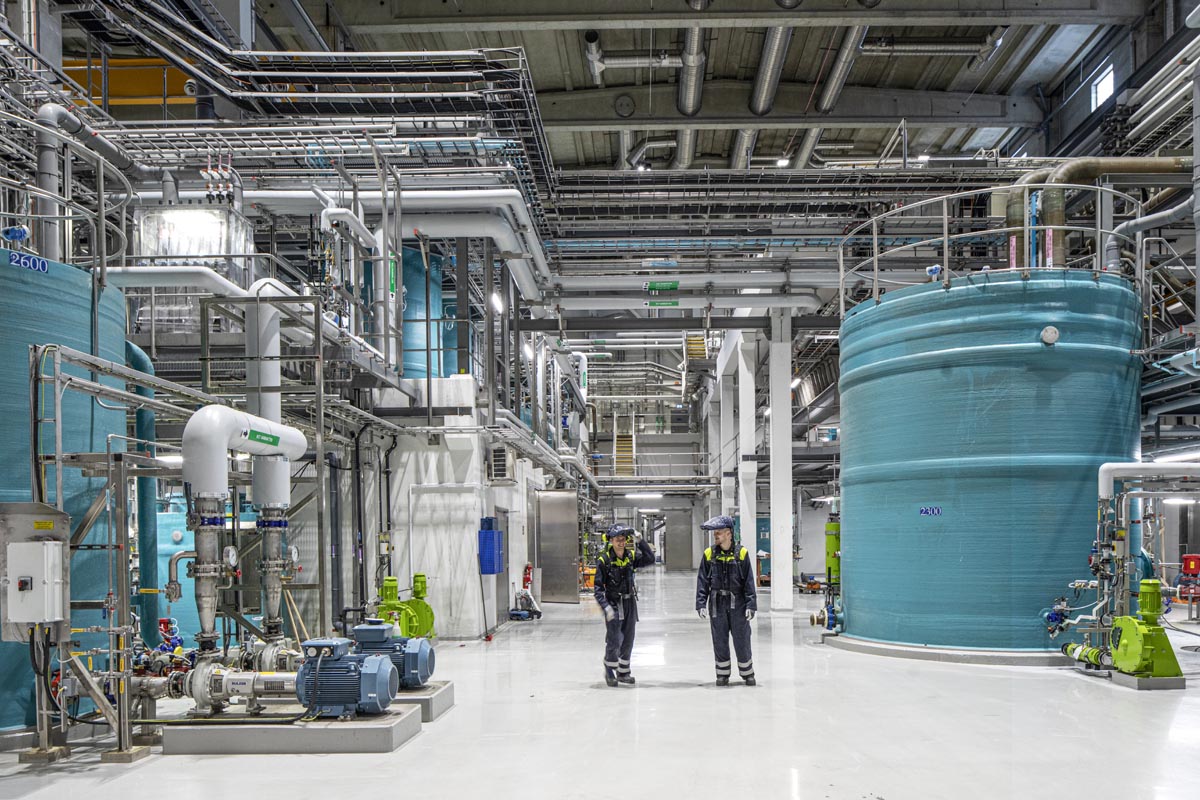
 As the company’s inputs and outputs both return to normal, Boliden is also making efforts to reduce emissions and waste.| Courtesy of Boliden[/caption]
One of the biggest e-scrap smelters in the world boosted its consumption of scrap electronics by 14% last year, achieving the highest number in four years.
Located in northern Sweden, the Rönnskär smelter recycled 83,000 metric tons of e-scrap in 2022, up from 73,000 metric tons the year before, according to a recently published annual and sustainability report from parent company Boliden.
Rönnskär is one of the most advanced copper smelters in the world, with most of its e-scrap feedstock coming from Europe. In 2020, the first year COVID-19's effects were felt worldwide, Boliden tallied its lowest volume of e-scrap consumed in nearly a decade. Last year's e-scrap recycling number was a return to pre-pandemic levels.
In addition to recycling e-scrap, Boliden also processes lead-acid batteries and residuals from various industries. Overall, Boliden recycled about 321,500 tons of recovered materials in 2022, down from 330,400 metric tons in 2021. The recycled input rate in 2022 was 12%, the same as the year before.
For the Rönnskär smelter, specifically, the facility recycled 160,000 metric tons of secondary materials, down 5% from the year before. Of that total in 2022, scrap electronics made up 52%.
It's important to note that recovered materials make up a relatively small percentage of Rönnskär's inputs. In 2022, mined copper concentrate made up 82% of input, with recovered materials making up the remaining 18%. E-scrap's portion of total inputs was 10%.
According to the latest report, the facility in 2022 produced (all tons are metric) 218,000 tons of copper (down 2% from 2021), 12 tons of gold (up 11%), 467 tons of silver (down 3%), 2 tons of palladium concentrate (no 2021 number stated) and 550,000 tons of sulphuric acid (up 4%).
"Lower secondary raw material feed had an impact on copper production at Rönnskär," the report noted.
As the company’s inputs and outputs both return to normal, Boliden is also making efforts to reduce emissions and waste.| Courtesy of Boliden[/caption]
One of the biggest e-scrap smelters in the world boosted its consumption of scrap electronics by 14% last year, achieving the highest number in four years.
Located in northern Sweden, the Rönnskär smelter recycled 83,000 metric tons of e-scrap in 2022, up from 73,000 metric tons the year before, according to a recently published annual and sustainability report from parent company Boliden.
Rönnskär is one of the most advanced copper smelters in the world, with most of its e-scrap feedstock coming from Europe. In 2020, the first year COVID-19's effects were felt worldwide, Boliden tallied its lowest volume of e-scrap consumed in nearly a decade. Last year's e-scrap recycling number was a return to pre-pandemic levels.
In addition to recycling e-scrap, Boliden also processes lead-acid batteries and residuals from various industries. Overall, Boliden recycled about 321,500 tons of recovered materials in 2022, down from 330,400 metric tons in 2021. The recycled input rate in 2022 was 12%, the same as the year before.
For the Rönnskär smelter, specifically, the facility recycled 160,000 metric tons of secondary materials, down 5% from the year before. Of that total in 2022, scrap electronics made up 52%.
It's important to note that recovered materials make up a relatively small percentage of Rönnskär's inputs. In 2022, mined copper concentrate made up 82% of input, with recovered materials making up the remaining 18%. E-scrap's portion of total inputs was 10%.
According to the latest report, the facility in 2022 produced (all tons are metric) 218,000 tons of copper (down 2% from 2021), 12 tons of gold (up 11%), 467 tons of silver (down 3%), 2 tons of palladium concentrate (no 2021 number stated) and 550,000 tons of sulphuric acid (up 4%).
"Lower secondary raw material feed had an impact on copper production at Rönnskär," the report noted.
[caption id="attachment_21366" align="aligncenter" width="1200"] As the company’s inputs and outputs both return to normal, Boliden is also making efforts to reduce emissions and waste.| Courtesy of Boliden[/caption]
One of the biggest e-scrap smelters in the world boosted its consumption of scrap electronics by 14% last year, achieving the highest number in four years.
Located in northern Sweden, the Rönnskär smelter recycled 83,000 metric tons of e-scrap in 2022, up from 73,000 metric tons the year before, according to a recently published annual and sustainability report from parent company Boliden.
Rönnskär is one of the most advanced copper smelters in the world, with most of its e-scrap feedstock coming from Europe. In 2020, the first year COVID-19's effects were felt worldwide, Boliden tallied its lowest volume of e-scrap consumed in nearly a decade. Last year's e-scrap recycling number was a return to pre-pandemic levels.
In addition to recycling e-scrap, Boliden also processes lead-acid batteries and residuals from various industries. Overall, Boliden recycled about 321,500 tons of recovered materials in 2022, down from 330,400 metric tons in 2021. The recycled input rate in 2022 was 12%, the same as the year before.
For the Rönnskär smelter, specifically, the facility recycled 160,000 metric tons of secondary materials, down 5% from the year before. Of that total in 2022, scrap electronics made up 52%.
It's important to note that recovered materials make up a relatively small percentage of Rönnskär's inputs. In 2022, mined copper concentrate made up 82% of input, with recovered materials making up the remaining 18%. E-scrap's portion of total inputs was 10%.
According to the latest report, the facility in 2022 produced (all tons are metric) 218,000 tons of copper (down 2% from 2021), 12 tons of gold (up 11%), 467 tons of silver (down 3%), 2 tons of palladium concentrate (no 2021 number stated) and 550,000 tons of sulphuric acid (up 4%).
"Lower secondary raw material feed had an impact on copper production at Rönnskär," the report noted.
As the company’s inputs and outputs both return to normal, Boliden is also making efforts to reduce emissions and waste.| Courtesy of Boliden[/caption]
One of the biggest e-scrap smelters in the world boosted its consumption of scrap electronics by 14% last year, achieving the highest number in four years.
Located in northern Sweden, the Rönnskär smelter recycled 83,000 metric tons of e-scrap in 2022, up from 73,000 metric tons the year before, according to a recently published annual and sustainability report from parent company Boliden.
Rönnskär is one of the most advanced copper smelters in the world, with most of its e-scrap feedstock coming from Europe. In 2020, the first year COVID-19's effects were felt worldwide, Boliden tallied its lowest volume of e-scrap consumed in nearly a decade. Last year's e-scrap recycling number was a return to pre-pandemic levels.
In addition to recycling e-scrap, Boliden also processes lead-acid batteries and residuals from various industries. Overall, Boliden recycled about 321,500 tons of recovered materials in 2022, down from 330,400 metric tons in 2021. The recycled input rate in 2022 was 12%, the same as the year before.
For the Rönnskär smelter, specifically, the facility recycled 160,000 metric tons of secondary materials, down 5% from the year before. Of that total in 2022, scrap electronics made up 52%.
It's important to note that recovered materials make up a relatively small percentage of Rönnskär's inputs. In 2022, mined copper concentrate made up 82% of input, with recovered materials making up the remaining 18%. E-scrap's portion of total inputs was 10%.
According to the latest report, the facility in 2022 produced (all tons are metric) 218,000 tons of copper (down 2% from 2021), 12 tons of gold (up 11%), 467 tons of silver (down 3%), 2 tons of palladium concentrate (no 2021 number stated) and 550,000 tons of sulphuric acid (up 4%).
"Lower secondary raw material feed had an impact on copper production at Rönnskär," the report noted.
Categories