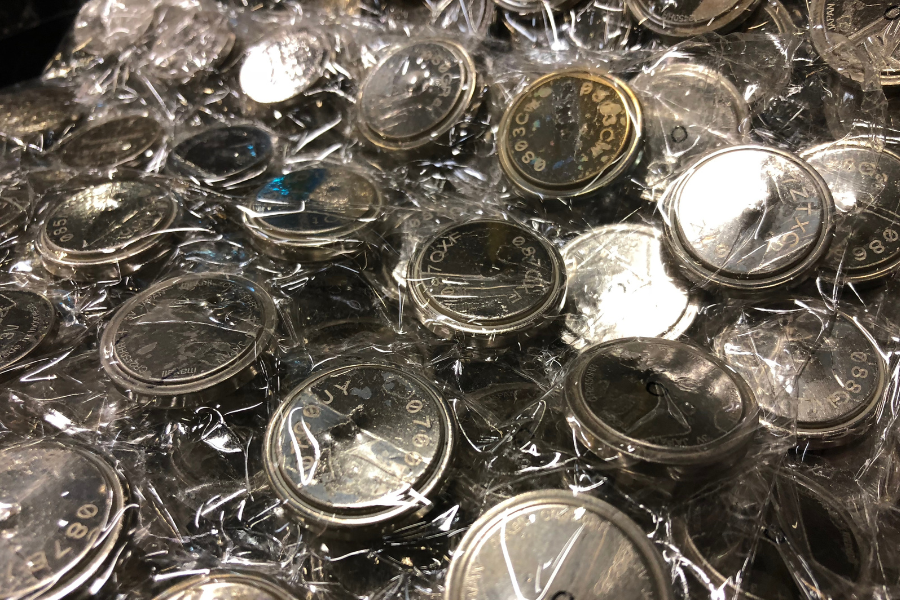
 Lithium primary batteries have a reputation for starting fires. | Courtesy of Sims Lifecycle Services[/caption]
Lithium button cell batteries sparked a small fire at BlueSky Solutions, but an official at the North Carolina e-scrap recycler said workflow changes have been made to prevent future incidents.
Guy Caprioli, director of business operations at Charlotte, N.C.-based BlueSky Solutions, told E-Scrap News that the April 17 fire started with about 14 pounds of lithium primary button cell batteries in an isolated battery staging zone, which limited the impact of the fire.
When workers remove the batteries from circuit boards prior to shipping the boards out for refining, Caprioli said, they are placed in 5-gallon buckets of mineral oil and stored in a designated shipping container in the parking lot.
However, in this case, a small amount of batteries had been removed earlier in the day and placed in a designated staging area but had not yet been placed in mineral oil, a step that is typically done by another team, Caprioli said. He said he suspected that some of the batteries had physical damage that caused them to slowly heat up.
"The root cause was the delay in getting the primary batteries into 5-gallon buckets of mineral oil because of all the additional workflow steps involved in the [standard operating procedure]," Caprioli said. "We have updated our workflow so that all lithium primary button cell batteries collected during the day are packaged in mineral oil by the end of the workday."
Lithium primary batteries have a reputation for starting fires. | Courtesy of Sims Lifecycle Services[/caption]
Lithium button cell batteries sparked a small fire at BlueSky Solutions, but an official at the North Carolina e-scrap recycler said workflow changes have been made to prevent future incidents.
Guy Caprioli, director of business operations at Charlotte, N.C.-based BlueSky Solutions, told E-Scrap News that the April 17 fire started with about 14 pounds of lithium primary button cell batteries in an isolated battery staging zone, which limited the impact of the fire.
When workers remove the batteries from circuit boards prior to shipping the boards out for refining, Caprioli said, they are placed in 5-gallon buckets of mineral oil and stored in a designated shipping container in the parking lot.
However, in this case, a small amount of batteries had been removed earlier in the day and placed in a designated staging area but had not yet been placed in mineral oil, a step that is typically done by another team, Caprioli said. He said he suspected that some of the batteries had physical damage that caused them to slowly heat up.
"The root cause was the delay in getting the primary batteries into 5-gallon buckets of mineral oil because of all the additional workflow steps involved in the [standard operating procedure]," Caprioli said. "We have updated our workflow so that all lithium primary button cell batteries collected during the day are packaged in mineral oil by the end of the workday."
[caption id="attachment_21729" align="aligncenter" width="900"] Lithium primary batteries have a reputation for starting fires. | Courtesy of Sims Lifecycle Services[/caption]
Lithium button cell batteries sparked a small fire at BlueSky Solutions, but an official at the North Carolina e-scrap recycler said workflow changes have been made to prevent future incidents.
Guy Caprioli, director of business operations at Charlotte, N.C.-based BlueSky Solutions, told E-Scrap News that the April 17 fire started with about 14 pounds of lithium primary button cell batteries in an isolated battery staging zone, which limited the impact of the fire.
When workers remove the batteries from circuit boards prior to shipping the boards out for refining, Caprioli said, they are placed in 5-gallon buckets of mineral oil and stored in a designated shipping container in the parking lot.
However, in this case, a small amount of batteries had been removed earlier in the day and placed in a designated staging area but had not yet been placed in mineral oil, a step that is typically done by another team, Caprioli said. He said he suspected that some of the batteries had physical damage that caused them to slowly heat up.
"The root cause was the delay in getting the primary batteries into 5-gallon buckets of mineral oil because of all the additional workflow steps involved in the [standard operating procedure]," Caprioli said. "We have updated our workflow so that all lithium primary button cell batteries collected during the day are packaged in mineral oil by the end of the workday."
Lithium primary batteries have a reputation for starting fires. | Courtesy of Sims Lifecycle Services[/caption]
Lithium button cell batteries sparked a small fire at BlueSky Solutions, but an official at the North Carolina e-scrap recycler said workflow changes have been made to prevent future incidents.
Guy Caprioli, director of business operations at Charlotte, N.C.-based BlueSky Solutions, told E-Scrap News that the April 17 fire started with about 14 pounds of lithium primary button cell batteries in an isolated battery staging zone, which limited the impact of the fire.
When workers remove the batteries from circuit boards prior to shipping the boards out for refining, Caprioli said, they are placed in 5-gallon buckets of mineral oil and stored in a designated shipping container in the parking lot.
However, in this case, a small amount of batteries had been removed earlier in the day and placed in a designated staging area but had not yet been placed in mineral oil, a step that is typically done by another team, Caprioli said. He said he suspected that some of the batteries had physical damage that caused them to slowly heat up.
"The root cause was the delay in getting the primary batteries into 5-gallon buckets of mineral oil because of all the additional workflow steps involved in the [standard operating procedure]," Caprioli said. "We have updated our workflow so that all lithium primary button cell batteries collected during the day are packaged in mineral oil by the end of the workday."
Categories