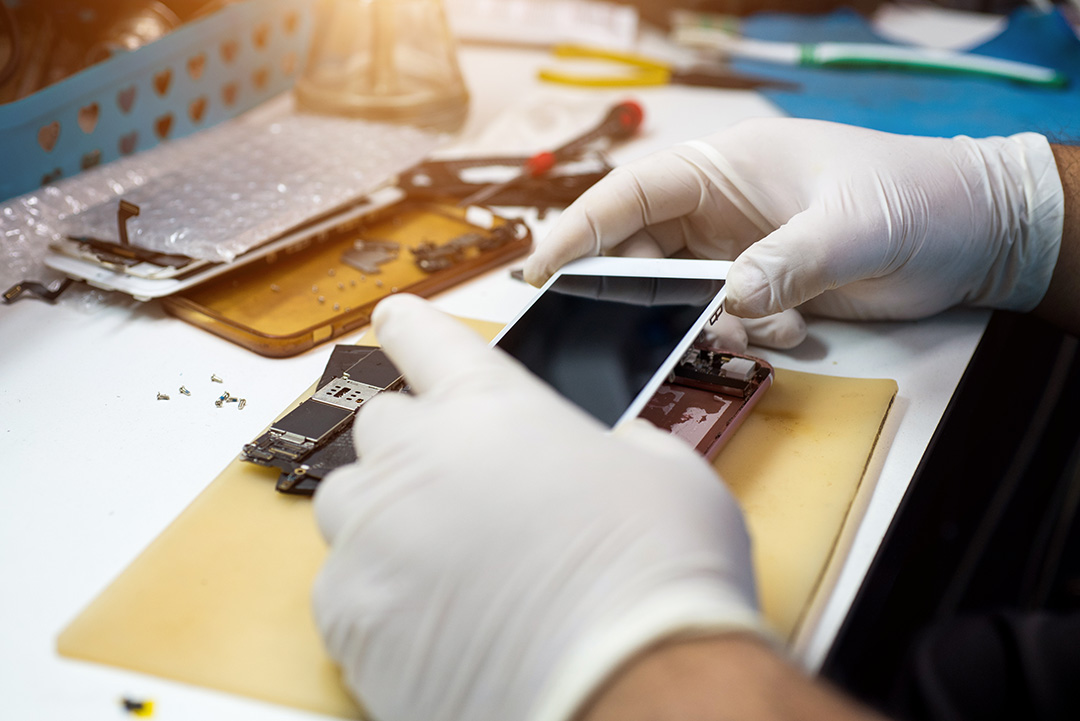
 Apple previously opposed right-to-repair bills in various states, but has seemingly changed its tune in tandem with the passage of California’s law. | PK Studio/Shutterstock[/caption]
Apple supports the concept of federal right-to-repair legislation, and it will voluntarily extend the requirements of California's new repair law to the rest of the U.S., Apple's repair boss said Tuesday.
Speaking during the Oct. 24 broadcast alongside federal officials, including top Biden advisors, Brian Naumann of Apple said the tech behemoth supports a federal right-to-repair law as long as it balances repairability with durability, security and physical safety.
"We think that there would be a real value in establishing a national standard," said Naumann, who is a company vice president and is general manager of Apple's repair business.
Naumann said a federal law should maintain consumer privacy and data and security features, ensure transparency for consumers about the origin of parts used in repairs, and apply prospectively to allow manufacturers to focus on building new products that comply with the requirements, he said.
Although they differ in important ways, including the products they cover, right-to-repair bills generally require OEMs to make available to independent repair shops and consumers the parts, tools and documentation needed to fix devices.
Apple decided to support California's recently signed repair bill, Senate Bill 244. That legislation requires manufacturers to make the repair resources, including software tools, available to independent shops and individual consumers on "fair and reasonable" terms starting July 1, 2024. The law covers TVs, radios, audio or video recorders or playback equipment, video cameras, computers, photocopiers, refrigerators, freezers, ranges, microwave ovens, washers, dryers, dishwashers, trash compactors and air conditioners. It excludes video game consoles and alarm systems.
OEMs aren't required to provide any locks or security bypassess under the legal language, and repair shops must disclose to consumers whether they're an OEM-authorized repair shop and whether they're using any replacement parts not provided by the OEM.
California's was the fourth repair bill to be signed into law in the U.S., after Colorado, Minnesota and New York.
During the event, Naumann also said Apple would voluntarily extend the provisions in California's law to consumers throughout the U.S.
"We intend to honor California's new repair provisions across the United States," he said.
Apple previously opposed right-to-repair bills in various states, but has seemingly changed its tune in tandem with the passage of California’s law. | PK Studio/Shutterstock[/caption]
Apple supports the concept of federal right-to-repair legislation, and it will voluntarily extend the requirements of California's new repair law to the rest of the U.S., Apple's repair boss said Tuesday.
Speaking during the Oct. 24 broadcast alongside federal officials, including top Biden advisors, Brian Naumann of Apple said the tech behemoth supports a federal right-to-repair law as long as it balances repairability with durability, security and physical safety.
"We think that there would be a real value in establishing a national standard," said Naumann, who is a company vice president and is general manager of Apple's repair business.
Naumann said a federal law should maintain consumer privacy and data and security features, ensure transparency for consumers about the origin of parts used in repairs, and apply prospectively to allow manufacturers to focus on building new products that comply with the requirements, he said.
Although they differ in important ways, including the products they cover, right-to-repair bills generally require OEMs to make available to independent repair shops and consumers the parts, tools and documentation needed to fix devices.
Apple decided to support California's recently signed repair bill, Senate Bill 244. That legislation requires manufacturers to make the repair resources, including software tools, available to independent shops and individual consumers on "fair and reasonable" terms starting July 1, 2024. The law covers TVs, radios, audio or video recorders or playback equipment, video cameras, computers, photocopiers, refrigerators, freezers, ranges, microwave ovens, washers, dryers, dishwashers, trash compactors and air conditioners. It excludes video game consoles and alarm systems.
OEMs aren't required to provide any locks or security bypassess under the legal language, and repair shops must disclose to consumers whether they're an OEM-authorized repair shop and whether they're using any replacement parts not provided by the OEM.
California's was the fourth repair bill to be signed into law in the U.S., after Colorado, Minnesota and New York.
During the event, Naumann also said Apple would voluntarily extend the provisions in California's law to consumers throughout the U.S.
"We intend to honor California's new repair provisions across the United States," he said.
[caption id="attachment_10990" align="aligncenter" width="1080"] Apple previously opposed right-to-repair bills in various states, but has seemingly changed its tune in tandem with the passage of California’s law. | PK Studio/Shutterstock[/caption]
Apple supports the concept of federal right-to-repair legislation, and it will voluntarily extend the requirements of California's new repair law to the rest of the U.S., Apple's repair boss said Tuesday.
Speaking during the Oct. 24 broadcast alongside federal officials, including top Biden advisors, Brian Naumann of Apple said the tech behemoth supports a federal right-to-repair law as long as it balances repairability with durability, security and physical safety.
"We think that there would be a real value in establishing a national standard," said Naumann, who is a company vice president and is general manager of Apple's repair business.
Naumann said a federal law should maintain consumer privacy and data and security features, ensure transparency for consumers about the origin of parts used in repairs, and apply prospectively to allow manufacturers to focus on building new products that comply with the requirements, he said.
Although they differ in important ways, including the products they cover, right-to-repair bills generally require OEMs to make available to independent repair shops and consumers the parts, tools and documentation needed to fix devices.
Apple decided to support California's recently signed repair bill, Senate Bill 244. That legislation requires manufacturers to make the repair resources, including software tools, available to independent shops and individual consumers on "fair and reasonable" terms starting July 1, 2024. The law covers TVs, radios, audio or video recorders or playback equipment, video cameras, computers, photocopiers, refrigerators, freezers, ranges, microwave ovens, washers, dryers, dishwashers, trash compactors and air conditioners. It excludes video game consoles and alarm systems.
OEMs aren't required to provide any locks or security bypassess under the legal language, and repair shops must disclose to consumers whether they're an OEM-authorized repair shop and whether they're using any replacement parts not provided by the OEM.
California's was the fourth repair bill to be signed into law in the U.S., after Colorado, Minnesota and New York.
During the event, Naumann also said Apple would voluntarily extend the provisions in California's law to consumers throughout the U.S.
"We intend to honor California's new repair provisions across the United States," he said.
Apple previously opposed right-to-repair bills in various states, but has seemingly changed its tune in tandem with the passage of California’s law. | PK Studio/Shutterstock[/caption]
Apple supports the concept of federal right-to-repair legislation, and it will voluntarily extend the requirements of California's new repair law to the rest of the U.S., Apple's repair boss said Tuesday.
Speaking during the Oct. 24 broadcast alongside federal officials, including top Biden advisors, Brian Naumann of Apple said the tech behemoth supports a federal right-to-repair law as long as it balances repairability with durability, security and physical safety.
"We think that there would be a real value in establishing a national standard," said Naumann, who is a company vice president and is general manager of Apple's repair business.
Naumann said a federal law should maintain consumer privacy and data and security features, ensure transparency for consumers about the origin of parts used in repairs, and apply prospectively to allow manufacturers to focus on building new products that comply with the requirements, he said.
Although they differ in important ways, including the products they cover, right-to-repair bills generally require OEMs to make available to independent repair shops and consumers the parts, tools and documentation needed to fix devices.
Apple decided to support California's recently signed repair bill, Senate Bill 244. That legislation requires manufacturers to make the repair resources, including software tools, available to independent shops and individual consumers on "fair and reasonable" terms starting July 1, 2024. The law covers TVs, radios, audio or video recorders or playback equipment, video cameras, computers, photocopiers, refrigerators, freezers, ranges, microwave ovens, washers, dryers, dishwashers, trash compactors and air conditioners. It excludes video game consoles and alarm systems.
OEMs aren't required to provide any locks or security bypassess under the legal language, and repair shops must disclose to consumers whether they're an OEM-authorized repair shop and whether they're using any replacement parts not provided by the OEM.
California's was the fourth repair bill to be signed into law in the U.S., after Colorado, Minnesota and New York.
During the event, Naumann also said Apple would voluntarily extend the provisions in California's law to consumers throughout the U.S.
"We intend to honor California's new repair provisions across the United States," he said.
Categories