 Panelists at the 2024 E-Scrap Conference provided insight into issues facing e-plastics, and their views on what lies ahead. | Big Wave Productions/Resource Recycling[/caption]
With domestic demand building slowly, U.S. processors must look to industries outside electronics manufacturing to absorb their e-plastics volumes, according to panelists at the recent E-Scrap Conference in Orlando.
Since North America offers little in the way of electronics manufacturers who might buy recycled e-plastics, the automotive sector in Asia and Mexico is a key area of growth, especially for ABS and PP, said panelist Zhan "Bo" Zhang, director of BoMet Polymer Solutions. Japan and South Korea are among the top five countries for automobile production, for example, and they sell to Europe, which has upcoming mandates that new vehicles contain 25% recycled plastics.
Extending U.S. mandates beyond beverage bottles and into other industries could enable e-plastics processors to expand, added Hong Yoon, CEO of Hanil Eco Solutions, based in Southern California.
South Korea has a relatively small and stagnant population and thus a small supply of old vehicles, Yoon said. In addition, Korea does not shred used vehicles, opting instead to sell them to Russia and other countries. As such, Korea has a limited supply of PCR.
Meanwhile, the U.S. has a vast supply of used vehicles destined for shredding, Yoon said: "I want recyclers to understand that the material you're shipping to Malaysia and other parts of Asia will be a strategic resource in the future that you have control of."
Panelists at the 2024 E-Scrap Conference provided insight into issues facing e-plastics, and their views on what lies ahead. | Big Wave Productions/Resource Recycling[/caption]
With domestic demand building slowly, U.S. processors must look to industries outside electronics manufacturing to absorb their e-plastics volumes, according to panelists at the recent E-Scrap Conference in Orlando.
Since North America offers little in the way of electronics manufacturers who might buy recycled e-plastics, the automotive sector in Asia and Mexico is a key area of growth, especially for ABS and PP, said panelist Zhan "Bo" Zhang, director of BoMet Polymer Solutions. Japan and South Korea are among the top five countries for automobile production, for example, and they sell to Europe, which has upcoming mandates that new vehicles contain 25% recycled plastics.
Extending U.S. mandates beyond beverage bottles and into other industries could enable e-plastics processors to expand, added Hong Yoon, CEO of Hanil Eco Solutions, based in Southern California.
South Korea has a relatively small and stagnant population and thus a small supply of old vehicles, Yoon said. In addition, Korea does not shred used vehicles, opting instead to sell them to Russia and other countries. As such, Korea has a limited supply of PCR.
Meanwhile, the U.S. has a vast supply of used vehicles destined for shredding, Yoon said: "I want recyclers to understand that the material you're shipping to Malaysia and other parts of Asia will be a strategic resource in the future that you have control of."
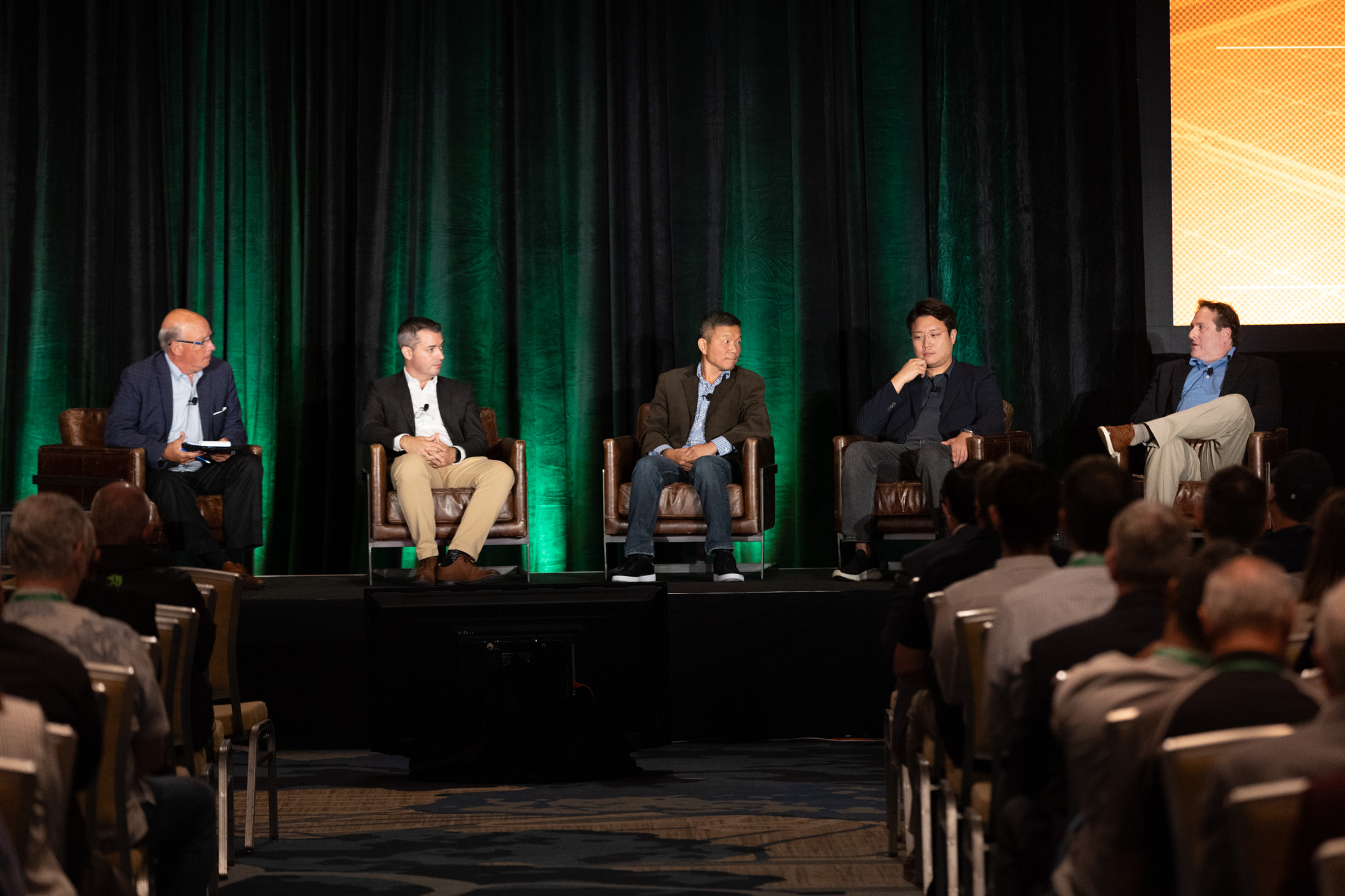
[caption id="attachment_25201" align="aligncenter" width="2000"] Panelists at the 2024 E-Scrap Conference provided insight into issues facing e-plastics, and their views on what lies ahead. | Big Wave Productions/Resource Recycling[/caption]
With domestic demand building slowly, U.S. processors must look to industries outside electronics manufacturing to absorb their e-plastics volumes, according to panelists at the recent E-Scrap Conference in Orlando.
Since North America offers little in the way of electronics manufacturers who might buy recycled e-plastics, the automotive sector in Asia and Mexico is a key area of growth, especially for ABS and PP, said panelist Zhan "Bo" Zhang, director of BoMet Polymer Solutions. Japan and South Korea are among the top five countries for automobile production, for example, and they sell to Europe, which has upcoming mandates that new vehicles contain 25% recycled plastics.
Extending U.S. mandates beyond beverage bottles and into other industries could enable e-plastics processors to expand, added Hong Yoon, CEO of Hanil Eco Solutions, based in Southern California.
South Korea has a relatively small and stagnant population and thus a small supply of old vehicles, Yoon said. In addition, Korea does not shred used vehicles, opting instead to sell them to Russia and other countries. As such, Korea has a limited supply of PCR.
Meanwhile, the U.S. has a vast supply of used vehicles destined for shredding, Yoon said: "I want recyclers to understand that the material you're shipping to Malaysia and other parts of Asia will be a strategic resource in the future that you have control of."
Panelists at the 2024 E-Scrap Conference provided insight into issues facing e-plastics, and their views on what lies ahead. | Big Wave Productions/Resource Recycling[/caption]
With domestic demand building slowly, U.S. processors must look to industries outside electronics manufacturing to absorb their e-plastics volumes, according to panelists at the recent E-Scrap Conference in Orlando.
Since North America offers little in the way of electronics manufacturers who might buy recycled e-plastics, the automotive sector in Asia and Mexico is a key area of growth, especially for ABS and PP, said panelist Zhan "Bo" Zhang, director of BoMet Polymer Solutions. Japan and South Korea are among the top five countries for automobile production, for example, and they sell to Europe, which has upcoming mandates that new vehicles contain 25% recycled plastics.
Extending U.S. mandates beyond beverage bottles and into other industries could enable e-plastics processors to expand, added Hong Yoon, CEO of Hanil Eco Solutions, based in Southern California.
South Korea has a relatively small and stagnant population and thus a small supply of old vehicles, Yoon said. In addition, Korea does not shred used vehicles, opting instead to sell them to Russia and other countries. As such, Korea has a limited supply of PCR.
Meanwhile, the U.S. has a vast supply of used vehicles destined for shredding, Yoon said: "I want recyclers to understand that the material you're shipping to Malaysia and other parts of Asia will be a strategic resource in the future that you have control of."
Categories