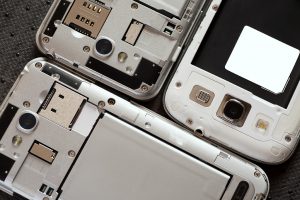
 A lithium-ion battery expert says smartphone reuse trends will hamper the ability to use mobile device batteries as a major source of cobalt.
Hans Eric Melin, managing director of consultancy Creation Inn, recently authored a report on lithium-ion battery recovery.
A lithium-ion battery expert says smartphone reuse trends will hamper the ability to use mobile device batteries as a major source of cobalt.
Hans Eric Melin, managing director of consultancy Creation Inn, recently authored a report on lithium-ion battery recovery.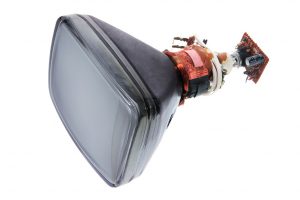 Credit: photosync/Shutterstock[/caption]
For years, India-based electronics manufacturer Videocon has served as a major outlet for recovered CRT glass.
Credit: photosync/Shutterstock[/caption]
For years, India-based electronics manufacturer Videocon has served as a major outlet for recovered CRT glass. Credit: donvictorio/Shutterstock[/caption]
An e-scrap processor is refuting allegations by Basel Action Network that the company shipped a broken monitor to Asia.
Basel Action Network (BAN), a Seattle-based watchdog group,
Credit: donvictorio/Shutterstock[/caption]
An e-scrap processor is refuting allegations by Basel Action Network that the company shipped a broken monitor to Asia.
Basel Action Network (BAN), a Seattle-based watchdog group,  Credit: lightrain/Shutterstock[/caption]
Four e-scrap companies have issued statements after being tagged by the Basel Action Network for allegedly exporting scrap printers and LCD monitors.
Seattle-based Basel Action Network (BAN)
Credit: lightrain/Shutterstock[/caption]
Four e-scrap companies have issued statements after being tagged by the Basel Action Network for allegedly exporting scrap printers and LCD monitors.
Seattle-based Basel Action Network (BAN)  Basel Action Network, which has been using GPS trackers to follow used electronics, today named six companies it says were involved in shipping scrap printers and LCD monitors to Asia.
The Seattle-based advocacy group today
Basel Action Network, which has been using GPS trackers to follow used electronics, today named six companies it says were involved in shipping scrap printers and LCD monitors to Asia.
The Seattle-based advocacy group today  This story has been updated
A new waste management plan in the Netherlands has forced Jansen Recycling, a Dutch outlet for U.S. CRT glass, to discontinue accepting material from its suppliers.
The national government's plan, known as LAP3, went into effect Dec. 28 and prohibits the use of CRT glass in concrete products.
This story has been updated
A new waste management plan in the Netherlands has forced Jansen Recycling, a Dutch outlet for U.S. CRT glass, to discontinue accepting material from its suppliers.
The national government's plan, known as LAP3, went into effect Dec. 28 and prohibits the use of CRT glass in concrete products. Joe Pickard speaks at the Resource Recycling Conference.[/caption]
Ferrous and non-ferrous metals recovered from electronics and other sources have been volatile of late.
Joe Pickard speaks at the Resource Recycling Conference.[/caption]
Ferrous and non-ferrous metals recovered from electronics and other sources have been volatile of late. John Lingelbach[/caption]
The Basel Action Network (BAN) has
John Lingelbach[/caption]
The Basel Action Network (BAN) has  Seven e-scrap entities have been accused of questionable downstream practices by the Basel Action Network, after tracking devices showed they were involved in moving materials that were eventually exported to developing countries.
Named in Basel Action Network's (BAN)
Seven e-scrap entities have been accused of questionable downstream practices by the Basel Action Network, after tracking devices showed they were involved in moving materials that were eventually exported to developing countries.
Named in Basel Action Network's (BAN)