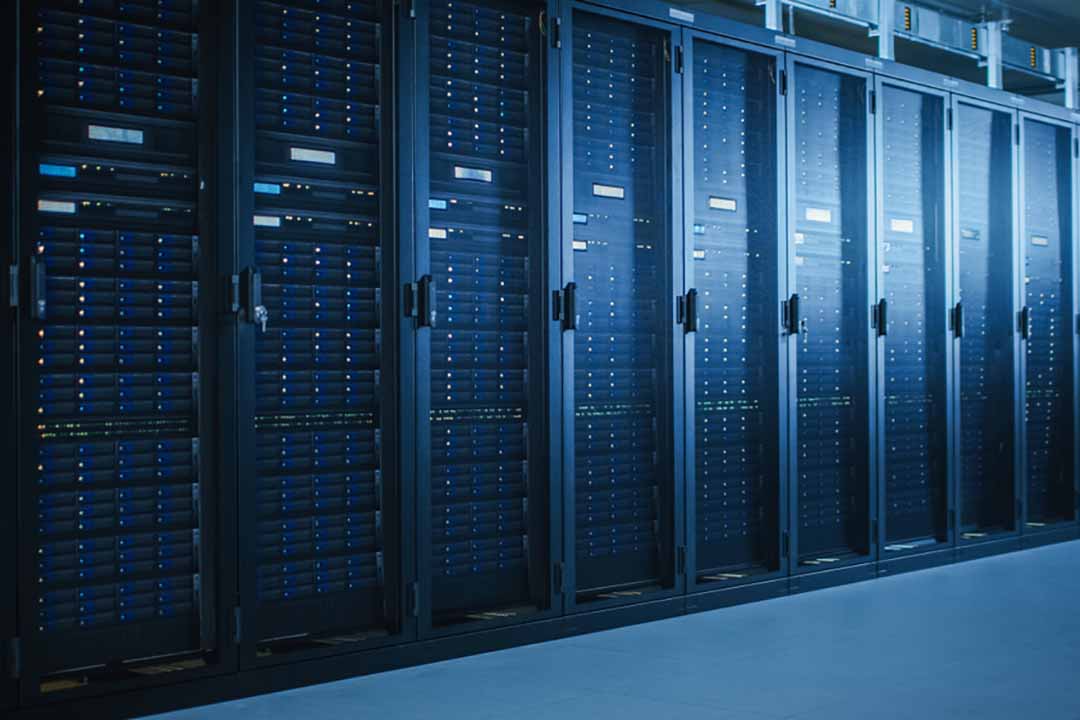
 Sims Lifecycle Services saw a 13.9% increase in cloud volumes recycled during the 2020 fiscal year. | Gorodenkoff/Shutterstock[/caption]
Sims Lifecycle Services secured four additional cloud customers during the last fiscal year, helping to boost its data center decommissioning volume to 24,600 metric tons.
Sims Limited, parent company for the ITAD company, on Aug. 18 released financial and performance data for its 2020 fiscal year (July 1, 2019 through June 30, 2020). Reports from the Australia-traded company show how a slimmed-down Sims Lifecycle Services (SLS) has boosted its profit margin by re-focusing on data center decommissioning.
Last year, SLS (formerly known as Sims Recycling Solutions) brought in 408 million Australian dollars in revenue (about $295 million; all dollar figures below in U.S. dollars), down 45% from the prior fiscal year. Its underlying earnings before interest and taxes (EBIT) were $12.2 million, down 35% from 2019.
The decrease was because Sims sold a number of its European e-scrap recycling operations last year, shrinking the company's e-scrap presence considerably. On Sept. 30, 2019, the company sold facilities in Austria, Belgium, Germany, the Netherlands and Sweden to Germany-headquartered TSR Recycling. Those plants are focused on recycling end-of-life devices received through extended producer responsibility (EPR) programs. Sims executives have said they pivoted the business to focus on ITAD services and data center decommissioning.
According to a Sims year-end report, normalizing the 2019 fiscal year to exclude for the nine months of disposed operations, fiscal year 2020 sales revenues were actually higher by 6.9%. Additionally, the fiscal year 2020 EBIT margin was 4.1%, up from 3.5% during the 2019 fiscal year.
The profit margin was higher for a couple of reasons, according to the report: higher precious metals prices (see related story) and a 13.9% increase in cloud volumes recycled during the 2020 fiscal year.
Still, with parent company Sims Limited facing lower scrap metal prices and COVID-19 shutdowns during the 2020 fiscal year, the company reduced staff around the world, including at SLS sites. SLS had 919 employees during the 2020 fiscal year, down from 990 the previous year (this 2019 number excludes the 360 employees that were transferred to TSR with the sale of the European operations), according to a Sims presentation.
Sims Lifecycle Services saw a 13.9% increase in cloud volumes recycled during the 2020 fiscal year. | Gorodenkoff/Shutterstock[/caption]
Sims Lifecycle Services secured four additional cloud customers during the last fiscal year, helping to boost its data center decommissioning volume to 24,600 metric tons.
Sims Limited, parent company for the ITAD company, on Aug. 18 released financial and performance data for its 2020 fiscal year (July 1, 2019 through June 30, 2020). Reports from the Australia-traded company show how a slimmed-down Sims Lifecycle Services (SLS) has boosted its profit margin by re-focusing on data center decommissioning.
Last year, SLS (formerly known as Sims Recycling Solutions) brought in 408 million Australian dollars in revenue (about $295 million; all dollar figures below in U.S. dollars), down 45% from the prior fiscal year. Its underlying earnings before interest and taxes (EBIT) were $12.2 million, down 35% from 2019.
The decrease was because Sims sold a number of its European e-scrap recycling operations last year, shrinking the company's e-scrap presence considerably. On Sept. 30, 2019, the company sold facilities in Austria, Belgium, Germany, the Netherlands and Sweden to Germany-headquartered TSR Recycling. Those plants are focused on recycling end-of-life devices received through extended producer responsibility (EPR) programs. Sims executives have said they pivoted the business to focus on ITAD services and data center decommissioning.
According to a Sims year-end report, normalizing the 2019 fiscal year to exclude for the nine months of disposed operations, fiscal year 2020 sales revenues were actually higher by 6.9%. Additionally, the fiscal year 2020 EBIT margin was 4.1%, up from 3.5% during the 2019 fiscal year.
The profit margin was higher for a couple of reasons, according to the report: higher precious metals prices (see related story) and a 13.9% increase in cloud volumes recycled during the 2020 fiscal year.
Still, with parent company Sims Limited facing lower scrap metal prices and COVID-19 shutdowns during the 2020 fiscal year, the company reduced staff around the world, including at SLS sites. SLS had 919 employees during the 2020 fiscal year, down from 990 the previous year (this 2019 number excludes the 360 employees that were transferred to TSR with the sale of the European operations), according to a Sims presentation.
[caption id="attachment_14304" align="aligncenter" width="1080"] Sims Lifecycle Services saw a 13.9% increase in cloud volumes recycled during the 2020 fiscal year. | Gorodenkoff/Shutterstock[/caption]
Sims Lifecycle Services secured four additional cloud customers during the last fiscal year, helping to boost its data center decommissioning volume to 24,600 metric tons.
Sims Limited, parent company for the ITAD company, on Aug. 18 released financial and performance data for its 2020 fiscal year (July 1, 2019 through June 30, 2020). Reports from the Australia-traded company show how a slimmed-down Sims Lifecycle Services (SLS) has boosted its profit margin by re-focusing on data center decommissioning.
Last year, SLS (formerly known as Sims Recycling Solutions) brought in 408 million Australian dollars in revenue (about $295 million; all dollar figures below in U.S. dollars), down 45% from the prior fiscal year. Its underlying earnings before interest and taxes (EBIT) were $12.2 million, down 35% from 2019.
The decrease was because Sims sold a number of its European e-scrap recycling operations last year, shrinking the company's e-scrap presence considerably. On Sept. 30, 2019, the company sold facilities in Austria, Belgium, Germany, the Netherlands and Sweden to Germany-headquartered TSR Recycling. Those plants are focused on recycling end-of-life devices received through extended producer responsibility (EPR) programs. Sims executives have said they pivoted the business to focus on ITAD services and data center decommissioning.
According to a Sims year-end report, normalizing the 2019 fiscal year to exclude for the nine months of disposed operations, fiscal year 2020 sales revenues were actually higher by 6.9%. Additionally, the fiscal year 2020 EBIT margin was 4.1%, up from 3.5% during the 2019 fiscal year.
The profit margin was higher for a couple of reasons, according to the report: higher precious metals prices (see related story) and a 13.9% increase in cloud volumes recycled during the 2020 fiscal year.
Still, with parent company Sims Limited facing lower scrap metal prices and COVID-19 shutdowns during the 2020 fiscal year, the company reduced staff around the world, including at SLS sites. SLS had 919 employees during the 2020 fiscal year, down from 990 the previous year (this 2019 number excludes the 360 employees that were transferred to TSR with the sale of the European operations), according to a Sims presentation.
Sims Lifecycle Services saw a 13.9% increase in cloud volumes recycled during the 2020 fiscal year. | Gorodenkoff/Shutterstock[/caption]
Sims Lifecycle Services secured four additional cloud customers during the last fiscal year, helping to boost its data center decommissioning volume to 24,600 metric tons.
Sims Limited, parent company for the ITAD company, on Aug. 18 released financial and performance data for its 2020 fiscal year (July 1, 2019 through June 30, 2020). Reports from the Australia-traded company show how a slimmed-down Sims Lifecycle Services (SLS) has boosted its profit margin by re-focusing on data center decommissioning.
Last year, SLS (formerly known as Sims Recycling Solutions) brought in 408 million Australian dollars in revenue (about $295 million; all dollar figures below in U.S. dollars), down 45% from the prior fiscal year. Its underlying earnings before interest and taxes (EBIT) were $12.2 million, down 35% from 2019.
The decrease was because Sims sold a number of its European e-scrap recycling operations last year, shrinking the company's e-scrap presence considerably. On Sept. 30, 2019, the company sold facilities in Austria, Belgium, Germany, the Netherlands and Sweden to Germany-headquartered TSR Recycling. Those plants are focused on recycling end-of-life devices received through extended producer responsibility (EPR) programs. Sims executives have said they pivoted the business to focus on ITAD services and data center decommissioning.
According to a Sims year-end report, normalizing the 2019 fiscal year to exclude for the nine months of disposed operations, fiscal year 2020 sales revenues were actually higher by 6.9%. Additionally, the fiscal year 2020 EBIT margin was 4.1%, up from 3.5% during the 2019 fiscal year.
The profit margin was higher for a couple of reasons, according to the report: higher precious metals prices (see related story) and a 13.9% increase in cloud volumes recycled during the 2020 fiscal year.
Still, with parent company Sims Limited facing lower scrap metal prices and COVID-19 shutdowns during the 2020 fiscal year, the company reduced staff around the world, including at SLS sites. SLS had 919 employees during the 2020 fiscal year, down from 990 the previous year (this 2019 number excludes the 360 employees that were transferred to TSR with the sale of the European operations), according to a Sims presentation.
Categories