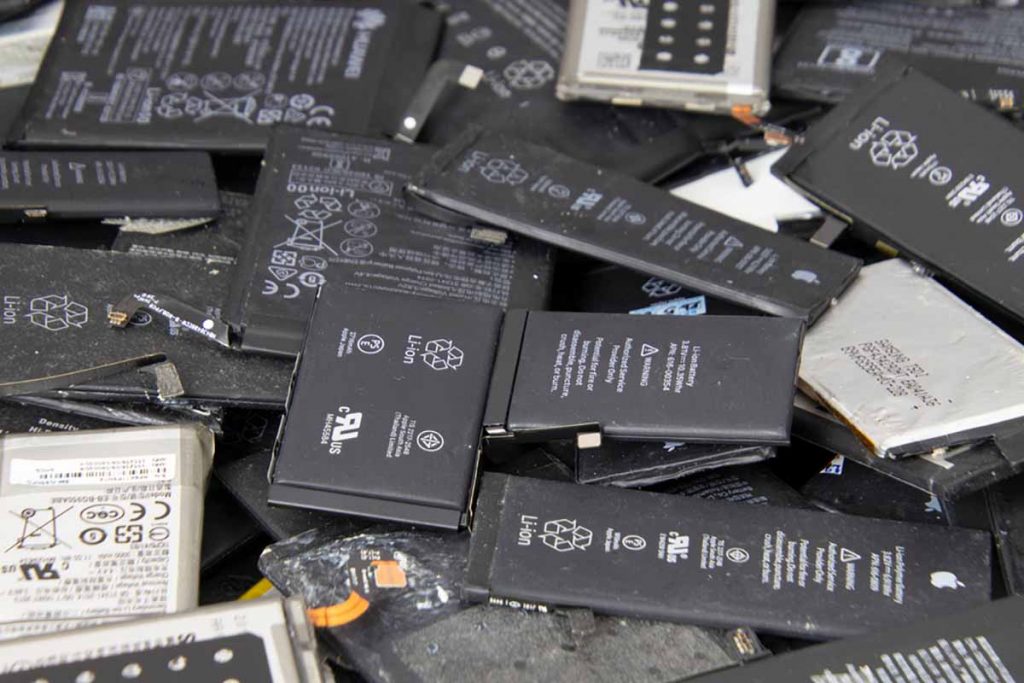
 Closing The Loop's project accumulated about 11,000 pounds of batteries, primarily from mobile phones. | Orapruek/Shutterstock[/caption]
Leaders of an effort to recycle mobile phone batteries collected from West Africa recently outlined challenges and successes during their 18-month pilot project.
Closing the Loop, an Amsterdam-based company with e-scrap collection networks set up throughout Africa, provides an "offset" service for wireless industry stakeholders. Under this system, Closing the Loop facilitates collection of end-of-life phones based on the number of new ones put on the market by its customers.
In late 2017, Closing the Loop set its sights on additional types of e-scrap to collect in this fashion, starting with mobile phone batteries. The company launched a pilot project with Dutch device producer Fairphone, aiming to collect batteries from West Africa and transport them to countries with adequate processing infrastructure.
This is similar to the mobile phone "offset" service, but batteries have until now been excluded from the service "because of the extra care that needs to be taken due to their hazardous nature," Closing the Loop wrote in a recent report covering the project.
The pilot collection program kicked off in Nigeria in 2018 and continued through April 2020.
Closing the Loop worked with Verde Impacto, a Nigerian environmental services company, to facilitate local collection of batteries. Verde Impacto worked with the informal collection sector to source batteries, and local e-scrap firm Hinckley Recycling oversaw regulatory compliance for transportation and shipping.
Throughout the 18 months of collection, the project accumulated about 11,000 pounds of batteries, primarily from mobile phones. The total also included a small quantity of laptop batteries. The batteries were delivered to a partner recycling company in Belgium.
"A key difference between phones and batteries was the extra complication related to shipping batteries, as well as the negative value of the waste," Closing the Loop wrote in the report.
Closing The Loop's project accumulated about 11,000 pounds of batteries, primarily from mobile phones. | Orapruek/Shutterstock[/caption]
Leaders of an effort to recycle mobile phone batteries collected from West Africa recently outlined challenges and successes during their 18-month pilot project.
Closing the Loop, an Amsterdam-based company with e-scrap collection networks set up throughout Africa, provides an "offset" service for wireless industry stakeholders. Under this system, Closing the Loop facilitates collection of end-of-life phones based on the number of new ones put on the market by its customers.
In late 2017, Closing the Loop set its sights on additional types of e-scrap to collect in this fashion, starting with mobile phone batteries. The company launched a pilot project with Dutch device producer Fairphone, aiming to collect batteries from West Africa and transport them to countries with adequate processing infrastructure.
This is similar to the mobile phone "offset" service, but batteries have until now been excluded from the service "because of the extra care that needs to be taken due to their hazardous nature," Closing the Loop wrote in a recent report covering the project.
The pilot collection program kicked off in Nigeria in 2018 and continued through April 2020.
Closing the Loop worked with Verde Impacto, a Nigerian environmental services company, to facilitate local collection of batteries. Verde Impacto worked with the informal collection sector to source batteries, and local e-scrap firm Hinckley Recycling oversaw regulatory compliance for transportation and shipping.
Throughout the 18 months of collection, the project accumulated about 11,000 pounds of batteries, primarily from mobile phones. The total also included a small quantity of laptop batteries. The batteries were delivered to a partner recycling company in Belgium.
"A key difference between phones and batteries was the extra complication related to shipping batteries, as well as the negative value of the waste," Closing the Loop wrote in the report.
[caption id="attachment_14731" align="aligncenter" width="900"] Closing The Loop's project accumulated about 11,000 pounds of batteries, primarily from mobile phones. | Orapruek/Shutterstock[/caption]
Leaders of an effort to recycle mobile phone batteries collected from West Africa recently outlined challenges and successes during their 18-month pilot project.
Closing the Loop, an Amsterdam-based company with e-scrap collection networks set up throughout Africa, provides an "offset" service for wireless industry stakeholders. Under this system, Closing the Loop facilitates collection of end-of-life phones based on the number of new ones put on the market by its customers.
In late 2017, Closing the Loop set its sights on additional types of e-scrap to collect in this fashion, starting with mobile phone batteries. The company launched a pilot project with Dutch device producer Fairphone, aiming to collect batteries from West Africa and transport them to countries with adequate processing infrastructure.
This is similar to the mobile phone "offset" service, but batteries have until now been excluded from the service "because of the extra care that needs to be taken due to their hazardous nature," Closing the Loop wrote in a recent report covering the project.
The pilot collection program kicked off in Nigeria in 2018 and continued through April 2020.
Closing the Loop worked with Verde Impacto, a Nigerian environmental services company, to facilitate local collection of batteries. Verde Impacto worked with the informal collection sector to source batteries, and local e-scrap firm Hinckley Recycling oversaw regulatory compliance for transportation and shipping.
Throughout the 18 months of collection, the project accumulated about 11,000 pounds of batteries, primarily from mobile phones. The total also included a small quantity of laptop batteries. The batteries were delivered to a partner recycling company in Belgium.
"A key difference between phones and batteries was the extra complication related to shipping batteries, as well as the negative value of the waste," Closing the Loop wrote in the report.
Closing The Loop's project accumulated about 11,000 pounds of batteries, primarily from mobile phones. | Orapruek/Shutterstock[/caption]
Leaders of an effort to recycle mobile phone batteries collected from West Africa recently outlined challenges and successes during their 18-month pilot project.
Closing the Loop, an Amsterdam-based company with e-scrap collection networks set up throughout Africa, provides an "offset" service for wireless industry stakeholders. Under this system, Closing the Loop facilitates collection of end-of-life phones based on the number of new ones put on the market by its customers.
In late 2017, Closing the Loop set its sights on additional types of e-scrap to collect in this fashion, starting with mobile phone batteries. The company launched a pilot project with Dutch device producer Fairphone, aiming to collect batteries from West Africa and transport them to countries with adequate processing infrastructure.
This is similar to the mobile phone "offset" service, but batteries have until now been excluded from the service "because of the extra care that needs to be taken due to their hazardous nature," Closing the Loop wrote in a recent report covering the project.
The pilot collection program kicked off in Nigeria in 2018 and continued through April 2020.
Closing the Loop worked with Verde Impacto, a Nigerian environmental services company, to facilitate local collection of batteries. Verde Impacto worked with the informal collection sector to source batteries, and local e-scrap firm Hinckley Recycling oversaw regulatory compliance for transportation and shipping.
Throughout the 18 months of collection, the project accumulated about 11,000 pounds of batteries, primarily from mobile phones. The total also included a small quantity of laptop batteries. The batteries were delivered to a partner recycling company in Belgium.
"A key difference between phones and batteries was the extra complication related to shipping batteries, as well as the negative value of the waste," Closing the Loop wrote in the report.
Categories