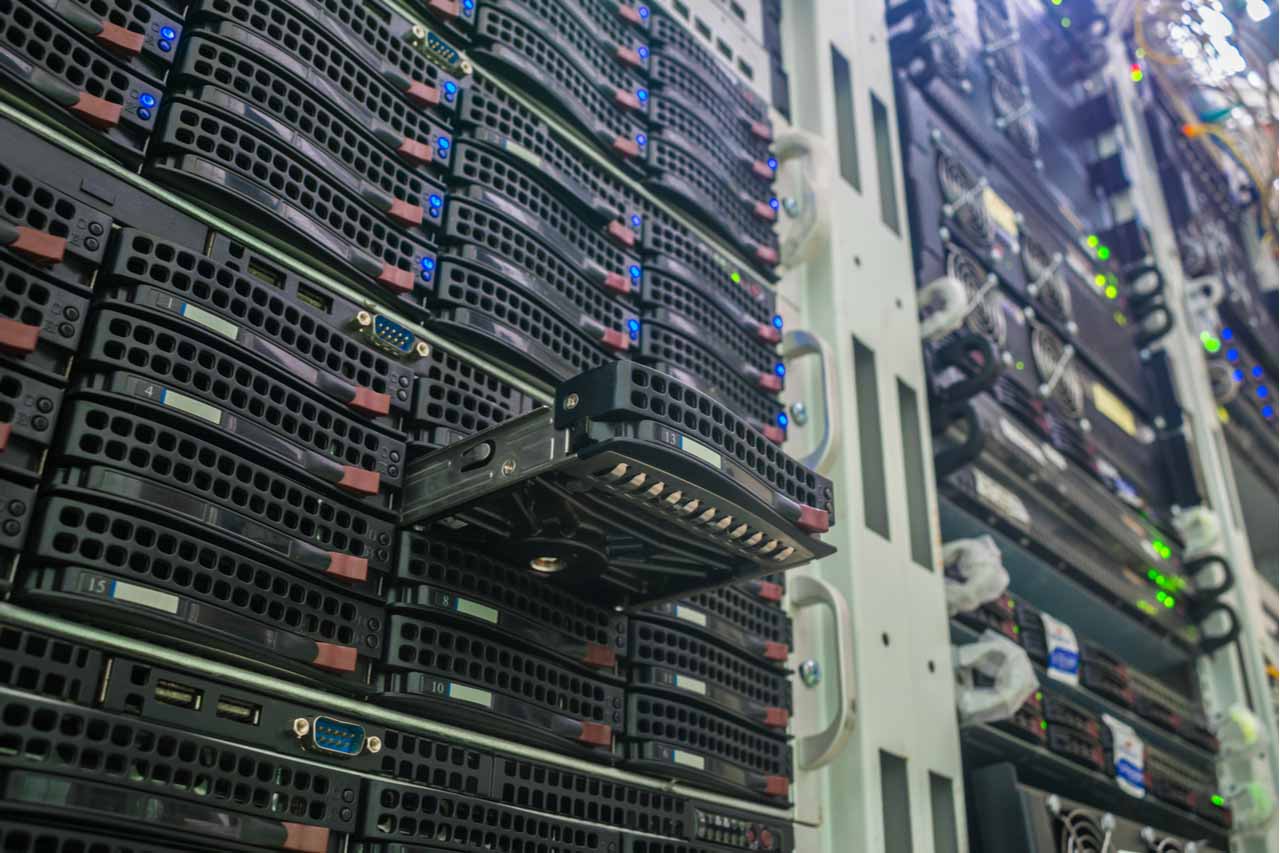
 Sims' drive into the cloud was slowed by the coronavirus pandemic last year. | Maximumm/Shutterstock[/caption]
Sims Lifecycle Services enjoyed a year-over-year profit boost in the latter half of 2020, although COVID-19 slowed the company's push to recycle materials associated with cloud computing.
During the second half of calendar year 2020, Sims Lifecycle Services brought in 6.8 million Australian dollars (nearly $5.3 million; all dollar figures below converted to U.S. dollars) in underlying earnings before interest and taxes (EBIT).
That number was down substantially from the second half of 2019, but that's because the third quarter 2019 results included a number of European e-scrap recycling businesses that Sims later sold in a $93 million deal. Comparing the results of ITAD businesses Sims owned then and now, the EBIT increased from about $620,000 in the second half of 2019 to $5.3 million in the second half of 2020, or an increase of about 750%.
On Sept. 30, 2019, Sims Limited, parent company for Sims Lifecycle Services, sold European operations that were oriented toward recycling e-scrap regulated by extended producer responsibility programs. The move was part of Sims Limited's pivot away from e-scrap and toward providing ITAD services, including for data centers. Last year, Sims Limited, parent company for Sims Lifecycle Services (SLS), reported that the push into decommissioning cloud computer equipment was helping to boost profit margins.
Sims' drive into the cloud was slowed by the coronavirus pandemic last year. | Maximumm/Shutterstock[/caption]
Sims Lifecycle Services enjoyed a year-over-year profit boost in the latter half of 2020, although COVID-19 slowed the company's push to recycle materials associated with cloud computing.
During the second half of calendar year 2020, Sims Lifecycle Services brought in 6.8 million Australian dollars (nearly $5.3 million; all dollar figures below converted to U.S. dollars) in underlying earnings before interest and taxes (EBIT).
That number was down substantially from the second half of 2019, but that's because the third quarter 2019 results included a number of European e-scrap recycling businesses that Sims later sold in a $93 million deal. Comparing the results of ITAD businesses Sims owned then and now, the EBIT increased from about $620,000 in the second half of 2019 to $5.3 million in the second half of 2020, or an increase of about 750%.
On Sept. 30, 2019, Sims Limited, parent company for Sims Lifecycle Services, sold European operations that were oriented toward recycling e-scrap regulated by extended producer responsibility programs. The move was part of Sims Limited's pivot away from e-scrap and toward providing ITAD services, including for data centers. Last year, Sims Limited, parent company for Sims Lifecycle Services (SLS), reported that the push into decommissioning cloud computer equipment was helping to boost profit margins.
[caption id="attachment_14089" align="aligncenter" width="1280"] Sims' drive into the cloud was slowed by the coronavirus pandemic last year. | Maximumm/Shutterstock[/caption]
Sims Lifecycle Services enjoyed a year-over-year profit boost in the latter half of 2020, although COVID-19 slowed the company's push to recycle materials associated with cloud computing.
During the second half of calendar year 2020, Sims Lifecycle Services brought in 6.8 million Australian dollars (nearly $5.3 million; all dollar figures below converted to U.S. dollars) in underlying earnings before interest and taxes (EBIT).
That number was down substantially from the second half of 2019, but that's because the third quarter 2019 results included a number of European e-scrap recycling businesses that Sims later sold in a $93 million deal. Comparing the results of ITAD businesses Sims owned then and now, the EBIT increased from about $620,000 in the second half of 2019 to $5.3 million in the second half of 2020, or an increase of about 750%.
On Sept. 30, 2019, Sims Limited, parent company for Sims Lifecycle Services, sold European operations that were oriented toward recycling e-scrap regulated by extended producer responsibility programs. The move was part of Sims Limited's pivot away from e-scrap and toward providing ITAD services, including for data centers. Last year, Sims Limited, parent company for Sims Lifecycle Services (SLS), reported that the push into decommissioning cloud computer equipment was helping to boost profit margins.
Sims' drive into the cloud was slowed by the coronavirus pandemic last year. | Maximumm/Shutterstock[/caption]
Sims Lifecycle Services enjoyed a year-over-year profit boost in the latter half of 2020, although COVID-19 slowed the company's push to recycle materials associated with cloud computing.
During the second half of calendar year 2020, Sims Lifecycle Services brought in 6.8 million Australian dollars (nearly $5.3 million; all dollar figures below converted to U.S. dollars) in underlying earnings before interest and taxes (EBIT).
That number was down substantially from the second half of 2019, but that's because the third quarter 2019 results included a number of European e-scrap recycling businesses that Sims later sold in a $93 million deal. Comparing the results of ITAD businesses Sims owned then and now, the EBIT increased from about $620,000 in the second half of 2019 to $5.3 million in the second half of 2020, or an increase of about 750%.
On Sept. 30, 2019, Sims Limited, parent company for Sims Lifecycle Services, sold European operations that were oriented toward recycling e-scrap regulated by extended producer responsibility programs. The move was part of Sims Limited's pivot away from e-scrap and toward providing ITAD services, including for data centers. Last year, Sims Limited, parent company for Sims Lifecycle Services (SLS), reported that the push into decommissioning cloud computer equipment was helping to boost profit margins.
Categories