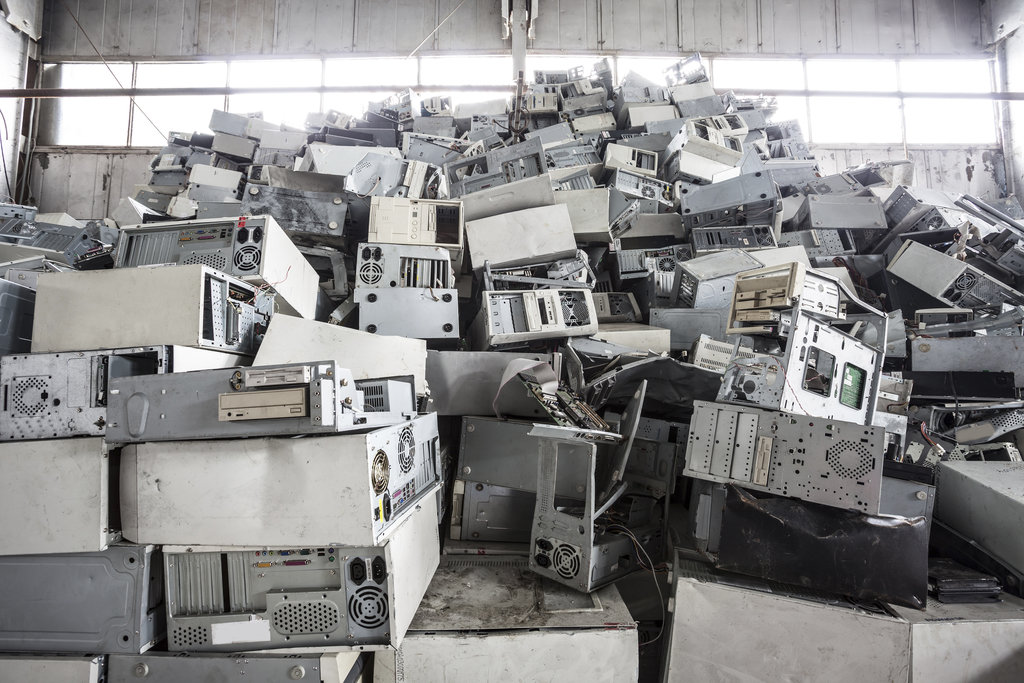
 A United Nations University study found e-scrap generation fell during the pandemic, but the decrease varied by region. | chistoprudov dmitriy / Shutterstock[/caption]
COVID-19 caused global consumption of electronics and electrical appliances to fall by about 6.4%, which likely means the planet will witness a dip in e-scrap generation, according to new report estimates.
The United Nations University (UNU) Sustainable Cycles programme (SCYCLE) and United Nations Institute for Training and Research (UNITAR) earlier this month released the results of its research on the effects of the pandemic on electronics and appliance purchases during the first three quarters of 2020.
Examining global trade data, researchers estimated that worldwide consumption fell by about 4.9 million metric tons, compared with a theoretical "business-as-usual" scenario in which the pandemic never happened. That's a drop of about 6.4%.
But the decrease varied drastically in different regions. The report's authors, Kees Baldé of UNU and Ruediger Kuehr of UNU SCYCLE and UNITAR, noted the implications for global disparities in access to technology.
"The so-called digital divide is increasing," Kuehr stated in a press release. "The ability to adapt to digitisation and earn a living or simply to own and benefit from electronics is decreasing in some parts of the world. COVID-19 also revealed a digital divide in high-income countries, where many poor are left behind."
A United Nations University study found e-scrap generation fell during the pandemic, but the decrease varied by region. | chistoprudov dmitriy / Shutterstock[/caption]
COVID-19 caused global consumption of electronics and electrical appliances to fall by about 6.4%, which likely means the planet will witness a dip in e-scrap generation, according to new report estimates.
The United Nations University (UNU) Sustainable Cycles programme (SCYCLE) and United Nations Institute for Training and Research (UNITAR) earlier this month released the results of its research on the effects of the pandemic on electronics and appliance purchases during the first three quarters of 2020.
Examining global trade data, researchers estimated that worldwide consumption fell by about 4.9 million metric tons, compared with a theoretical "business-as-usual" scenario in which the pandemic never happened. That's a drop of about 6.4%.
But the decrease varied drastically in different regions. The report's authors, Kees Baldé of UNU and Ruediger Kuehr of UNU SCYCLE and UNITAR, noted the implications for global disparities in access to technology.
"The so-called digital divide is increasing," Kuehr stated in a press release. "The ability to adapt to digitisation and earn a living or simply to own and benefit from electronics is decreasing in some parts of the world. COVID-19 also revealed a digital divide in high-income countries, where many poor are left behind."
[caption id="attachment_1283" align="aligncenter" width="1024"] A United Nations University study found e-scrap generation fell during the pandemic, but the decrease varied by region. | chistoprudov dmitriy / Shutterstock[/caption]
COVID-19 caused global consumption of electronics and electrical appliances to fall by about 6.4%, which likely means the planet will witness a dip in e-scrap generation, according to new report estimates.
The United Nations University (UNU) Sustainable Cycles programme (SCYCLE) and United Nations Institute for Training and Research (UNITAR) earlier this month released the results of its research on the effects of the pandemic on electronics and appliance purchases during the first three quarters of 2020.
Examining global trade data, researchers estimated that worldwide consumption fell by about 4.9 million metric tons, compared with a theoretical "business-as-usual" scenario in which the pandemic never happened. That's a drop of about 6.4%.
But the decrease varied drastically in different regions. The report's authors, Kees Baldé of UNU and Ruediger Kuehr of UNU SCYCLE and UNITAR, noted the implications for global disparities in access to technology.
"The so-called digital divide is increasing," Kuehr stated in a press release. "The ability to adapt to digitisation and earn a living or simply to own and benefit from electronics is decreasing in some parts of the world. COVID-19 also revealed a digital divide in high-income countries, where many poor are left behind."
A United Nations University study found e-scrap generation fell during the pandemic, but the decrease varied by region. | chistoprudov dmitriy / Shutterstock[/caption]
COVID-19 caused global consumption of electronics and electrical appliances to fall by about 6.4%, which likely means the planet will witness a dip in e-scrap generation, according to new report estimates.
The United Nations University (UNU) Sustainable Cycles programme (SCYCLE) and United Nations Institute for Training and Research (UNITAR) earlier this month released the results of its research on the effects of the pandemic on electronics and appliance purchases during the first three quarters of 2020.
Examining global trade data, researchers estimated that worldwide consumption fell by about 4.9 million metric tons, compared with a theoretical "business-as-usual" scenario in which the pandemic never happened. That's a drop of about 6.4%.
But the decrease varied drastically in different regions. The report's authors, Kees Baldé of UNU and Ruediger Kuehr of UNU SCYCLE and UNITAR, noted the implications for global disparities in access to technology.
"The so-called digital divide is increasing," Kuehr stated in a press release. "The ability to adapt to digitisation and earn a living or simply to own and benefit from electronics is decreasing in some parts of the world. COVID-19 also revealed a digital divide in high-income countries, where many poor are left behind."
Categories