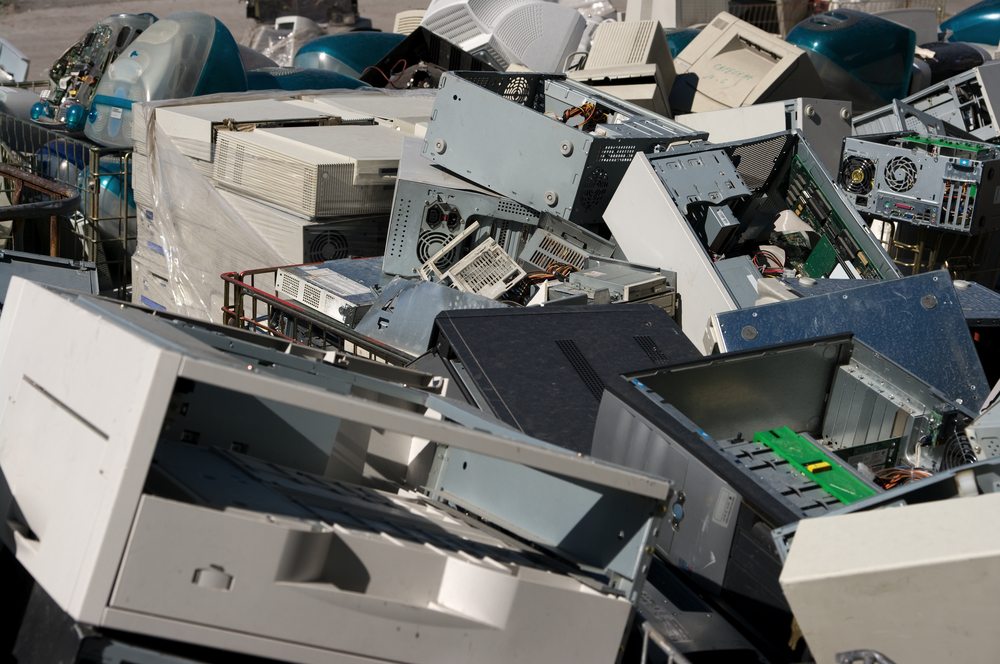
 The E-Cycle Washington program reported that 93% of the materials collected in 2021 were recycled. | Huguette Roe/Shutterstock[/caption]
Seven processors handled electronics under E-Cycle Washington's program in 2021, sending recovered commodities to downstreams all around the globe.
According to E-Cycle Washington's 2021 annual report, produced by the stewardship group Washington Materials Management and Financing Authority, about 93% of the weight of electronics collected in 2021 was recycled, while 7% was residuals such as wood, un-recyclable plastic and floor sweep.
The annual report from Washington state's extended producer responsibility program provides details on how much material each processor handled, where they send materials after processing, who they subcontracted with, and more. The report contains a level of disclosure few other programs have.
According to the document, Ace Metal Company was the e-scrap facility paid to recycle the most pounds through the program last year, at about 3.4 million. It was followed by Metro Metals Tacoma with 3.0 million pounds, Metro Metals Vancouver with 2.8 million pounds, E-Waste with 2.2 million pounds and EWC Group with 2.0 million pounds. URT recycled about 714,000 pounds, and ERI recycled 222,000 pounds.
The E-Cycle Washington program reported that 93% of the materials collected in 2021 were recycled. | Huguette Roe/Shutterstock[/caption]
Seven processors handled electronics under E-Cycle Washington's program in 2021, sending recovered commodities to downstreams all around the globe.
According to E-Cycle Washington's 2021 annual report, produced by the stewardship group Washington Materials Management and Financing Authority, about 93% of the weight of electronics collected in 2021 was recycled, while 7% was residuals such as wood, un-recyclable plastic and floor sweep.
The annual report from Washington state's extended producer responsibility program provides details on how much material each processor handled, where they send materials after processing, who they subcontracted with, and more. The report contains a level of disclosure few other programs have.
According to the document, Ace Metal Company was the e-scrap facility paid to recycle the most pounds through the program last year, at about 3.4 million. It was followed by Metro Metals Tacoma with 3.0 million pounds, Metro Metals Vancouver with 2.8 million pounds, E-Waste with 2.2 million pounds and EWC Group with 2.0 million pounds. URT recycled about 714,000 pounds, and ERI recycled 222,000 pounds.
[caption id="attachment_4166" align="aligncenter" width="1000"] The E-Cycle Washington program reported that 93% of the materials collected in 2021 were recycled. | Huguette Roe/Shutterstock[/caption]
Seven processors handled electronics under E-Cycle Washington's program in 2021, sending recovered commodities to downstreams all around the globe.
According to E-Cycle Washington's 2021 annual report, produced by the stewardship group Washington Materials Management and Financing Authority, about 93% of the weight of electronics collected in 2021 was recycled, while 7% was residuals such as wood, un-recyclable plastic and floor sweep.
The annual report from Washington state's extended producer responsibility program provides details on how much material each processor handled, where they send materials after processing, who they subcontracted with, and more. The report contains a level of disclosure few other programs have.
According to the document, Ace Metal Company was the e-scrap facility paid to recycle the most pounds through the program last year, at about 3.4 million. It was followed by Metro Metals Tacoma with 3.0 million pounds, Metro Metals Vancouver with 2.8 million pounds, E-Waste with 2.2 million pounds and EWC Group with 2.0 million pounds. URT recycled about 714,000 pounds, and ERI recycled 222,000 pounds.
The E-Cycle Washington program reported that 93% of the materials collected in 2021 were recycled. | Huguette Roe/Shutterstock[/caption]
Seven processors handled electronics under E-Cycle Washington's program in 2021, sending recovered commodities to downstreams all around the globe.
According to E-Cycle Washington's 2021 annual report, produced by the stewardship group Washington Materials Management and Financing Authority, about 93% of the weight of electronics collected in 2021 was recycled, while 7% was residuals such as wood, un-recyclable plastic and floor sweep.
The annual report from Washington state's extended producer responsibility program provides details on how much material each processor handled, where they send materials after processing, who they subcontracted with, and more. The report contains a level of disclosure few other programs have.
According to the document, Ace Metal Company was the e-scrap facility paid to recycle the most pounds through the program last year, at about 3.4 million. It was followed by Metro Metals Tacoma with 3.0 million pounds, Metro Metals Vancouver with 2.8 million pounds, E-Waste with 2.2 million pounds and EWC Group with 2.0 million pounds. URT recycled about 714,000 pounds, and ERI recycled 222,000 pounds.
Categories