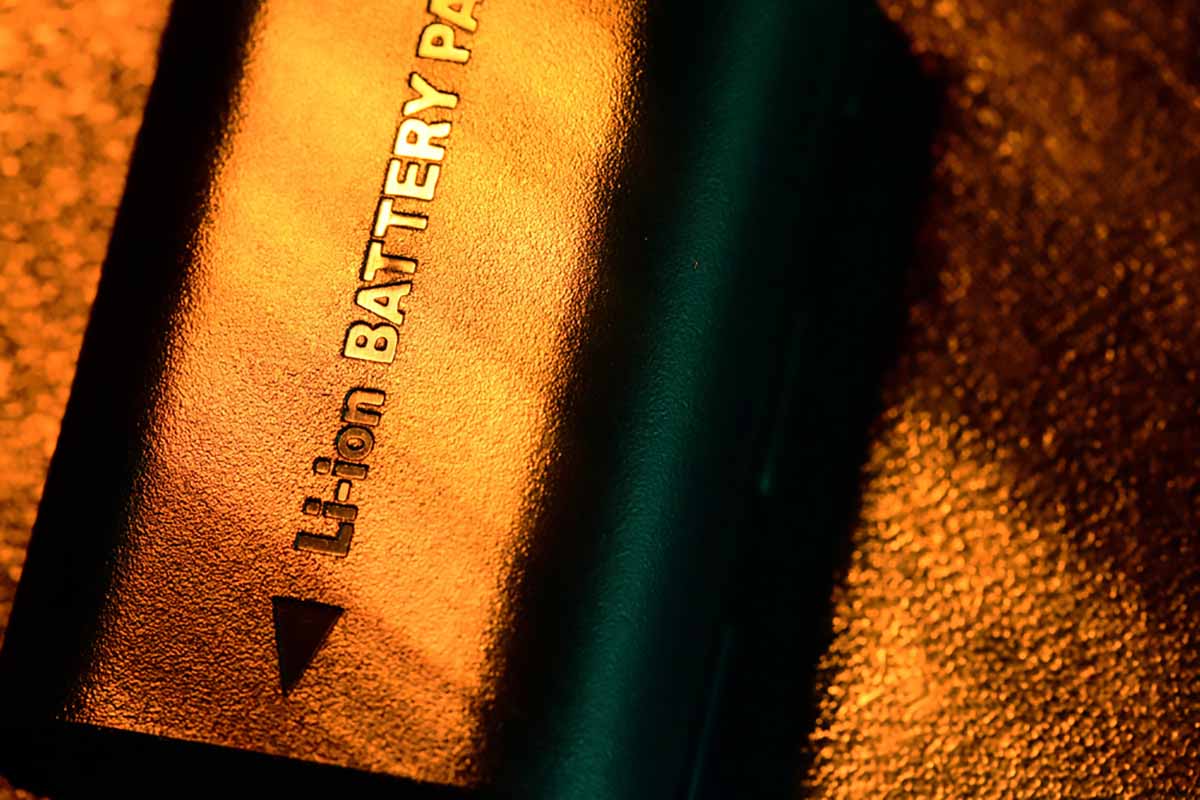
 Green Li-ion's battery recycling technology can take shredded lithium-ion battery material to pCAM material within the same system. | Janaka Dharmasena/Shutterstock[/caption]
A lithium-ion battery recycling technology company is looking to build regional supply chains by providing recyclers and manufacturers with modular units that can take batteries from black mass to pCAM.
Singapore-founded Green Li-ion's system was developed to solve a geopolitical and environmental problem with recycling lithium-ion batteries, Stephen Hayward, vice president of operations, told E-Scrap News. Traditionally, recycling batteries involves shredding them then separating out the critical materials, such as cobalt, manganese and nickel, along with the black mass.
However, before those materials can be re-manufactured into batteries, they need to be combined into cathode active material (CAM) or precursor cathode active material (pCAM). Most of the facilities that can complete that step are located in Asia, Hayward noted.
"Is that truly a secure supply chain and really a true carbon footprint reduction if you have to send your material out of the country to get it put into the format you need?" Hayward said. "My opinion would be no, it's not. What you really want to do is keep it in the region where you shred the battery."
That's exactly what Green Li-ion aims to do, by selling both patented technology designs and equipment to e-scrap processors, OEMs and "anyone who ultimately has black mass."
"It can reprocess pCAM and even use scrap off the back of manufacturing lines," Hayward added. "It's a very flexible unit and our target market is pretty broad. This truly is a solution for a pure circular economy and reduced carbon footprint versus the traditional way of recycling."
Green Li-ion's battery recycling technology can take shredded lithium-ion battery material to pCAM material within the same system. | Janaka Dharmasena/Shutterstock[/caption]
A lithium-ion battery recycling technology company is looking to build regional supply chains by providing recyclers and manufacturers with modular units that can take batteries from black mass to pCAM.
Singapore-founded Green Li-ion's system was developed to solve a geopolitical and environmental problem with recycling lithium-ion batteries, Stephen Hayward, vice president of operations, told E-Scrap News. Traditionally, recycling batteries involves shredding them then separating out the critical materials, such as cobalt, manganese and nickel, along with the black mass.
However, before those materials can be re-manufactured into batteries, they need to be combined into cathode active material (CAM) or precursor cathode active material (pCAM). Most of the facilities that can complete that step are located in Asia, Hayward noted.
"Is that truly a secure supply chain and really a true carbon footprint reduction if you have to send your material out of the country to get it put into the format you need?" Hayward said. "My opinion would be no, it's not. What you really want to do is keep it in the region where you shred the battery."
That's exactly what Green Li-ion aims to do, by selling both patented technology designs and equipment to e-scrap processors, OEMs and "anyone who ultimately has black mass."
"It can reprocess pCAM and even use scrap off the back of manufacturing lines," Hayward added. "It's a very flexible unit and our target market is pretty broad. This truly is a solution for a pure circular economy and reduced carbon footprint versus the traditional way of recycling."
[caption id="attachment_16758" align="aligncenter" width="1200"] Green Li-ion's battery recycling technology can take shredded lithium-ion battery material to pCAM material within the same system. | Janaka Dharmasena/Shutterstock[/caption]
A lithium-ion battery recycling technology company is looking to build regional supply chains by providing recyclers and manufacturers with modular units that can take batteries from black mass to pCAM.
Singapore-founded Green Li-ion's system was developed to solve a geopolitical and environmental problem with recycling lithium-ion batteries, Stephen Hayward, vice president of operations, told E-Scrap News. Traditionally, recycling batteries involves shredding them then separating out the critical materials, such as cobalt, manganese and nickel, along with the black mass.
However, before those materials can be re-manufactured into batteries, they need to be combined into cathode active material (CAM) or precursor cathode active material (pCAM). Most of the facilities that can complete that step are located in Asia, Hayward noted.
"Is that truly a secure supply chain and really a true carbon footprint reduction if you have to send your material out of the country to get it put into the format you need?" Hayward said. "My opinion would be no, it's not. What you really want to do is keep it in the region where you shred the battery."
That's exactly what Green Li-ion aims to do, by selling both patented technology designs and equipment to e-scrap processors, OEMs and "anyone who ultimately has black mass."
"It can reprocess pCAM and even use scrap off the back of manufacturing lines," Hayward added. "It's a very flexible unit and our target market is pretty broad. This truly is a solution for a pure circular economy and reduced carbon footprint versus the traditional way of recycling."
Green Li-ion's battery recycling technology can take shredded lithium-ion battery material to pCAM material within the same system. | Janaka Dharmasena/Shutterstock[/caption]
A lithium-ion battery recycling technology company is looking to build regional supply chains by providing recyclers and manufacturers with modular units that can take batteries from black mass to pCAM.
Singapore-founded Green Li-ion's system was developed to solve a geopolitical and environmental problem with recycling lithium-ion batteries, Stephen Hayward, vice president of operations, told E-Scrap News. Traditionally, recycling batteries involves shredding them then separating out the critical materials, such as cobalt, manganese and nickel, along with the black mass.
However, before those materials can be re-manufactured into batteries, they need to be combined into cathode active material (CAM) or precursor cathode active material (pCAM). Most of the facilities that can complete that step are located in Asia, Hayward noted.
"Is that truly a secure supply chain and really a true carbon footprint reduction if you have to send your material out of the country to get it put into the format you need?" Hayward said. "My opinion would be no, it's not. What you really want to do is keep it in the region where you shred the battery."
That's exactly what Green Li-ion aims to do, by selling both patented technology designs and equipment to e-scrap processors, OEMs and "anyone who ultimately has black mass."
"It can reprocess pCAM and even use scrap off the back of manufacturing lines," Hayward added. "It's a very flexible unit and our target market is pretty broad. This truly is a solution for a pure circular economy and reduced carbon footprint versus the traditional way of recycling."
Categories