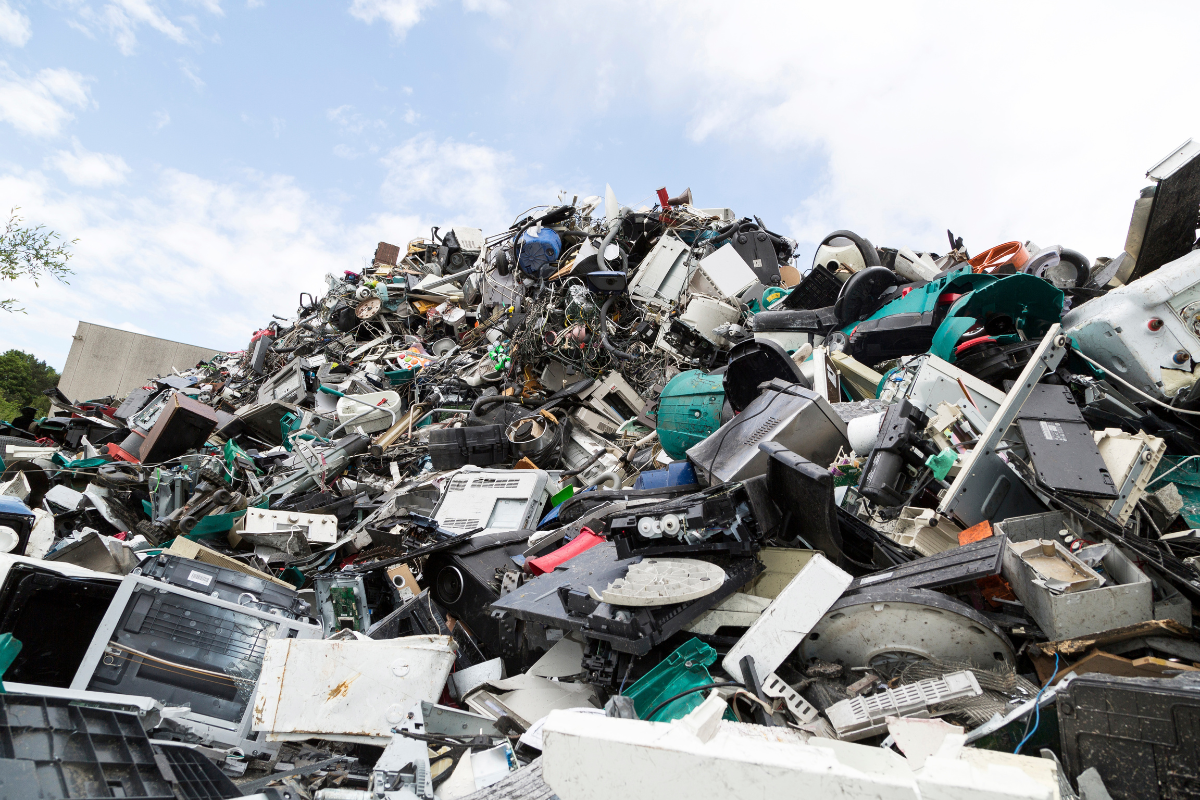
 The U.S. Department of Energy's Electronics Scrap Materials Recycling Prize is a multi-phase competition for a range of electronics recycling industry players. | Morten B/Shutterstock[/caption]
A technology manager with the U.S. Department of Energy said improving e-scrap management fits squarely within the federal government's material sourcing and climate goals. That's why the agency has launched a new funding and technical assistance opportunity targeting electronics recovery.
The Energy department on March 6 announced the Electronics Scrap Materials Recycling Prize, or E-SCRAP. It's a competition for a broad range of applicants connected to the electronics recycling industry, with multiple phases highlighting different stages of project implementation.
Jeremy Mehta, technology manager within the department's Advanced Materials and Manufacturing Technologies Office, said the department has invested in a number of e-scrap recovery-related projects over the past decade, particularly in the separation and material extraction stage. For example, the department is a funding partner of the REMADE Institute, which supports research and development related to recycling, reuse and remanufacturing. Other government branches including the U.S. military have also funded such efforts.
The E-SCRAP prize aims to build on that work and connect it to other segments of the end-of-life electronics sector.
"We see this prize as being an effective tool to bridge some of the different players that exist along the value chain, from collection to sorting, to concentration, to preprocessing, to actual separation and extraction," Mehta told E-Scrap News.
Validating and benchmarking the output material, and ultimately getting it back into new electronics to replace virgin material, are further areas of interest, Mehta added.
The department believes building connections between these diverse parts of the electronics recovery sector will highlight opportunities to optimize processes, share information and overall improve the economics of recovering, preparing and reusing metals in electronic devices.
"It's a fragmented value chain," Mehta said. "And we're trying to defragment that."
The U.S. Department of Energy's Electronics Scrap Materials Recycling Prize is a multi-phase competition for a range of electronics recycling industry players. | Morten B/Shutterstock[/caption]
A technology manager with the U.S. Department of Energy said improving e-scrap management fits squarely within the federal government's material sourcing and climate goals. That's why the agency has launched a new funding and technical assistance opportunity targeting electronics recovery.
The Energy department on March 6 announced the Electronics Scrap Materials Recycling Prize, or E-SCRAP. It's a competition for a broad range of applicants connected to the electronics recycling industry, with multiple phases highlighting different stages of project implementation.
Jeremy Mehta, technology manager within the department's Advanced Materials and Manufacturing Technologies Office, said the department has invested in a number of e-scrap recovery-related projects over the past decade, particularly in the separation and material extraction stage. For example, the department is a funding partner of the REMADE Institute, which supports research and development related to recycling, reuse and remanufacturing. Other government branches including the U.S. military have also funded such efforts.
The E-SCRAP prize aims to build on that work and connect it to other segments of the end-of-life electronics sector.
"We see this prize as being an effective tool to bridge some of the different players that exist along the value chain, from collection to sorting, to concentration, to preprocessing, to actual separation and extraction," Mehta told E-Scrap News.
Validating and benchmarking the output material, and ultimately getting it back into new electronics to replace virgin material, are further areas of interest, Mehta added.
The department believes building connections between these diverse parts of the electronics recovery sector will highlight opportunities to optimize processes, share information and overall improve the economics of recovering, preparing and reusing metals in electronic devices.
"It's a fragmented value chain," Mehta said. "And we're trying to defragment that."
[caption id="attachment_24211" align="aligncenter" width="1200"] The U.S. Department of Energy's Electronics Scrap Materials Recycling Prize is a multi-phase competition for a range of electronics recycling industry players. | Morten B/Shutterstock[/caption]
A technology manager with the U.S. Department of Energy said improving e-scrap management fits squarely within the federal government's material sourcing and climate goals. That's why the agency has launched a new funding and technical assistance opportunity targeting electronics recovery.
The Energy department on March 6 announced the Electronics Scrap Materials Recycling Prize, or E-SCRAP. It's a competition for a broad range of applicants connected to the electronics recycling industry, with multiple phases highlighting different stages of project implementation.
Jeremy Mehta, technology manager within the department's Advanced Materials and Manufacturing Technologies Office, said the department has invested in a number of e-scrap recovery-related projects over the past decade, particularly in the separation and material extraction stage. For example, the department is a funding partner of the REMADE Institute, which supports research and development related to recycling, reuse and remanufacturing. Other government branches including the U.S. military have also funded such efforts.
The E-SCRAP prize aims to build on that work and connect it to other segments of the end-of-life electronics sector.
"We see this prize as being an effective tool to bridge some of the different players that exist along the value chain, from collection to sorting, to concentration, to preprocessing, to actual separation and extraction," Mehta told E-Scrap News.
Validating and benchmarking the output material, and ultimately getting it back into new electronics to replace virgin material, are further areas of interest, Mehta added.
The department believes building connections between these diverse parts of the electronics recovery sector will highlight opportunities to optimize processes, share information and overall improve the economics of recovering, preparing and reusing metals in electronic devices.
"It's a fragmented value chain," Mehta said. "And we're trying to defragment that."
The U.S. Department of Energy's Electronics Scrap Materials Recycling Prize is a multi-phase competition for a range of electronics recycling industry players. | Morten B/Shutterstock[/caption]
A technology manager with the U.S. Department of Energy said improving e-scrap management fits squarely within the federal government's material sourcing and climate goals. That's why the agency has launched a new funding and technical assistance opportunity targeting electronics recovery.
The Energy department on March 6 announced the Electronics Scrap Materials Recycling Prize, or E-SCRAP. It's a competition for a broad range of applicants connected to the electronics recycling industry, with multiple phases highlighting different stages of project implementation.
Jeremy Mehta, technology manager within the department's Advanced Materials and Manufacturing Technologies Office, said the department has invested in a number of e-scrap recovery-related projects over the past decade, particularly in the separation and material extraction stage. For example, the department is a funding partner of the REMADE Institute, which supports research and development related to recycling, reuse and remanufacturing. Other government branches including the U.S. military have also funded such efforts.
The E-SCRAP prize aims to build on that work and connect it to other segments of the end-of-life electronics sector.
"We see this prize as being an effective tool to bridge some of the different players that exist along the value chain, from collection to sorting, to concentration, to preprocessing, to actual separation and extraction," Mehta told E-Scrap News.
Validating and benchmarking the output material, and ultimately getting it back into new electronics to replace virgin material, are further areas of interest, Mehta added.
The department believes building connections between these diverse parts of the electronics recovery sector will highlight opportunities to optimize processes, share information and overall improve the economics of recovering, preparing and reusing metals in electronic devices.
"It's a fragmented value chain," Mehta said. "And we're trying to defragment that."
Categories