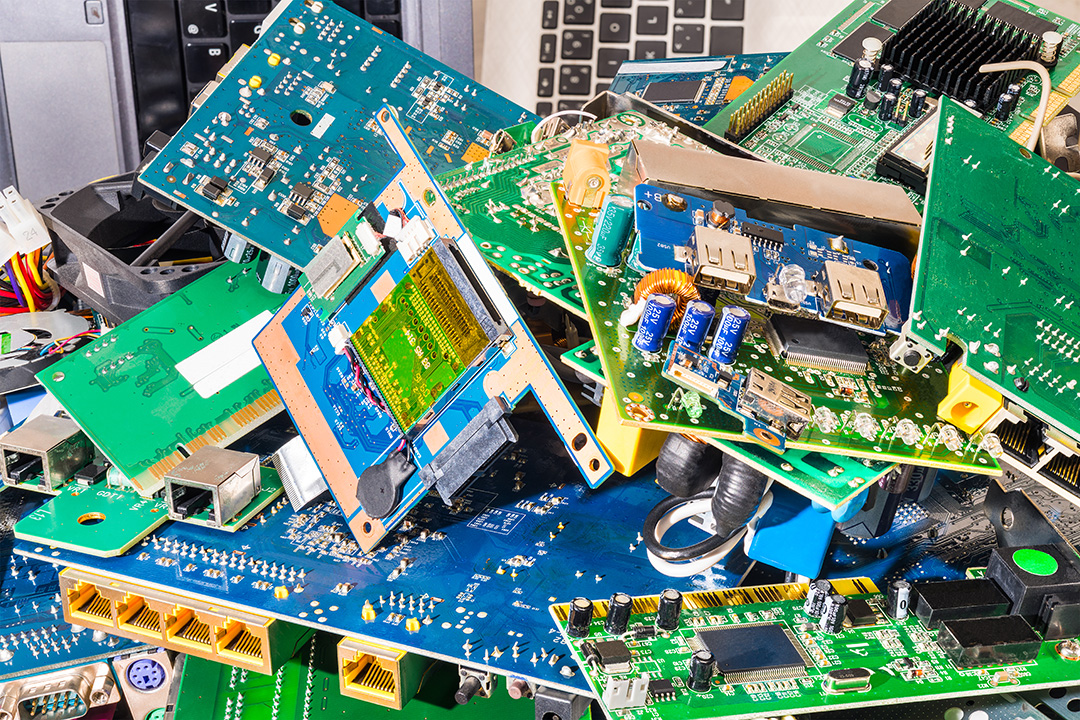
 The UN Conference on Trade and Development said in its Digital Economy Report that developing nations shoulder a disproportionate share of the environmental impact from global digitalization. | KPixMining/Shutterstock[/caption]
People living in developed countries generate more than 20 times as much e-scrap as their counterparts in developing countries, according to the United Nations Conference on Trade and Development's recently released 2024 Digital Economy Report.
The report explores the environmental impact of the global digital sector and the disproportionate burden developing countries bear. Developed countries generate 55 pounds of e-scrap per person, compared to less than 2 pounds in developing countries and half a pound in the least developed countries, for example.
In March, a global analysis from the U.N. also found that electronics and electrical equipment are reaching end of life at a quantity and speed that is far outpacing the recycling sector's capacity to collect and process that material.
The new report found that global digital-related material has increased by 30% since 2010, to 10.5 million tons in 2022, but only 24% of it was formally collected in 2022. Developing countries collected only 7.5% of their total material generated.
"Inadequate handling and disposal of digital waste exacerbates environmental inequalities, disproportionately impacting developing countries," the authors wrote.
The report cited the vast increase in e-commerce, noting the number of online shoppers has grown to 2.3 billion in 2021, compared to fewer than 100 million in 2000. Although digitalization drives global economic growth and offers opportunities for developing countries, the environmental repercussions are worsening.
The shift to digitalization affects developing countries disproportionately both economically and ecologically, the report noted, but these countries could leverage this movement to foster development.
"We must harness the power of digitalization to advance inclusive and sustainable development, while mitigating its negative environmental impacts," said Rebeca Grynspan, the conference's secretary general. "This requires a shift towards a circular digital economy, characterized by responsible consumption and production, renewable energy use and comprehensive e-waste management. The digital economy's growing environmental impact can be reversed."
The UN Conference on Trade and Development said in its Digital Economy Report that developing nations shoulder a disproportionate share of the environmental impact from global digitalization. | KPixMining/Shutterstock[/caption]
People living in developed countries generate more than 20 times as much e-scrap as their counterparts in developing countries, according to the United Nations Conference on Trade and Development's recently released 2024 Digital Economy Report.
The report explores the environmental impact of the global digital sector and the disproportionate burden developing countries bear. Developed countries generate 55 pounds of e-scrap per person, compared to less than 2 pounds in developing countries and half a pound in the least developed countries, for example.
In March, a global analysis from the U.N. also found that electronics and electrical equipment are reaching end of life at a quantity and speed that is far outpacing the recycling sector's capacity to collect and process that material.
The new report found that global digital-related material has increased by 30% since 2010, to 10.5 million tons in 2022, but only 24% of it was formally collected in 2022. Developing countries collected only 7.5% of their total material generated.
"Inadequate handling and disposal of digital waste exacerbates environmental inequalities, disproportionately impacting developing countries," the authors wrote.
The report cited the vast increase in e-commerce, noting the number of online shoppers has grown to 2.3 billion in 2021, compared to fewer than 100 million in 2000. Although digitalization drives global economic growth and offers opportunities for developing countries, the environmental repercussions are worsening.
The shift to digitalization affects developing countries disproportionately both economically and ecologically, the report noted, but these countries could leverage this movement to foster development.
"We must harness the power of digitalization to advance inclusive and sustainable development, while mitigating its negative environmental impacts," said Rebeca Grynspan, the conference's secretary general. "This requires a shift towards a circular digital economy, characterized by responsible consumption and production, renewable energy use and comprehensive e-waste management. The digital economy's growing environmental impact can be reversed."
[caption id="attachment_11157" align="aligncenter" width="1200"] The UN Conference on Trade and Development said in its Digital Economy Report that developing nations shoulder a disproportionate share of the environmental impact from global digitalization. | KPixMining/Shutterstock[/caption]
People living in developed countries generate more than 20 times as much e-scrap as their counterparts in developing countries, according to the United Nations Conference on Trade and Development's recently released 2024 Digital Economy Report.
The report explores the environmental impact of the global digital sector and the disproportionate burden developing countries bear. Developed countries generate 55 pounds of e-scrap per person, compared to less than 2 pounds in developing countries and half a pound in the least developed countries, for example.
In March, a global analysis from the U.N. also found that electronics and electrical equipment are reaching end of life at a quantity and speed that is far outpacing the recycling sector's capacity to collect and process that material.
The new report found that global digital-related material has increased by 30% since 2010, to 10.5 million tons in 2022, but only 24% of it was formally collected in 2022. Developing countries collected only 7.5% of their total material generated.
"Inadequate handling and disposal of digital waste exacerbates environmental inequalities, disproportionately impacting developing countries," the authors wrote.
The report cited the vast increase in e-commerce, noting the number of online shoppers has grown to 2.3 billion in 2021, compared to fewer than 100 million in 2000. Although digitalization drives global economic growth and offers opportunities for developing countries, the environmental repercussions are worsening.
The shift to digitalization affects developing countries disproportionately both economically and ecologically, the report noted, but these countries could leverage this movement to foster development.
"We must harness the power of digitalization to advance inclusive and sustainable development, while mitigating its negative environmental impacts," said Rebeca Grynspan, the conference's secretary general. "This requires a shift towards a circular digital economy, characterized by responsible consumption and production, renewable energy use and comprehensive e-waste management. The digital economy's growing environmental impact can be reversed."
The UN Conference on Trade and Development said in its Digital Economy Report that developing nations shoulder a disproportionate share of the environmental impact from global digitalization. | KPixMining/Shutterstock[/caption]
People living in developed countries generate more than 20 times as much e-scrap as their counterparts in developing countries, according to the United Nations Conference on Trade and Development's recently released 2024 Digital Economy Report.
The report explores the environmental impact of the global digital sector and the disproportionate burden developing countries bear. Developed countries generate 55 pounds of e-scrap per person, compared to less than 2 pounds in developing countries and half a pound in the least developed countries, for example.
In March, a global analysis from the U.N. also found that electronics and electrical equipment are reaching end of life at a quantity and speed that is far outpacing the recycling sector's capacity to collect and process that material.
The new report found that global digital-related material has increased by 30% since 2010, to 10.5 million tons in 2022, but only 24% of it was formally collected in 2022. Developing countries collected only 7.5% of their total material generated.
"Inadequate handling and disposal of digital waste exacerbates environmental inequalities, disproportionately impacting developing countries," the authors wrote.
The report cited the vast increase in e-commerce, noting the number of online shoppers has grown to 2.3 billion in 2021, compared to fewer than 100 million in 2000. Although digitalization drives global economic growth and offers opportunities for developing countries, the environmental repercussions are worsening.
The shift to digitalization affects developing countries disproportionately both economically and ecologically, the report noted, but these countries could leverage this movement to foster development.
"We must harness the power of digitalization to advance inclusive and sustainable development, while mitigating its negative environmental impacts," said Rebeca Grynspan, the conference's secretary general. "This requires a shift towards a circular digital economy, characterized by responsible consumption and production, renewable energy use and comprehensive e-waste management. The digital economy's growing environmental impact can be reversed."
Categories