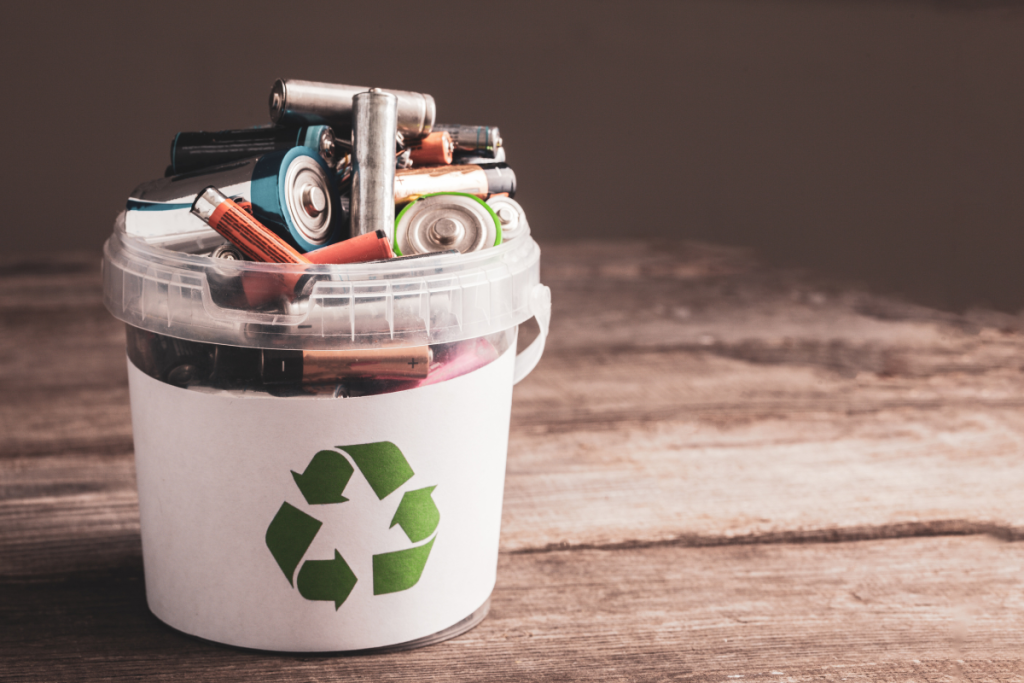
 The U.S. EPA is working on a Battery Collection Best Practices and Battery Labeling Guidelines project, which will provide a toolkit for local governments to use when implementing battery collection programs, among other deliverables. | Chepko-Danil-Vitalevich/Shutterstock[/caption]
The U.S. EPA has held a series of expert working groups, aiming to find the most effective strategies to keep batteries out of the garbage and recycling streams. For a growing number of municipalities, including one major U.S. city, that is coming to mean offering the convenience of curbside collection.
The EPA's "Battery Collection Best Practices and Battery Labeling Guidelines" project, spurred by the Bipartisan Infrastructure Law and authorized with $25 million in funding by Congress, will ultimately generate a toolkit for local governments to use when implementing battery collection programs, and a set of voluntary labeling guidelines for use in crafting battery labels. Both resources are due in 2026.
The agency kicked off its work sessions on collection and labeling in March, and has held seven sessions throughout the year, covering collection, storage, transport and labeling of small-format batteries, a category that includes the bulk of removable and embedded batteries in consumer electronics. A summary of these work sessions is available on the EPA's website.
The EPA is now moving into examining mid-format batteries, which includes batteries in e-bikes and e-scooters. The first session, set for Sept. 12, will cover policies, practices and trends in managing these batteries.
The EPA is developing a report to Congress on battery practices, aiming for publication later this year.
"This report will identify existing best practices, describe the current state of battery collection, and lay out EPA's next steps," the agency wrote. "After the publication of this report, EPA will seek to capture and share new and innovative best practices to complement the report."
As the federal agency continues to push the conversation forward in battery management, some municipalities are exploring how to increase battery collection convenience for residents.
The U.S. EPA is working on a Battery Collection Best Practices and Battery Labeling Guidelines project, which will provide a toolkit for local governments to use when implementing battery collection programs, among other deliverables. | Chepko-Danil-Vitalevich/Shutterstock[/caption]
The U.S. EPA has held a series of expert working groups, aiming to find the most effective strategies to keep batteries out of the garbage and recycling streams. For a growing number of municipalities, including one major U.S. city, that is coming to mean offering the convenience of curbside collection.
The EPA's "Battery Collection Best Practices and Battery Labeling Guidelines" project, spurred by the Bipartisan Infrastructure Law and authorized with $25 million in funding by Congress, will ultimately generate a toolkit for local governments to use when implementing battery collection programs, and a set of voluntary labeling guidelines for use in crafting battery labels. Both resources are due in 2026.
The agency kicked off its work sessions on collection and labeling in March, and has held seven sessions throughout the year, covering collection, storage, transport and labeling of small-format batteries, a category that includes the bulk of removable and embedded batteries in consumer electronics. A summary of these work sessions is available on the EPA's website.
The EPA is now moving into examining mid-format batteries, which includes batteries in e-bikes and e-scooters. The first session, set for Sept. 12, will cover policies, practices and trends in managing these batteries.
The EPA is developing a report to Congress on battery practices, aiming for publication later this year.
"This report will identify existing best practices, describe the current state of battery collection, and lay out EPA's next steps," the agency wrote. "After the publication of this report, EPA will seek to capture and share new and innovative best practices to complement the report."
As the federal agency continues to push the conversation forward in battery management, some municipalities are exploring how to increase battery collection convenience for residents.
[caption id="attachment_22770" align="aligncenter" width="900"] The U.S. EPA is working on a Battery Collection Best Practices and Battery Labeling Guidelines project, which will provide a toolkit for local governments to use when implementing battery collection programs, among other deliverables. | Chepko-Danil-Vitalevich/Shutterstock[/caption]
The U.S. EPA has held a series of expert working groups, aiming to find the most effective strategies to keep batteries out of the garbage and recycling streams. For a growing number of municipalities, including one major U.S. city, that is coming to mean offering the convenience of curbside collection.
The EPA's "Battery Collection Best Practices and Battery Labeling Guidelines" project, spurred by the Bipartisan Infrastructure Law and authorized with $25 million in funding by Congress, will ultimately generate a toolkit for local governments to use when implementing battery collection programs, and a set of voluntary labeling guidelines for use in crafting battery labels. Both resources are due in 2026.
The agency kicked off its work sessions on collection and labeling in March, and has held seven sessions throughout the year, covering collection, storage, transport and labeling of small-format batteries, a category that includes the bulk of removable and embedded batteries in consumer electronics. A summary of these work sessions is available on the EPA's website.
The EPA is now moving into examining mid-format batteries, which includes batteries in e-bikes and e-scooters. The first session, set for Sept. 12, will cover policies, practices and trends in managing these batteries.
The EPA is developing a report to Congress on battery practices, aiming for publication later this year.
"This report will identify existing best practices, describe the current state of battery collection, and lay out EPA's next steps," the agency wrote. "After the publication of this report, EPA will seek to capture and share new and innovative best practices to complement the report."
As the federal agency continues to push the conversation forward in battery management, some municipalities are exploring how to increase battery collection convenience for residents.
The U.S. EPA is working on a Battery Collection Best Practices and Battery Labeling Guidelines project, which will provide a toolkit for local governments to use when implementing battery collection programs, among other deliverables. | Chepko-Danil-Vitalevich/Shutterstock[/caption]
The U.S. EPA has held a series of expert working groups, aiming to find the most effective strategies to keep batteries out of the garbage and recycling streams. For a growing number of municipalities, including one major U.S. city, that is coming to mean offering the convenience of curbside collection.
The EPA's "Battery Collection Best Practices and Battery Labeling Guidelines" project, spurred by the Bipartisan Infrastructure Law and authorized with $25 million in funding by Congress, will ultimately generate a toolkit for local governments to use when implementing battery collection programs, and a set of voluntary labeling guidelines for use in crafting battery labels. Both resources are due in 2026.
The agency kicked off its work sessions on collection and labeling in March, and has held seven sessions throughout the year, covering collection, storage, transport and labeling of small-format batteries, a category that includes the bulk of removable and embedded batteries in consumer electronics. A summary of these work sessions is available on the EPA's website.
The EPA is now moving into examining mid-format batteries, which includes batteries in e-bikes and e-scooters. The first session, set for Sept. 12, will cover policies, practices and trends in managing these batteries.
The EPA is developing a report to Congress on battery practices, aiming for publication later this year.
"This report will identify existing best practices, describe the current state of battery collection, and lay out EPA's next steps," the agency wrote. "After the publication of this report, EPA will seek to capture and share new and innovative best practices to complement the report."
As the federal agency continues to push the conversation forward in battery management, some municipalities are exploring how to increase battery collection convenience for residents.
Categories