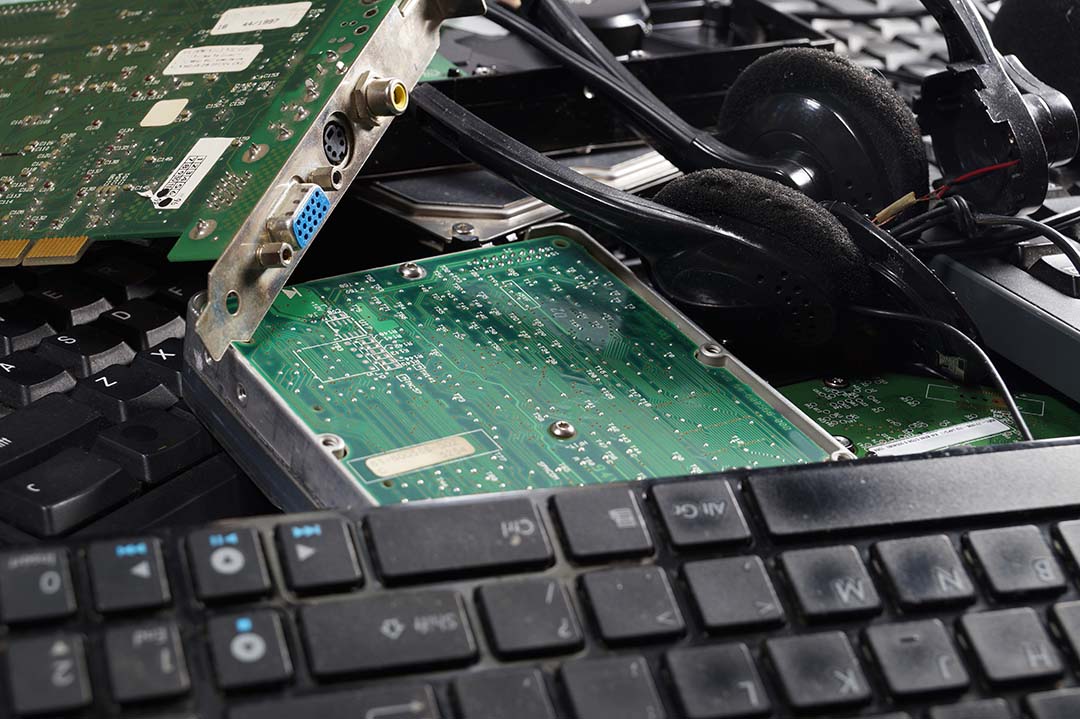
 The tariffs threaten to raise costs to import end-of-life batteries, circuit boards and mixed e-scrap from Canada and Mexico. | priscilla list/Shutterstock[/caption]
March 7 update: Some of the new tariffs on imports from both Mexico and Canada were paused following executive orders President Donald Trump signed on March 6. The orders exempt goods that enter the U.S. under the U.S.-Mexico-Canada Agreement, which would appear to exempt recycled materials, but it's not entirely clear. Canada's first round of retaliatory tariffs appears to remain in effect.
The Recycled Materials Association warned of potential "severe" disruption to the materials recovery sector after tariffs targeting the U.S.'s largest trading partners took effect this week. Some tariffs on Mexican imports were paused for another month on March 6. Meanwhile, Canada's proposed response includes tariffs on U.S. exports of recycled materials.
The tariffs threaten to raise costs to import end-of-life batteries, circuit boards and mixed e-scrap from Canada and Mexico. Although trade data for e-scrap is not as clear-cut as for other recycled commodities, U.S. Census Bureau figures indicate more than 14 million pounds of these materials came in from Mexico and more than 6 million pounds from Canada in 2024.
President Donald Trump first outlined the 25% tariffs in a pair of Feb. 1 executive orders, framing them as a response to drug trafficking and border security problems. They were quickly paused for one month after deals were reached with the governments of Canada and Mexico. During a press conference March 3, Trump told reporters there was "no room left" for further deals to be made with Canada and Mexico.
Still, on March 6, Trump wrote on social media that he had spoken with Canadian President Claudia Sheinbaum and decided that any imports that fall under the U.S.-Mexico-Canada Agreement will not be subject to tariffs until April 2.
After the measures took effect early Tuesday morning, Canada responded immediately with tariffs on 30 billion Canadian dollars ($21 billion) of U.S. exports to Canada beginning March 4, echoing the country's response before the tariffs were delayed in February.
Those retaliatory tariffs are set to expand later this month, if the U.S. doesn't remove its tariffs. The Canadian government this week published a lengthy list of commodities that would be hit with responsive tariffs. The list includes most types of scrap plastic, including the tariff code commonly used for e-plastics. It also includes the entire tariff category used for e-scrap.
Additionally, in a March 3 executive order Trump also doubled the recently enacted 10% tariff on Chinese imports to 20%. Trump has framed the tariff as a response to the flow of fentanyl and other drugs from China into the U.S., and the new executive order says the country has "not taken adequate steps to alleviate the illicit drug crisis through cooperative enforcement actions."
The move drew immediate retaliatory tariffs from China, whose foreign ministry on March 4 issued a harsh rebuke during a press conference: "If war is what the U.S. wants, be it a tariff war, a trade war or any other type of war, we're ready to fight till the end."
The tariffs threaten to raise costs to import end-of-life batteries, circuit boards and mixed e-scrap from Canada and Mexico. | priscilla list/Shutterstock[/caption]
March 7 update: Some of the new tariffs on imports from both Mexico and Canada were paused following executive orders President Donald Trump signed on March 6. The orders exempt goods that enter the U.S. under the U.S.-Mexico-Canada Agreement, which would appear to exempt recycled materials, but it's not entirely clear. Canada's first round of retaliatory tariffs appears to remain in effect.
The Recycled Materials Association warned of potential "severe" disruption to the materials recovery sector after tariffs targeting the U.S.'s largest trading partners took effect this week. Some tariffs on Mexican imports were paused for another month on March 6. Meanwhile, Canada's proposed response includes tariffs on U.S. exports of recycled materials.
The tariffs threaten to raise costs to import end-of-life batteries, circuit boards and mixed e-scrap from Canada and Mexico. Although trade data for e-scrap is not as clear-cut as for other recycled commodities, U.S. Census Bureau figures indicate more than 14 million pounds of these materials came in from Mexico and more than 6 million pounds from Canada in 2024.
President Donald Trump first outlined the 25% tariffs in a pair of Feb. 1 executive orders, framing them as a response to drug trafficking and border security problems. They were quickly paused for one month after deals were reached with the governments of Canada and Mexico. During a press conference March 3, Trump told reporters there was "no room left" for further deals to be made with Canada and Mexico.
Still, on March 6, Trump wrote on social media that he had spoken with Canadian President Claudia Sheinbaum and decided that any imports that fall under the U.S.-Mexico-Canada Agreement will not be subject to tariffs until April 2.
After the measures took effect early Tuesday morning, Canada responded immediately with tariffs on 30 billion Canadian dollars ($21 billion) of U.S. exports to Canada beginning March 4, echoing the country's response before the tariffs were delayed in February.
Those retaliatory tariffs are set to expand later this month, if the U.S. doesn't remove its tariffs. The Canadian government this week published a lengthy list of commodities that would be hit with responsive tariffs. The list includes most types of scrap plastic, including the tariff code commonly used for e-plastics. It also includes the entire tariff category used for e-scrap.
Additionally, in a March 3 executive order Trump also doubled the recently enacted 10% tariff on Chinese imports to 20%. Trump has framed the tariff as a response to the flow of fentanyl and other drugs from China into the U.S., and the new executive order says the country has "not taken adequate steps to alleviate the illicit drug crisis through cooperative enforcement actions."
The move drew immediate retaliatory tariffs from China, whose foreign ministry on March 4 issued a harsh rebuke during a press conference: "If war is what the U.S. wants, be it a tariff war, a trade war or any other type of war, we're ready to fight till the end."
[caption id="attachment_8692" align="aligncenter" width="1200"] The tariffs threaten to raise costs to import end-of-life batteries, circuit boards and mixed e-scrap from Canada and Mexico. | priscilla list/Shutterstock[/caption]
March 7 update: Some of the new tariffs on imports from both Mexico and Canada were paused following executive orders President Donald Trump signed on March 6. The orders exempt goods that enter the U.S. under the U.S.-Mexico-Canada Agreement, which would appear to exempt recycled materials, but it's not entirely clear. Canada's first round of retaliatory tariffs appears to remain in effect.
The Recycled Materials Association warned of potential "severe" disruption to the materials recovery sector after tariffs targeting the U.S.'s largest trading partners took effect this week. Some tariffs on Mexican imports were paused for another month on March 6. Meanwhile, Canada's proposed response includes tariffs on U.S. exports of recycled materials.
The tariffs threaten to raise costs to import end-of-life batteries, circuit boards and mixed e-scrap from Canada and Mexico. Although trade data for e-scrap is not as clear-cut as for other recycled commodities, U.S. Census Bureau figures indicate more than 14 million pounds of these materials came in from Mexico and more than 6 million pounds from Canada in 2024.
President Donald Trump first outlined the 25% tariffs in a pair of Feb. 1 executive orders, framing them as a response to drug trafficking and border security problems. They were quickly paused for one month after deals were reached with the governments of Canada and Mexico. During a press conference March 3, Trump told reporters there was "no room left" for further deals to be made with Canada and Mexico.
Still, on March 6, Trump wrote on social media that he had spoken with Canadian President Claudia Sheinbaum and decided that any imports that fall under the U.S.-Mexico-Canada Agreement will not be subject to tariffs until April 2.
After the measures took effect early Tuesday morning, Canada responded immediately with tariffs on 30 billion Canadian dollars ($21 billion) of U.S. exports to Canada beginning March 4, echoing the country's response before the tariffs were delayed in February.
Those retaliatory tariffs are set to expand later this month, if the U.S. doesn't remove its tariffs. The Canadian government this week published a lengthy list of commodities that would be hit with responsive tariffs. The list includes most types of scrap plastic, including the tariff code commonly used for e-plastics. It also includes the entire tariff category used for e-scrap.
Additionally, in a March 3 executive order Trump also doubled the recently enacted 10% tariff on Chinese imports to 20%. Trump has framed the tariff as a response to the flow of fentanyl and other drugs from China into the U.S., and the new executive order says the country has "not taken adequate steps to alleviate the illicit drug crisis through cooperative enforcement actions."
The move drew immediate retaliatory tariffs from China, whose foreign ministry on March 4 issued a harsh rebuke during a press conference: "If war is what the U.S. wants, be it a tariff war, a trade war or any other type of war, we're ready to fight till the end."
The tariffs threaten to raise costs to import end-of-life batteries, circuit boards and mixed e-scrap from Canada and Mexico. | priscilla list/Shutterstock[/caption]
March 7 update: Some of the new tariffs on imports from both Mexico and Canada were paused following executive orders President Donald Trump signed on March 6. The orders exempt goods that enter the U.S. under the U.S.-Mexico-Canada Agreement, which would appear to exempt recycled materials, but it's not entirely clear. Canada's first round of retaliatory tariffs appears to remain in effect.
The Recycled Materials Association warned of potential "severe" disruption to the materials recovery sector after tariffs targeting the U.S.'s largest trading partners took effect this week. Some tariffs on Mexican imports were paused for another month on March 6. Meanwhile, Canada's proposed response includes tariffs on U.S. exports of recycled materials.
The tariffs threaten to raise costs to import end-of-life batteries, circuit boards and mixed e-scrap from Canada and Mexico. Although trade data for e-scrap is not as clear-cut as for other recycled commodities, U.S. Census Bureau figures indicate more than 14 million pounds of these materials came in from Mexico and more than 6 million pounds from Canada in 2024.
President Donald Trump first outlined the 25% tariffs in a pair of Feb. 1 executive orders, framing them as a response to drug trafficking and border security problems. They were quickly paused for one month after deals were reached with the governments of Canada and Mexico. During a press conference March 3, Trump told reporters there was "no room left" for further deals to be made with Canada and Mexico.
Still, on March 6, Trump wrote on social media that he had spoken with Canadian President Claudia Sheinbaum and decided that any imports that fall under the U.S.-Mexico-Canada Agreement will not be subject to tariffs until April 2.
After the measures took effect early Tuesday morning, Canada responded immediately with tariffs on 30 billion Canadian dollars ($21 billion) of U.S. exports to Canada beginning March 4, echoing the country's response before the tariffs were delayed in February.
Those retaliatory tariffs are set to expand later this month, if the U.S. doesn't remove its tariffs. The Canadian government this week published a lengthy list of commodities that would be hit with responsive tariffs. The list includes most types of scrap plastic, including the tariff code commonly used for e-plastics. It also includes the entire tariff category used for e-scrap.
Additionally, in a March 3 executive order Trump also doubled the recently enacted 10% tariff on Chinese imports to 20%. Trump has framed the tariff as a response to the flow of fentanyl and other drugs from China into the U.S., and the new executive order says the country has "not taken adequate steps to alleviate the illicit drug crisis through cooperative enforcement actions."
The move drew immediate retaliatory tariffs from China, whose foreign ministry on March 4 issued a harsh rebuke during a press conference: "If war is what the U.S. wants, be it a tariff war, a trade war or any other type of war, we're ready to fight till the end."
Categories