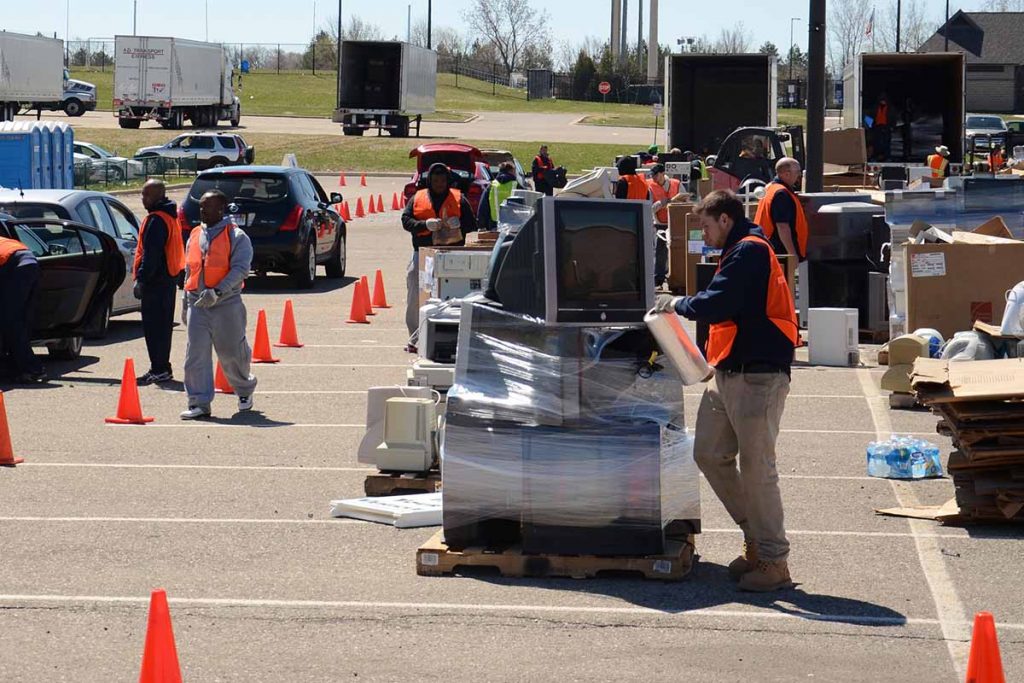
 The safety-focused summit came after the latest federal data showed a backslide in waste and recycling industry safety. | Susan Montgomery/Shutterstock[/caption]
As recycling companies seek to improve workplace safety amid an industry-wide increase in on-the-job fatalities, experts at a recent industry summit advised managers to focus their attention on — and for top executives, even to attend — the regular pre-shift safety meetings.
That was one takeaway from the Waste Advantage Safety Summit, held in March, which was convened after a troubling rise in solid waste and recycling industry fatalities. The Bureau of Labor Statistics late last year reported an increase in MRF worker deaths in 2023, finding that solid waste collection rose from seventh to fourth on its list of most dangerous jobs.
That's the highest it's been in the government's 20-year span of reporting such numbers, said David Biderman, a consultant and past leader of the Solid Waste Association of North America, SWANA, and he called it "very disconcerting."
"There's no single reason for the 70% increase in collection worker fatalities or the record number of MRF worker fatalities in 2023," he said during the summit. Additionally, he suggested it may be an undercount, as temporary workers are not counted in those BLS figures.
There are societal-wide factors at play. Collection workers are constantly in contact with drivers on the road, and "post-COVID, driving habits changed," Biderman said. "There are more distracted drivers than ever." The locations people are driving have also changed, with work from home producing more traffic in suburbs rather than in office-heavy urban areas.
Worker turnover has also increased post-COVID-19, with wages rising in other driving careers like Amazon or FedEx delivery, Biderman noted. With turnover comes challenges in instilling the importance of safety.
Causes aside, the summit brought together stakeholders highlighting various areas of safety concern and how to reduce dangers on the job. Those range from very specific on-the-job behavior change to employer-level culture shifts. For example, "while some employers tell their frontline workers that safety is really important, they also impose productivity requirements that are higher and higher," Biderman said.
Company culture from the top down is key, he said.
"It means showing up at that safety meeting that starts at 4:30 in the morning before the drivers roll out," Biderman said, noting he has conducted early-morning safety meetings both with and without company executives present. "When do the drivers and helpers pay more attention? When the owner of the company is in the room. So the owner of companies needs to be at these safety meetings; it sends a signal to the front line that safety matters."
The safety-focused summit came after the latest federal data showed a backslide in waste and recycling industry safety. | Susan Montgomery/Shutterstock[/caption]
As recycling companies seek to improve workplace safety amid an industry-wide increase in on-the-job fatalities, experts at a recent industry summit advised managers to focus their attention on — and for top executives, even to attend — the regular pre-shift safety meetings.
That was one takeaway from the Waste Advantage Safety Summit, held in March, which was convened after a troubling rise in solid waste and recycling industry fatalities. The Bureau of Labor Statistics late last year reported an increase in MRF worker deaths in 2023, finding that solid waste collection rose from seventh to fourth on its list of most dangerous jobs.
That's the highest it's been in the government's 20-year span of reporting such numbers, said David Biderman, a consultant and past leader of the Solid Waste Association of North America, SWANA, and he called it "very disconcerting."
"There's no single reason for the 70% increase in collection worker fatalities or the record number of MRF worker fatalities in 2023," he said during the summit. Additionally, he suggested it may be an undercount, as temporary workers are not counted in those BLS figures.
There are societal-wide factors at play. Collection workers are constantly in contact with drivers on the road, and "post-COVID, driving habits changed," Biderman said. "There are more distracted drivers than ever." The locations people are driving have also changed, with work from home producing more traffic in suburbs rather than in office-heavy urban areas.
Worker turnover has also increased post-COVID-19, with wages rising in other driving careers like Amazon or FedEx delivery, Biderman noted. With turnover comes challenges in instilling the importance of safety.
Causes aside, the summit brought together stakeholders highlighting various areas of safety concern and how to reduce dangers on the job. Those range from very specific on-the-job behavior change to employer-level culture shifts. For example, "while some employers tell their frontline workers that safety is really important, they also impose productivity requirements that are higher and higher," Biderman said.
Company culture from the top down is key, he said.
"It means showing up at that safety meeting that starts at 4:30 in the morning before the drivers roll out," Biderman said, noting he has conducted early-morning safety meetings both with and without company executives present. "When do the drivers and helpers pay more attention? When the owner of the company is in the room. So the owner of companies needs to be at these safety meetings; it sends a signal to the front line that safety matters."
[caption id="attachment_18925" align="aligncenter" width="900"] The safety-focused summit came after the latest federal data showed a backslide in waste and recycling industry safety. | Susan Montgomery/Shutterstock[/caption]
As recycling companies seek to improve workplace safety amid an industry-wide increase in on-the-job fatalities, experts at a recent industry summit advised managers to focus their attention on — and for top executives, even to attend — the regular pre-shift safety meetings.
That was one takeaway from the Waste Advantage Safety Summit, held in March, which was convened after a troubling rise in solid waste and recycling industry fatalities. The Bureau of Labor Statistics late last year reported an increase in MRF worker deaths in 2023, finding that solid waste collection rose from seventh to fourth on its list of most dangerous jobs.
That's the highest it's been in the government's 20-year span of reporting such numbers, said David Biderman, a consultant and past leader of the Solid Waste Association of North America, SWANA, and he called it "very disconcerting."
"There's no single reason for the 70% increase in collection worker fatalities or the record number of MRF worker fatalities in 2023," he said during the summit. Additionally, he suggested it may be an undercount, as temporary workers are not counted in those BLS figures.
There are societal-wide factors at play. Collection workers are constantly in contact with drivers on the road, and "post-COVID, driving habits changed," Biderman said. "There are more distracted drivers than ever." The locations people are driving have also changed, with work from home producing more traffic in suburbs rather than in office-heavy urban areas.
Worker turnover has also increased post-COVID-19, with wages rising in other driving careers like Amazon or FedEx delivery, Biderman noted. With turnover comes challenges in instilling the importance of safety.
Causes aside, the summit brought together stakeholders highlighting various areas of safety concern and how to reduce dangers on the job. Those range from very specific on-the-job behavior change to employer-level culture shifts. For example, "while some employers tell their frontline workers that safety is really important, they also impose productivity requirements that are higher and higher," Biderman said.
Company culture from the top down is key, he said.
"It means showing up at that safety meeting that starts at 4:30 in the morning before the drivers roll out," Biderman said, noting he has conducted early-morning safety meetings both with and without company executives present. "When do the drivers and helpers pay more attention? When the owner of the company is in the room. So the owner of companies needs to be at these safety meetings; it sends a signal to the front line that safety matters."
The safety-focused summit came after the latest federal data showed a backslide in waste and recycling industry safety. | Susan Montgomery/Shutterstock[/caption]
As recycling companies seek to improve workplace safety amid an industry-wide increase in on-the-job fatalities, experts at a recent industry summit advised managers to focus their attention on — and for top executives, even to attend — the regular pre-shift safety meetings.
That was one takeaway from the Waste Advantage Safety Summit, held in March, which was convened after a troubling rise in solid waste and recycling industry fatalities. The Bureau of Labor Statistics late last year reported an increase in MRF worker deaths in 2023, finding that solid waste collection rose from seventh to fourth on its list of most dangerous jobs.
That's the highest it's been in the government's 20-year span of reporting such numbers, said David Biderman, a consultant and past leader of the Solid Waste Association of North America, SWANA, and he called it "very disconcerting."
"There's no single reason for the 70% increase in collection worker fatalities or the record number of MRF worker fatalities in 2023," he said during the summit. Additionally, he suggested it may be an undercount, as temporary workers are not counted in those BLS figures.
There are societal-wide factors at play. Collection workers are constantly in contact with drivers on the road, and "post-COVID, driving habits changed," Biderman said. "There are more distracted drivers than ever." The locations people are driving have also changed, with work from home producing more traffic in suburbs rather than in office-heavy urban areas.
Worker turnover has also increased post-COVID-19, with wages rising in other driving careers like Amazon or FedEx delivery, Biderman noted. With turnover comes challenges in instilling the importance of safety.
Causes aside, the summit brought together stakeholders highlighting various areas of safety concern and how to reduce dangers on the job. Those range from very specific on-the-job behavior change to employer-level culture shifts. For example, "while some employers tell their frontline workers that safety is really important, they also impose productivity requirements that are higher and higher," Biderman said.
Company culture from the top down is key, he said.
"It means showing up at that safety meeting that starts at 4:30 in the morning before the drivers roll out," Biderman said, noting he has conducted early-morning safety meetings both with and without company executives present. "When do the drivers and helpers pay more attention? When the owner of the company is in the room. So the owner of companies needs to be at these safety meetings; it sends a signal to the front line that safety matters."
Categories