 Over the past decade, third-party certification has become an expectation for many processors and refurbishers of electronics.
R2, which is administered by Sustainable Electronics Recycling International (SERI) and offers its certification on a facility-by-facility basis, lists over 450 certified rec
Over the past decade, third-party certification has become an expectation for many processors and refurbishers of electronics.
R2, which is administered by Sustainable Electronics Recycling International (SERI) and offers its certification on a facility-by-facility basis, lists over 450 certified rec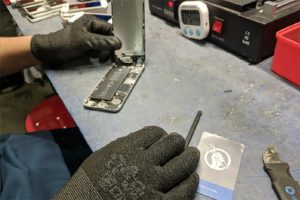 Most e-scrap managers know not to shred mobile devices that contain lithium-ion batteries. But it turns out fires are a threat even when disassembly procedures are utilized.
In a recent webinar hosted by the U.S.
Most e-scrap managers know not to shred mobile devices that contain lithium-ion batteries. But it turns out fires are a threat even when disassembly procedures are utilized.
In a recent webinar hosted by the U.S. PCs and display devices will have to meet new standards to be listed on a registry of environmentally friendly electronics.
The Green Electronics Council (GEC)
PCs and display devices will have to meet new standards to be listed on a registry of environmentally friendly electronics.
The Green Electronics Council (GEC)  Maine lawmakers passed an update to the state's electronics recycling law.
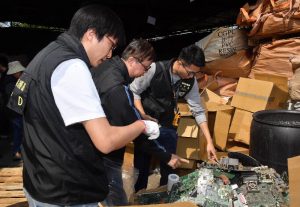 Authorities recently handed down several penalties for improper management of scrap electronics.
On March 6 and March 13, a court in Hong Kong, a semi-autonomous region of China,
Authorities recently handed down several penalties for improper management of scrap electronics.
On March 6 and March 13, a court in Hong Kong, a semi-autonomous region of China,  The group behind the R2 standard released a broad plan for ensuring certified facilities better conform to the electronics recycling standard.
 Budget shortfalls are a reality for state programs nationwide, and in Maryland, the strain is increasingly being felt at the county level.
The Maryland Recycling Network (MRN) recently held a webinar that featured Kitty McIlroy, project analyst for the Northeast Maryland Waste Disposal Authority
Budget shortfalls are a reality for state programs nationwide, and in Maryland, the strain is increasingly being felt at the county level.
The Maryland Recycling Network (MRN) recently held a webinar that featured Kitty McIlroy, project analyst for the Northeast Maryland Waste Disposal Authority India opened the door last week to imports of products that will be repaired and re-exported out the country, a move that could have significant implications for the electronics reuse sector.
According to an
India opened the door last week to imports of products that will be repaired and re-exported out the country, a move that could have significant implications for the electronics reuse sector.
According to an  An appeals court has ruled against Vizio in a case over how Connecticut's state program calculates the recycling fee it charges manufacturers.
Vizio filed suit against the Connecticut Department of Energy and Environmental Protection in 2015, taking issue with the Constitution State’s allocation of funding responsibility.
An appeals court has ruled against Vizio in a case over how Connecticut's state program calculates the recycling fee it charges manufacturers.
Vizio filed suit against the Connecticut Department of Energy and Environmental Protection in 2015, taking issue with the Constitution State’s allocation of funding responsibility. Research partially funded by a prominent IT asset disposition company led to the development of a non-toxic method for recycling e-plastics.
Sriraam Chandrasekaran and B.K. Sharma, scientists from the University of Illinois, found that a particular solvent can recover a clean stream of polycarbonate (PC) from mixtures of different e-plastics.
Research partially funded by a prominent IT asset disposition company led to the development of a non-toxic method for recycling e-plastics.
Sriraam Chandrasekaran and B.K. Sharma, scientists from the University of Illinois, found that a particular solvent can recover a clean stream of polycarbonate (PC) from mixtures of different e-plastics.