New Jersey Gov. Chris Christie signed a bill overhauling the state's e-scrap program. It was identical to legislation he pocket vetoed in 2016.
Christie on Jan.
An Arizona for-profit business shares electronics disassembly tips with a local nonprofit group, and a Minnesota county boosts fees it charges individuals who drop off display devices.
Knowledge sharing: An Arizona electronics recycling and hard drive destruction company shared some e-scrap disassembly knowledge with the nonprofit group Worl
The refurbished smartphone sector is expected to grow exponentially in the next three years, and a Seattle company aims to put its data analysis at the center of that development.
Retrace tracks e-scrap, specifically used cellphones, throughout the global market to give refurbishers and other e-scrap companies better data to
The federal government will invest up to $70 million in a new research institute focused on reducing recycling costs and boosting recycled content in manufacturing. E-scrap is one focus of the initiative.
The U.S. Department of Energy announced the creation of the Reducing Embodied-energy and Decreasing Emissions (REMADE) Institute, which will be headquartered in Rochester, N.Y.
China could hold enormous device-refurb opportunities, and BAN pushes for policy changes in South America.
Money on the Mainland: "It's virtually an untapped market." That's how Kerry Chen, an electronics refurbishment entrepreneur in China, describes the smartphone resale possibilities in the world's most populous nation.
Apple's earbuds get a zero on the repairability scale, and scrap writer Adam Minter is planning another book.
Rosy outlook: IBISWorld has updated a research report examining the electronics recycling sector.
Sustainable Electronics Recycling International is working on updates to the R2 standard, with potential changes in a host of high-interest areas.
The group's R2 Technical Advisory Committee (TAC) has been meeting to consider changes to the standard.
In sub-Saharan Africa, more than 182 million adults are illiterate, and 30 percent of young people are unable to read or write. Access to information and communication technology is critical to improving their educational and economic prospects.
 New Jersey Gov. Chris Christie signed a bill overhauling the state's e-scrap program. It was identical to legislation he pocket vetoed in 2016.
Christie on Jan.
New Jersey Gov. Chris Christie signed a bill overhauling the state's e-scrap program. It was identical to legislation he pocket vetoed in 2016.
Christie on Jan.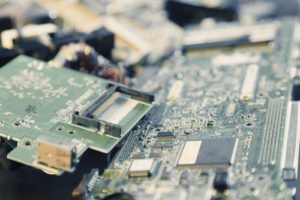 The federal government has dramatically lowered permissible exposure limits for beryllium, a metal used in some electronics.
The U.S.
The federal government has dramatically lowered permissible exposure limits for beryllium, a metal used in some electronics.
The U.S. An Arizona for-profit business shares electronics disassembly tips with a local nonprofit group, and a Minnesota county boosts fees it charges individuals who drop off display devices.
Knowledge sharing: An Arizona electronics recycling and hard drive destruction company shared some e-scrap disassembly knowledge with the nonprofit group Worl
An Arizona for-profit business shares electronics disassembly tips with a local nonprofit group, and a Minnesota county boosts fees it charges individuals who drop off display devices.
Knowledge sharing: An Arizona electronics recycling and hard drive destruction company shared some e-scrap disassembly knowledge with the nonprofit group Worl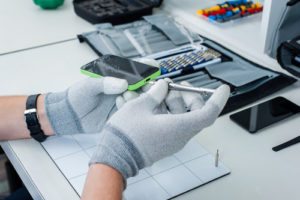 The refurbished smartphone sector is expected to grow exponentially in the next three years, and a Seattle company aims to put its data analysis at the center of that development.
Retrace tracks e-scrap, specifically used cellphones, throughout the global market to give refurbishers and other e-scrap companies better data to
The refurbished smartphone sector is expected to grow exponentially in the next three years, and a Seattle company aims to put its data analysis at the center of that development.
Retrace tracks e-scrap, specifically used cellphones, throughout the global market to give refurbishers and other e-scrap companies better data to  The federal government will invest up to $70 million in a new research institute focused on reducing recycling costs and boosting recycled content in manufacturing. E-scrap is one focus of the initiative.
The U.S. Department of Energy announced the creation of the Reducing Embodied-energy and Decreasing Emissions (REMADE) Institute, which will be headquartered in Rochester, N.Y.
The federal government will invest up to $70 million in a new research institute focused on reducing recycling costs and boosting recycled content in manufacturing. E-scrap is one focus of the initiative.
The U.S. Department of Energy announced the creation of the Reducing Embodied-energy and Decreasing Emissions (REMADE) Institute, which will be headquartered in Rochester, N.Y.
 China could hold enormous device-refurb opportunities, and BAN pushes for policy changes in South America.
Money on the Mainland: "It's virtually an untapped market." That's how Kerry Chen, an electronics refurbishment entrepreneur in China, describes the smartphone resale possibilities in the world's most populous nation.
China could hold enormous device-refurb opportunities, and BAN pushes for policy changes in South America.
Money on the Mainland: "It's virtually an untapped market." That's how Kerry Chen, an electronics refurbishment entrepreneur in China, describes the smartphone resale possibilities in the world's most populous nation.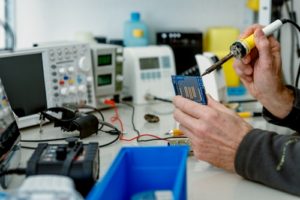
 In sub-Saharan Africa, more than 182 million adults are illiterate, and 30 percent of young people are unable to read or write. Access to information and communication technology is critical to improving their educational and economic prospects.