[caption id="attachment_5199" align="alignright" width="200"] Biju Nair, HYLA Mobile[/caption]
If you're reading this publication, you are well aware of the ultra-competitive nature of electronics recycling.
[caption id="attachment_3755" align="alignright" width="256"] Tom Bolon[/caption]
Let me cut to the chase: There is plenty of capacity at lead smelters in North America to fully recycle the lead from collected CRT glass.
We have all heard from one source or another that the smelters are either shutting down or drastically lowering their capacity
[caption id="attachment_3897" align="alignright" width="300"] J.J. Santos[/caption]
In developed countries, the ceramics industry is one of the sectors with the highest investment in innovation aimed at limiting the environmental impacts of its activities.
In sub-Saharan Africa, more than 182 million adults are illiterate, and 30 percent of young people are unable to read or write. Access to information and communication technology is critical to improving their educational and economic prospects.
Electronics recycling is one tough business. Industry companies are encountering high operating costs, low profit margins and the “C word” (commodities). What if technology could make the process more profitable?
Imagine end-of-life electronics that were manufactured with radio frequency identification (RFID) tags.
Steven Elmore, in his opinion piece entitled "BAN's tracking project missed opportunities to advance industry," seems to have complaints both about our study and about BAN's advocacy positions.
Recently, I had to go to Ikea to get some office gear. And I’m always struck by the same thing when I wend my way through the labyrinth that is that retail establishment, the just-so nature of all of their pre-fab rooms.
Basel Action Network's e-Trash Transparency report had the potential to produce positive results and spur constructive changes within electronics recycling, but instead it risks alienating large sections of the global industry.
 Biju Nair, HYLA Mobile[/caption]
If you're reading this publication, you are well aware of the ultra-competitive nature of electronics recycling.
Biju Nair, HYLA Mobile[/caption]
If you're reading this publication, you are well aware of the ultra-competitive nature of electronics recycling.
 Tom Bolon[/caption]
Let me cut to the chase: There is plenty of capacity at lead smelters in North America to fully recycle the lead from collected CRT glass.
We have all heard from one source or another that the smelters are either shutting down or drastically lowering their capacity
Tom Bolon[/caption]
Let me cut to the chase: There is plenty of capacity at lead smelters in North America to fully recycle the lead from collected CRT glass.
We have all heard from one source or another that the smelters are either shutting down or drastically lowering their capacity J.J. Santos[/caption]
In developed countries, the ceramics industry is one of the sectors with the highest investment in innovation aimed at limiting the environmental impacts of its activities.
J.J. Santos[/caption]
In developed countries, the ceramics industry is one of the sectors with the highest investment in innovation aimed at limiting the environmental impacts of its activities. In sub-Saharan Africa, more than 182 million adults are illiterate, and 30 percent of young people are unable to read or write. Access to information and communication technology is critical to improving their educational and economic prospects.
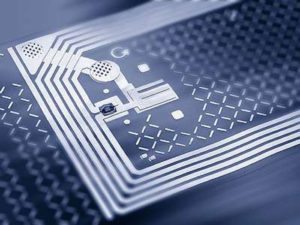 Electronics recycling is one tough business. Industry companies are encountering high operating costs, low profit margins and the “C word” (commodities). What if technology could make the process more profitable?
Imagine end-of-life electronics that were manufactured with radio frequency identification (RFID) tags.
Electronics recycling is one tough business. Industry companies are encountering high operating costs, low profit margins and the “C word” (commodities). What if technology could make the process more profitable?
Imagine end-of-life electronics that were manufactured with radio frequency identification (RFID) tags. Steven Elmore, in his
  Recently, I had to go to Ikea to get some office gear. And I’m always struck by the same thing when I wend my way through the labyrinth that is that retail establishment, the just-so nature of all of their pre-fab rooms.
 Basel Action Network's