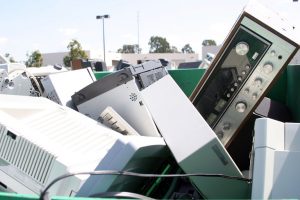
 California's e-scrap program took a hit when ECS Refining closed in June 2018, but it was anything but a critical blow. Other local and national e-scrap companies took up the slack.
ECS was once a nationwide e-scrap processor offering a variety of services.
California's e-scrap program took a hit when ECS Refining closed in June 2018, but it was anything but a critical blow. Other local and national e-scrap companies took up the slack.
ECS was once a nationwide e-scrap processor offering a variety of services. A major retailer will pay $7.4 million to settle allegations it again broke California law by illegally tossing used electronics and hazardous materials in the garbage.
Target, a massive Minneapolis-based retailer, agreed to a settlement resolving allegations that it violated both California law and the terms
A major retailer will pay $7.4 million to settle allegations it again broke California law by illegally tossing used electronics and hazardous materials in the garbage.
Target, a massive Minneapolis-based retailer, agreed to a settlement resolving allegations that it violated both California law and the terms Additional data protection and privacy laws are coming to San Francisco and elsewhere in the Golden State.
In November, San Franciscans voted 58 percent in favor of a
Additional data protection and privacy laws are coming to San Francisco and elsewhere in the Golden State.
In November, San Franciscans voted 58 percent in favor of a  Whole Foods Market California and two companies it owns will pay over $1.6 million to settle allegations they improperly disposed of electronics and hazardous wastes.
The company is the latest to settle with prosecutors in California over alleged violations of state hazardous waste laws.
Whole Foods Market California and two companies it owns will pay over $1.6 million to settle allegations they improperly disposed of electronics and hazardous wastes.
The company is the latest to settle with prosecutors in California over alleged violations of state hazardous waste laws.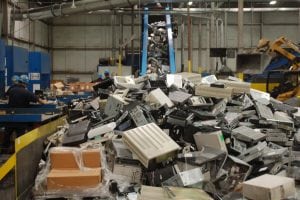 Material at the Mesquite, Texas ECS Refining facility. E-Scrap News file photo.[/caption]
E-scrap processor Dynamic Recycling has signed a deal to buy assets from bankrupt company ECS Refining.
Material at the Mesquite, Texas ECS Refining facility. E-Scrap News file photo.[/caption]
E-scrap processor Dynamic Recycling has signed a deal to buy assets from bankrupt company ECS Refining. It’s been 15 years since California’s e-scrap program was launched, and those years have brought significant changes to the end-of-life device stream.
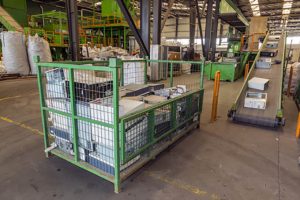 Processors handling non-CRT devices will be paid 60 cents a pound by the state of California, a 22 percent increase over their current payment rate.
Under California’s 15-year-old e-scrap program, consumers pay an advanced recycling fee when they buy new electronics.
Processors handling non-CRT devices will be paid 60 cents a pound by the state of California, a 22 percent increase over their current payment rate.
Under California’s 15-year-old e-scrap program, consumers pay an advanced recycling fee when they buy new electronics. Processors in California will soon receive reimbursement rates that vary based on the type of device recycled.
 The Home Depot will pay nearly $28 million in a California settlement involving disposal of e-scrap, batteries, household hazardous waste and intact customer information.
According to the Alameda County District Attorney's Office, the Atlanta-based retailer will pay $18.5 million in civil penalties and costs,
The Home Depot will pay nearly $28 million in a California settlement involving disposal of e-scrap, batteries, household hazardous waste and intact customer information.
According to the Alameda County District Attorney's Office, the Atlanta-based retailer will pay $18.5 million in civil penalties and costs, 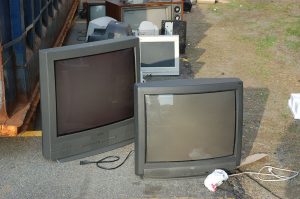 Credit: Eric Dykstra[/caption]
Changes in the end-of-life stream are prompting the oldest state electronics recycling program in the country to rethink its processor payment system.
California regulators are considering splitting the program’s processing payment system, through which state go
Credit: Eric Dykstra[/caption]
Changes in the end-of-life stream are prompting the oldest state electronics recycling program in the country to rethink its processor payment system.
California regulators are considering splitting the program’s processing payment system, through which state go