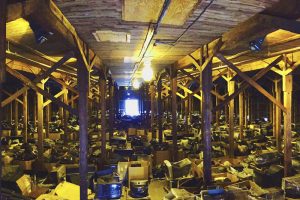
[caption id="attachment_6249" align="alignright" width="300"] CRTs stockpiled in a eWaste Tech warehouse in Richmond, Va.[/caption]
A property owner and public waste authority are at odds over a CRT stockpile in Richmond, Va. Meanwhile, the U.S.
A former Utah-based CRT processor has been indicted on several counts related to its abandonment of more than 3.5 million pounds of crushed leaded glass three years ago.
Named as defendants in the federal grand jury indictment are Stone Castle Recycling, CEO Anthony L. Stoddard and employee Jamen D. Wood. The document was filed on July 12 in the U.S.
The former leaders of CRT outlet Closed Loop Refining and Recovery have been directed by a court to pay more than $18 million for breaking the lease at the company's Columbus, Ohio headquarters and leaving behind more than 100 million pounds of CRT glass.
The
The fate of Nulife Glass is in question, with the firm halting operations as it struggles to meet regulator demands to remove CRT glass stored in warehouses.
Nulife, which originally started in the U.K., began operating in the U.S. in 2013. The company opened its headquarters in Dunkirk, N.Y. and began running a CRT glass furnace last year.
The illegal collection of e-scrap has resulted in fines for companies and individuals operating at two sites in Hong Kong's New Territories area.
A court on July 4 and July 11 levied fines totaling 24,000 Hong Kong dollars (about $3,100), after authorities in December found four metric tons of printed circuit boards and more than 1,300 LCD monitors and
Environmental officials in Minnesota are still attempting to get MPC, once one of the largest electronics recycling companies in the Upper Midwest, to complete the cleanup of its former operation.
According to officials, MPC has yet to clean out 32 semi-trailers containing intact CRTs and LCD monitors.
Com2 Recycling Solutions is opening a facility in Georgia as it expands its capacity to produce a glaze product from CRT glass. The glaze is currently used on tile products made by Brazilian manufacturers.
Illinois-based Com2 says the move will increase its total CRT processing capacity to 200 tons of intact devices per day and could also give e-scrap companies in the southern U.S.
This story originally appeared in the March 2017 issue of E-Scrap News. Subscribe today for access to all print content.
[dropcap]Has[/dropcap] the industry made real progress on the CRT issue? It’s tough to say.
Millions of electronics sit unused in Wisconsin homes, according to a report from the state's e-scrap program, and awareness of recycling options is growing.
 CRTs stockpiled in a eWaste Tech warehouse in Richmond, Va.[/caption]
A property owner and public waste authority are at odds over a CRT stockpile in Richmond, Va. Meanwhile, the U.S.
CRTs stockpiled in a eWaste Tech warehouse in Richmond, Va.[/caption]
A property owner and public waste authority are at odds over a CRT stockpile in Richmond, Va. Meanwhile, the U.S.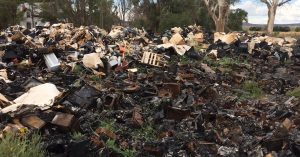 A former Utah-based CRT processor has been indicted on several counts related to its abandonment of more than 3.5 million pounds of crushed leaded glass three years ago.
Named as defendants in the federal grand jury indictment are Stone Castle Recycling, CEO Anthony L. Stoddard and employee Jamen D. Wood. The document was filed on July 12 in the U.S.
A former Utah-based CRT processor has been indicted on several counts related to its abandonment of more than 3.5 million pounds of crushed leaded glass three years ago.
Named as defendants in the federal grand jury indictment are Stone Castle Recycling, CEO Anthony L. Stoddard and employee Jamen D. Wood. The document was filed on July 12 in the U.S. The former leaders of CRT outlet Closed Loop Refining and Recovery have been directed by a court to pay more than $18 million for breaking the lease at the company's Columbus, Ohio headquarters and leaving behind more than 100 million pounds of CRT glass.
The
The former leaders of CRT outlet Closed Loop Refining and Recovery have been directed by a court to pay more than $18 million for breaking the lease at the company's Columbus, Ohio headquarters and leaving behind more than 100 million pounds of CRT glass.
The  Kuusakoski U.S.
 The fate of Nulife Glass is in question, with the firm halting operations as it struggles to meet regulator demands to remove CRT glass stored in warehouses.
Nulife, which originally started in the U.K., began operating in the U.S. in 2013. The company opened its headquarters in Dunkirk, N.Y. and began running a CRT glass furnace last year.
The fate of Nulife Glass is in question, with the firm halting operations as it struggles to meet regulator demands to remove CRT glass stored in warehouses.
Nulife, which originally started in the U.K., began operating in the U.S. in 2013. The company opened its headquarters in Dunkirk, N.Y. and began running a CRT glass furnace last year.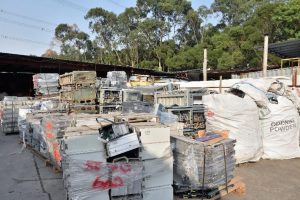 The illegal collection of e-scrap has resulted in fines for companies and individuals operating at two sites in Hong Kong's New Territories area.
A court on July 4 and July 11 levied fines totaling 24,000 Hong Kong dollars (about $3,100), after authorities in December found four metric tons of printed circuit boards and more than 1,300 LCD monitors and
The illegal collection of e-scrap has resulted in fines for companies and individuals operating at two sites in Hong Kong's New Territories area.
A court on July 4 and July 11 levied fines totaling 24,000 Hong Kong dollars (about $3,100), after authorities in December found four metric tons of printed circuit boards and more than 1,300 LCD monitors and 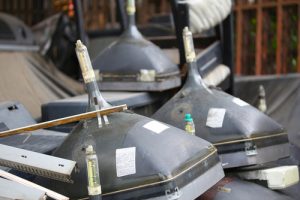 Environmental officials in Minnesota are still attempting to get MPC, once one of the largest electronics recycling companies in the Upper Midwest, to complete the cleanup of its former operation.
According to officials, MPC has yet to clean out 32 semi-trailers containing intact CRTs and LCD monitors.
Environmental officials in Minnesota are still attempting to get MPC, once one of the largest electronics recycling companies in the Upper Midwest, to complete the cleanup of its former operation.
According to officials, MPC has yet to clean out 32 semi-trailers containing intact CRTs and LCD monitors.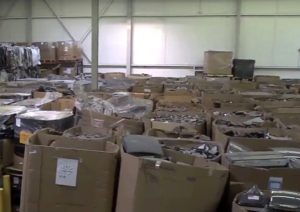 Com2 Recycling Solutions is opening a facility in Georgia as it expands its capacity to produce a glaze product from CRT glass. The glaze is currently used on tile products made by Brazilian manufacturers.
Illinois-based Com2 says the move will increase its total CRT processing capacity to 200 tons of intact devices per day and could also give e-scrap companies in the southern U.S.
Com2 Recycling Solutions is opening a facility in Georgia as it expands its capacity to produce a glaze product from CRT glass. The glaze is currently used on tile products made by Brazilian manufacturers.
Illinois-based Com2 says the move will increase its total CRT processing capacity to 200 tons of intact devices per day and could also give e-scrap companies in the southern U.S. This story originally appeared in the March 2017 issue of E-Scrap News.
  Millions of electronics sit unused in Wisconsin homes, according to a report from the state's e-scrap program, and awareness of recycling options is growing.