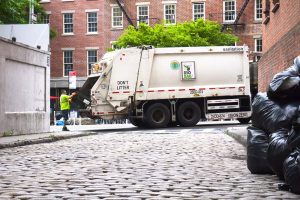
 Curbside garbage and recycling audits show the amount of e-scrap improperly disposed by New York City households has dropped substantially in recent years.
The New York Department of Sanitation (DSNY) last month released results of its 2017 waste characteriz
Curbside garbage and recycling audits show the amount of e-scrap improperly disposed by New York City households has dropped substantially in recent years.
The New York Department of Sanitation (DSNY) last month released results of its 2017 waste characteriz
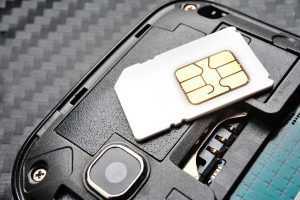 Research from a national laboratory shows that ultrasonic waves can be used to cheaply and effectively remove gold from scrap electronics.
In their experiments, scientists from Sandia National Laboratories in Albuquerque applied two different surfactants to the surface of a cell phone SIM card before submerging it in water.
Research from a national laboratory shows that ultrasonic waves can be used to cheaply and effectively remove gold from scrap electronics.
In their experiments, scientists from Sandia National Laboratories in Albuquerque applied two different surfactants to the surface of a cell phone SIM card before submerging it in water.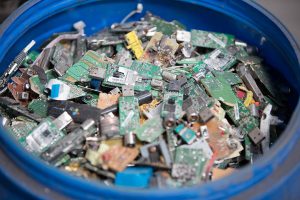 Researchers have looked at how the costs of e-scrap processing stack up against virgin mining, and their findings indicate recycling is more efficient for some key metals.
The analysis, completed by professors Jinhui Li and Xianlai Zeng of Tsinghua University in Beijing and professor John Mathews of Macquarie University in Sydney, shows economic upsides
Researchers have looked at how the costs of e-scrap processing stack up against virgin mining, and their findings indicate recycling is more efficient for some key metals.
The analysis, completed by professors Jinhui Li and Xianlai Zeng of Tsinghua University in Beijing and professor John Mathews of Macquarie University in Sydney, shows economic upsides 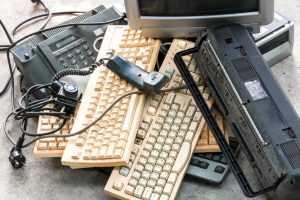 Research partially funded by a prominent IT asset disposition company led to the development of a non-toxic method for recycling e-plastics.
Sriraam Chandrasekaran and B.K. Sharma, scientists from the University of Illinois, found that a particular solvent can recover a clean stream of polycarbonate (PC) from mixtures of different e-plastics.
Research partially funded by a prominent IT asset disposition company led to the development of a non-toxic method for recycling e-plastics.
Sriraam Chandrasekaran and B.K. Sharma, scientists from the University of Illinois, found that a particular solvent can recover a clean stream of polycarbonate (PC) from mixtures of different e-plastics. A handful of United Nations entities have announced their collaboration to improve e-scrap management.
The U.N.
A handful of United Nations entities have announced their collaboration to improve e-scrap management.
The U.N. A byproduct from corn harvesting is a key component in a new method of e-scrap leaching.[/caption]
Researchers on two continents have recently made breakthroughs on the use of leaching techniques to recover critical materials from e-scrap.
A byproduct from corn harvesting is a key component in a new method of e-scrap leaching.[/caption]
Researchers on two continents have recently made breakthroughs on the use of leaching techniques to recover critical materials from e-scrap.
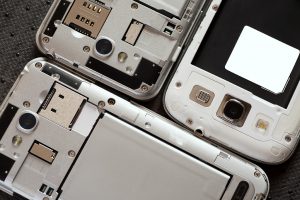 A lithium-ion battery expert says smartphone reuse trends will hamper the ability to use mobile device batteries as a major source of cobalt.
Hans Eric Melin, managing director of consultancy Creation Inn, recently
A lithium-ion battery expert says smartphone reuse trends will hamper the ability to use mobile device batteries as a major source of cobalt.
Hans Eric Melin, managing director of consultancy Creation Inn, recently  The European Union will provide funding to help formalize e-scrap recycling in a West African country that has been at the center of heated material export debates.
The EU will provide 1.2 million euros (about $1.46 million) to the E-MAGIN Ghana project over the next four years, according to
The European Union will provide funding to help formalize e-scrap recycling in a West African country that has been at the center of heated material export debates.
The EU will provide 1.2 million euros (about $1.46 million) to the E-MAGIN Ghana project over the next four years, according to  Two recent surveys explored consumer expectations when it comes to the management of recovered electronics.
One survey, commissioned by a new group called the Security Innovation Center (SIC), looked at the public's concerns about data security and privacy around used internet-connected devices
Two recent surveys explored consumer expectations when it comes to the management of recovered electronics.
One survey, commissioned by a new group called the Security Innovation Center (SIC), looked at the public's concerns about data security and privacy around used internet-connected devices