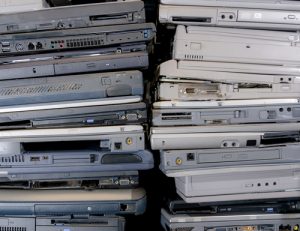
 Data detailing the global generation and flow of e-scrap is in draft form and will be published within the next couple months, according to the Bureau of International Recycling (BIR).
The organization aims to release the study well in advance of its May 2018 meeting, the chairman of BIR's e-scrap committee recently announced.
Accord
Data detailing the global generation and flow of e-scrap is in draft form and will be published within the next couple months, according to the Bureau of International Recycling (BIR).
The organization aims to release the study well in advance of its May 2018 meeting, the chairman of BIR's e-scrap committee recently announced.
Accord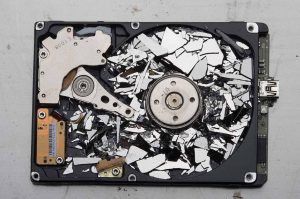 Scientists have developed an environmentally friendly way to recover rare earth elements from shredded electronic scrap without the need for pre-sorting of materials.
Researchers at the Critical Materials Institute (CMI) found a way to dissolve rare earths metals, which are used in hard drive magnets, using an acid-free solution.
Scientists have developed an environmentally friendly way to recover rare earth elements from shredded electronic scrap without the need for pre-sorting of materials.
Researchers at the Critical Materials Institute (CMI) found a way to dissolve rare earths metals, which are used in hard drive magnets, using an acid-free solution.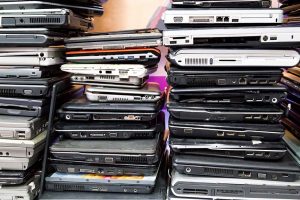 A European project will release a data platform providing a wealth of information on changes in the end-of-life stream.
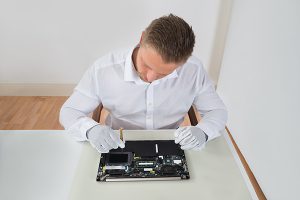 The average resale price for desktop computers and laptops has grown over the past two and a half years, according to a report by a prominent ITAD company.
Cascade Asset Management has published reports on resale value trends on a mostly annual basis since 2007, generally looking at three years of data.
The average resale price for desktop computers and laptops has grown over the past two and a half years, according to a report by a prominent ITAD company.
Cascade Asset Management has published reports on resale value trends on a mostly annual basis since 2007, generally looking at three years of data.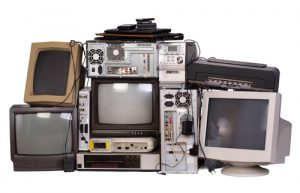 An initiative funded by the federal government could help solve a key materials recovery issue in e-scrap.
The REMADE (Reducing Embodied-Energy and Decreasing Emissions) Institute is gearing up to select its first projects to receive funding.
An initiative funded by the federal government could help solve a key materials recovery issue in e-scrap.
The REMADE (Reducing Embodied-Energy and Decreasing Emissions) Institute is gearing up to select its first projects to receive funding.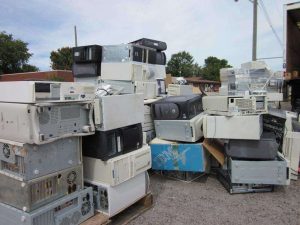 A new report identifies data security concerns as a major barrier to more recycling and claims there is growing interest in electronics take-back programs in the United Kingdom.
The
A new report identifies data security concerns as a major barrier to more recycling and claims there is growing interest in electronics take-back programs in the United Kingdom.
The  Researchers are gathering information about the global generation and flow of e-scrap, and they plan to publish their findings in November.
The project is being framed as a tool to help address several goals related to used electronics, including promoting recycling, creating refurbishment jobs, preventing illegal dumping
Researchers are gathering information about the global generation and flow of e-scrap, and they plan to publish their findings in November.
The project is being framed as a tool to help address several goals related to used electronics, including promoting recycling, creating refurbishment jobs, preventing illegal dumping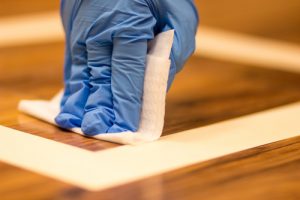 Even if an e-scrap facility is not thought to be processing toxics-emitting devices, it should be testing for toxic substances.
That's one takeaway from a researcher who co-authored a new report titled "
Even if an e-scrap facility is not thought to be processing toxics-emitting devices, it should be testing for toxic substances.
That's one takeaway from a researcher who co-authored a new report titled "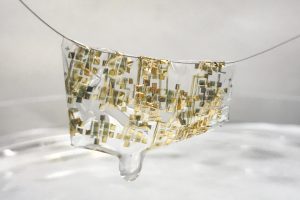 Photo by Bao lab, via Stanford University[/caption]
Researchers have developed a biodegradable polymer for electronics, which could complicate e-scrap recycling if it were ever adopted for widespread use.
Conducted by researchers from Stanford University, the University of California, Santa Barbara and Hewlett-Packard Enterprise, the
Photo by Bao lab, via Stanford University[/caption]
Researchers have developed a biodegradable polymer for electronics, which could complicate e-scrap recycling if it were ever adopted for widespread use.
Conducted by researchers from Stanford University, the University of California, Santa Barbara and Hewlett-Packard Enterprise, the  As the IT asset disposition industry matures, market factors are pushing hard toward more asset reuse rather than commodity sales.